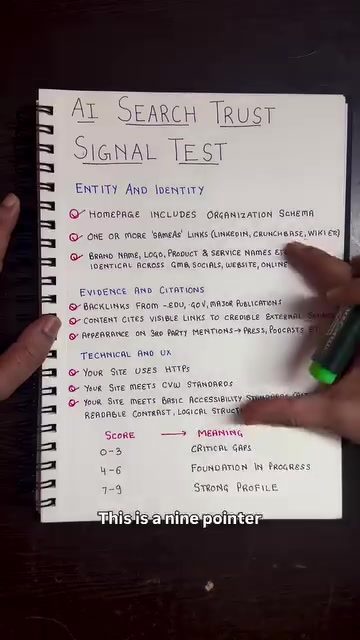
The AI Search Trust Signal Test
The AI Search Trust Signal Test is a comprehensive evaluation designed to assess how trustworthy AI platforms perceive your website. This test is crucial for understanding your online presence and credibility. By evaluating various aspects of your website, you can identify areas that need improvement and enhance your overall digital footprint. Here, we break down the key components of this test and explore how to optimize your website for better AI trust signals.
Why This Matters
In today's digital landscape, AI platforms play a pivotal role in determining the visibility and trustworthiness of websites. Whether it's search engines, social media, or other online platforms, AI algorithms assess numerous factors to gauge a website's credibility. By conducting this test, you gain insights into how AI perceives your site, enabling you to make informed decisions to boost your online reputation and improve your search rankings.
Components of the AI Search Trust Signal Test
Entity and Identity Check
The first part of the test involves an entity and identity check, which focuses on verifying the authenticity and consistency of your brand identity across various online platforms. This includes:
-
Organizational Schema: Ensure your homepage includes organizational schema. This structured data helps AI platforms understand your website's purpose and organization, making it easier for them to index and rank your content.
-
SameAs Schema Links: Verify that your website has one or more "same as" schema links. These links point to authoritative platforms like LinkedIn, Crunchbase, and Wikipedia, helping AI platforms validate your brand's legitimacy.
-
Consistent Branding: Make sure your brand name, logo, product, and service names are identical across Google My Business (GMB), social media, your website, and online listings. Consistency in branding reinforces your identity and builds trust with both users and AI algorithms.
Evidence and Citations
The second component of the test revolves around evidence and citations, which help establish your website's credibility through external validation. This includes:
-
Backlinks from High-Authority Websites: Check if your website receives backlinks from high-authority domains such as .edu, .gov, and major publications. Even one backlink from these sources can significantly boost your credibility and search engine rankings.
-
Content Citations: Ensure your content cites visible links to credible external sources. Citing authoritative references enhances your content's reliability and demonstrates your commitment to accuracy.
-
Third-Party Mentions: Verify your presence on third-party mentions such as press releases, podcasts, and other media outlets. These mentions provide external validation and increase your website's visibility.
Technical and User Experience Factors
The final part of the test assesses technical and user experience factors, which are essential for a seamless and accessible online experience. This includes:
-
HTTPS: Ensure your website uses HTTPS to provide secure browsing and protect user data. This not only enhances user trust but also meets the security standards required by many AI platforms.
-
Core Web Vitals: Measure your website's performance using Core Web Vitals, which include metrics like Loading, Interactivity, and Visual Stability. Meeting these standards ensures a smooth and efficient user experience.
-
Accessibility Standards: Ensure your website meets basic accessibility standards, including alt text for images, readable contrast for text, and a logical structure. Accessibility enhances user experience and makes your website more inclusive.
Practical Tips
Here are some practical tips to help you optimize your website for the AI Search Trust Signal Test:
-
Implement Organizational Schema: Add organizational schema to your homepage to provide structured data about your website's purpose and organization.
-
Create Consistent Branding: Ensure your brand identity, including names, logos, and service information, is consistent across all online platforms.
-
Build High-Authority Backlinks: Focus on acquiring backlinks from high-authority websites such as .edu, .gov, and major publications to enhance your credibility.
-
Cite Credible Sources: Include visible links to credible external sources in your content to demonstrate accuracy and reliability.
-
Optimize for Core Web Vitals: Use tools like Google's PageSpeed Insights to measure and improve your Core Web Vitals scores, ensuring a seamless user experience.
-
Enhance Accessibility: Implement accessibility features such as alt text, readable contrast, and a logical structure to make your website more inclusive and user-friendly.
Important Takeaways
Understanding and implementing the AI Search Trust Signal Test can significantly enhance your website's credibility and visibility. Here are the key takeaways:
- Consistency Matters: Ensure your brand identity is consistent across all platforms to build trust with both users and AI algorithms.
- Backlinks and Citations: Focus on acquiring backlinks from high-authority websites and citing credible sources to enhance your website's reliability.
- Technical and User Experience: Optimize your website's technical aspects and user experience to meet accessibility and performance standards.
Conclusion
The AI Search Trust Signal Test provides a structured approach to assessing and enhancing your website's credibility. By focusing on entity and identity verification, evidence and citations, and technical and user experience factors, you can build a strong and trustworthy online presence. Implementing the practical tips and strategies outlined in this article will help you optimize your website and improve its performance in AI-driven search algorithms.
Questions readers ask
What is the AI Search Trust Signal Test and why is it important?
The AI Search Trust Signal Test is a detailed evaluation that measures how trustworthy AI platforms view your website. It's important because it helps you understand and improve your site's credibility, which can significantly impact your search rankings and overall online presence. By identifying key areas for improvement, you can enhance your website's trustworthiness.
How can the AI Search Trust Signal Test improve my website's search rankings?
The test evaluates various factors that AI algorithms use to determine a website's credibility. By optimizing these factors, such as content quality, backlink standards, and schema markup, you can enhance your site's trust signals. This can lead to improved search rankings, as AI platforms are more likely to favor trustworthy and credible websites.
What are some key components of the AI Search Trust Signal Test?
The test covers several key components, including homepage trust factors, content quality signals, and backlink standards. It also evaluates schema markup, which helps AI platforms understand your site's structure and content. By focusing on these components, you can make your website more trustworthy to AI platforms and improve your digital footprint.
How can I use the AI Search Trust Signal Test to enhance my brand trust in search results?
By conducting a thorough website audit for trust using the AI Search Trust Signal Test, you can identify areas that need improvement. Addressing these areas can enhance your brand's trustworthiness in search results. This includes ensuring high-quality content, maintaining strong backlink standards, and implementing effective schema markup.
What is a trust signal in the context of the AI Search Trust Signal Test?
In the context of the AI Search Trust Signal Test, a trust signal is any factor that contributes to the perceived credibility and trustworthiness of your website. These signals can include high-quality content, strong backlinks, and effective use of schema markup. By optimizing these signals, you can make your website more appealing to AI algorithms and improve your search rankings.
How often should I conduct the AI Search Trust Signal Test on my website?
It's recommended to conduct the AI Search Trust Signal Test regularly, ideally every few months or whenever there are significant changes to your website. This ensures that your site remains optimized for trust signals and continues to perform well in search rankings. Regular testing helps you stay ahead of algorithm updates and maintain a strong digital footprint.
What tools can I use to implement the AI Search Trust Signal Test?
There are several tools available that can help you implement the AI Search Trust Signal Test. These tools can analyze your website's trust factors, content quality, and backlink standards. They can provide detailed reports and actionable insights to help you improve your site's trustworthiness. Researching and utilizing the right tools can make the optimization process much more efficient.
Related deep dives
Similar reads based on topic and creator.




Recent articles
Fresh deep dives from the latest Reels we unpacked.




Comments
Be the first to comment.