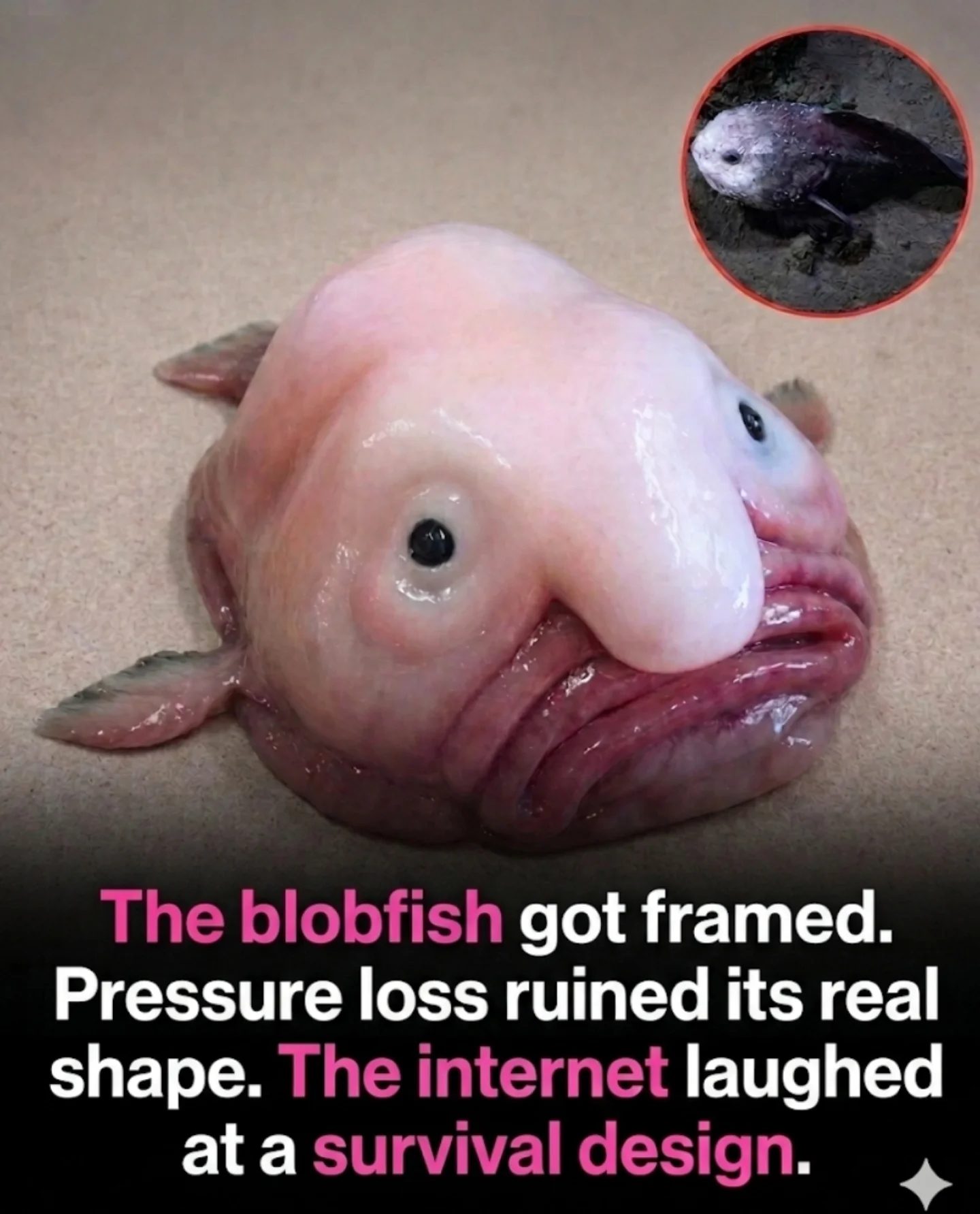
The blobfish (Psychrolutes marcidus) is a deep-sea creature that has garnered significant attention due to its unique appearance and unusual physiology. Despite being voted the "World's Ugliest Animal" by the Ugly Animal Preservation Society, the blobfish's true genius lies in its remarkable adaptations to its extreme environment.
Why this matters
Understanding the blobfish sheds light on the incredible strategies that deep-sea creatures employ to survive in one of the most inhospitable environments on Earth. The blobfish's physiology is a testament to the wonders of evolutionary engineering, illustrating how animals can adapt to extreme conditions in ways that might seem bizarre to human eyes.
Main discussion
The Blobfish's Natural Habitat and Appearance
The blobfish inhabits the deep sea, living at depths ranging from 2,000 to 4,000 feet (600 to 1,200 meters) off the coasts of Australia, Tasmania, and New Zealand. At these depths, the pressure is immense, up to 120 times greater than at the surface. This environment is characterized by near-freezing temperatures, extreme darkness, and a scarcity of food.
In its natural habitat, the blobfish does not resemble the gelatinous, drooping creature often seen in images. Instead, it has a more typical, sleek fish-like appearance, which allows it to glide effortlessly through the water. The blobfish's body is designed to conserve energy in this resource-scarce environment, where food is hard to come by and swimming requires considerable effort.
Unique Adaptations
Several unique adaptations make the blobfish well-suited to its deep-sea life:
No Swim Bladder
Most fish have a swim bladder, a gas-filled organ that helps them control their buoyancy. In the extreme pressures of the deep sea, this organ would implode. The blobfish, however, lacks a swim bladder. Instead, its body is composed of a gelatinous mass with a density slightly less than that of water. This allows the blobfish to float effortlessly above the ocean floor without expending energy on swimming.
Gelatinous Flesh
The blobfish's gelatinous flesh is another key adaptation. This soft, boneless body structure allows it to conserve energy by minimizing the need for muscle movement. Its low-density body lets it drift along the ocean floor, waiting for food to come its way. This strategy is crucial in an environment where movement is costly and resources are scarce.
Why Does the Blobfish Change Shape?
The blobfish’s distinctive appearance is often noted as it is a far cry from its natural state. When a blobfish is brought to the surface, it undergoes rapid decompression. This sudden pressure change causes its tissues to collapse and distort, resulting in the drooping, sad-faced "blob" that has become an internet sensation. This transformation is why the blobfish got framed. The miserable-looking, “melted” appearance only happens when the fish is dragged to the surface by humans, distorting its natural form.
Evolutionary Survival Design
The blobfish's appearance is a survival adaptation that allows it to thrive in its harsh environment. Its gelatinous body and lack of a swim bladder are not defects but ingenious solutions to the challenges of deep-sea living. These adaptations help the blobfish conserve energy and navigate its environment efficiently.
Internet Sensation
The blobfish's internet fame is largely due to its distorted appearance when brought to the surface. Its droopy, gelatinous form has often been the subject of amusement and curiosity, but it's important to recognize that this appearance is not its natural state. The blobfish’s genuine marvel lies in its remarkable survival design.
Practical tips
For those interested in marine life and deep-sea creatures, understanding the blobfish offers valuable insights. Here are some tips for appreciating and learning more about the blobfish and similar deep-sea creatures:
Research and Observation
- Understand the Environment: Learn about the deep sea's extreme conditions to better appreciate the adaptations of creatures like the blobfish.
- Observe Images and Videos: Look for images and videos that show the blobfish in its natural habitat to see its true form, not just the distorted version.
- Compare with Other Deep-Sea Creatures: Study other deep-sea creatures to see how they have adapted to similar challenges and how their survival strategies differ from the blobfish.
Conservation and Awareness
- Support Conservation Efforts: Organizations like the Ugly Animal Preservation Society work to raise awareness about lesser-known and often misunderstood creatures. Supporting such efforts can help preserve biodiversity and promote a deeper understanding of these animals.
- Spread Accurate Information: The blobfish’s story highlights the importance of accurate information. People are often misled by the distorted appearance of the blobfish. It is essential to spread accurate information about its natural form and adaptations to foster a more nuanced understanding of marine life.
Important takeaways
The blobfish is a fascinating example of how animals adapt to extreme environments. Its unique physiology, including its gelatinous body and lack of a swim bladder, allows it to conserve energy and thrive in the deep sea. The distorted appearance of the blobfish when brought to the surface has often been the subject of amusement, but it is essential to recognize that this is not its natural state. Understanding the true form and adaptations of the blobfish offers valuable insights into the wonders of deep-sea life and the incredible strategies that animals use to survive in the harshest conditions.
Conclusion
The blobfish is a remarkable example of how animals adapt to extreme environments. Its unique physiology and survival strategies are a testament to the wonders of evolutionary engineering. By understanding the blobfish, we gain a deeper appreciation for the diversity and ingenuity of marine life. The next time you see an image of a blobfish, remember that its true beauty lies in its remarkable adaptations to the deep sea, not just in its distorted appearance.
Questions readers ask
What makes the blobfish's appearance so unique and how does it aid in its survival?
The blobfish's gelatinous body is designed to withstand the immense pressures of the deep sea. Its lack of muscle mass reduces energy expenditure, making it an efficient deep-sea dweller. Its unique appearance is not just a curiosity but a vital survival strategy.
How does the blobfish conserve energy in its deep-sea environment?
The blobfish conserves energy by having a slow metabolism and minimal muscle mass. These adaptations allow it to survive in an environment where food is scarce. Additionally, its gelatinous structure requires less energy to maintain than a more muscular body would.
Why is the blobfish considered a marvel of evolutionary engineering?
The blobfish’s design is a marvel of evolutionary engineering because it has adapted to thrive in extreme conditions. By minimising energy expenditure and having a flexible body that can withstand immense pressure, the blobfish showcases how animals can evolve to succeed in seemingly inhospitable environments.
What are some of the extreme conditions the blobfish must endure in its deep-sea habitat?
The blobfish lives in extreme depths where temperatures are near freezing, and pressures are incredibly high. The complete lack of sunlight and scarcity of food make the deep sea one of the most challenging environments on Earth.
What role does the blobfish’s gelatinous structure play in its survival?
The blobfish’s gelatinous structure is crucial for its survival as it allows the fish to float effortlessly in the water. This adaptation conserves energy that would otherwise be used for swimming, making it well-suited for the low-energy deep-sea environment.
How does the blobfish's physiology compare to other deep-sea creatures?
The blobfish’s physiology is distinct from other deep-sea creatures due to its lack of muscle mass and gelatinous structure. While other deep-sea fish may have bioluminescent features or unique hunting adaptations, the blobfish’s strategy focuses on energy conservation and pressure resistance.
What can we learn from the blobfish about adaptation in extreme environments?
The blobfish teaches us that survival in extreme environments often involves unconventional strategies. Its design highlights the importance of energy conservation and structural adaptations in environments where resources are scarce and conditions are harsh.
Related deep dives
Similar reads based on topic and creator.




Recent articles
Fresh deep dives from the latest Reels we unpacked.




Comments
Be the first to comment.