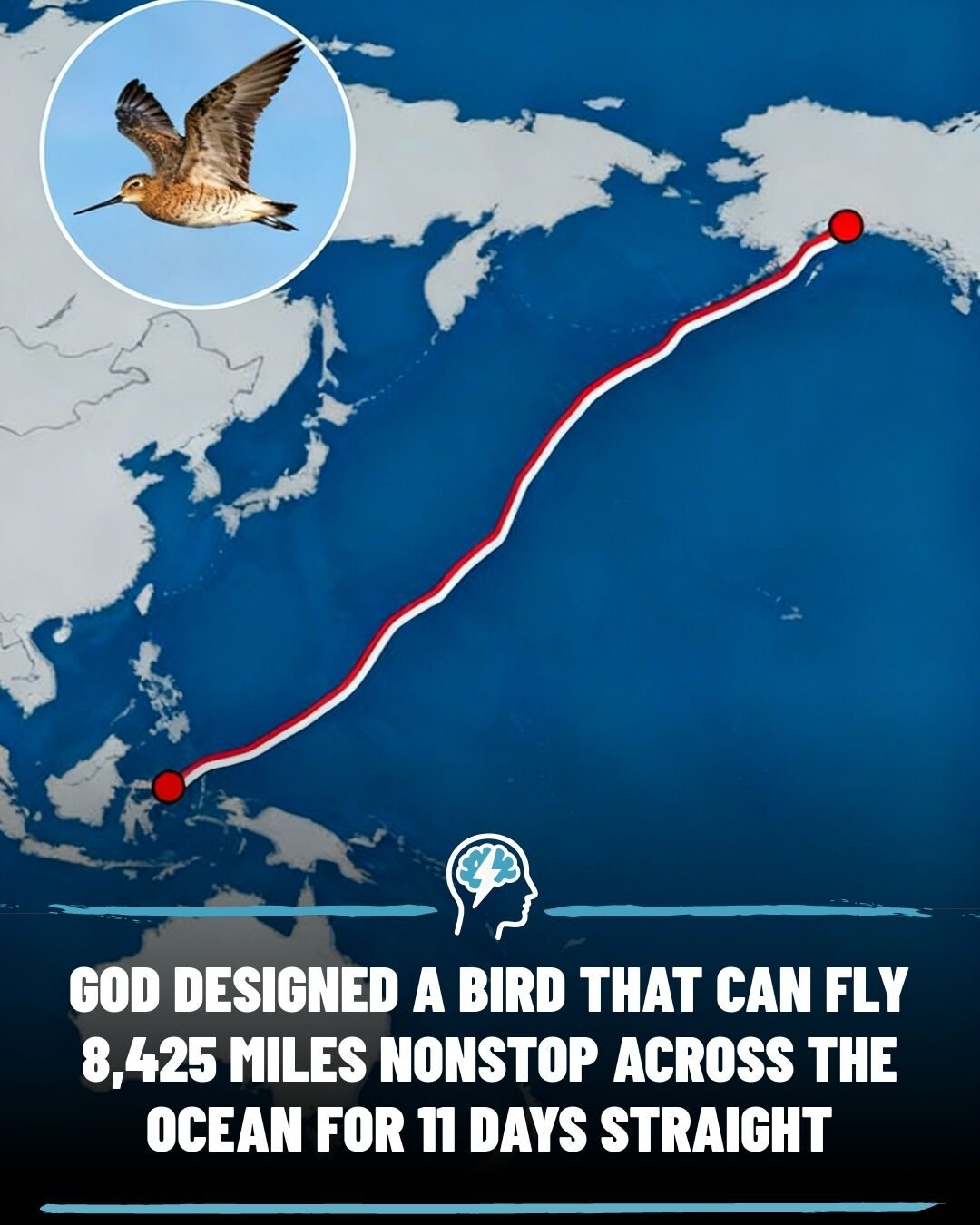
Juvenile Bar-Tailed Godwit Sets Record for Longest Non-Stop Flight
In October 2022, a five-month-old bar-tailed godwit made history by completing the longest non-stop flight ever documented by any animal. The juvenile bird flew an astonishing 13,560 kilometers (about 8,425 miles) from Alaska to Tasmania, navigating across the vast Pacific Ocean without a single stop for food, rest, or guidance from experienced adults. This extraordinary feat highlights the remarkable endurance, navigation, and adaptive capabilities of migratory birds, particularly the bar-tailed godwit.
The Magnitude of the Journey
The journey undertaken by this juvenile bar-tailed godwit is nothing short of remarkable. Flying non-stop for 11 days straight, the bird covered a distance of over 13,560 kilometers. This is not just a testament to the bird's physical endurance but also to its navigational prowess. The route crosses a vast ocean, presenting significant challenges in terms of navigation and survival.
Biological Adaptations for Long-Distance Flight
Bar-tailed godwits are known for their extraordinary ability to carry and utilize fat reserves. They carry the greatest fat loads of any migratory bird studied. However, storing such large amounts of fuel presents a unique challenge: space. To accommodate these energy reserves, the birds have evolved a remarkable solution. Before embarking on their journey, they actually shrink their digestive organs to make room for extra energy reserves. This adaptation allows them to store more fat, which is crucial for sustaining their journey.
Navigation without Guidance
One of the most astonishing aspects of this flight is that the bird had never made this journey before. Juvenile godwits navigate across open ocean on their first migration without any guidance from experienced adults. They rely on an innate sense of direction and navigation, an ability that is truly extraordinary. This instinctual knowledge allows them to successfully complete their migration journeys, despite the vast and featureless expanse of the ocean.
The Science Behind the Discovery
The record-breaking flight was meticulously documented by researchers from the U.S. Geological Survey, Max Planck Institute, and U.S. Fish and Wildlife Service. Using satellite tracking technology, these researchers were able to gather real data and rigorous study, providing concrete evidence of this incredible feat. This research not only confirms the bird's capabilities but also underscores the importance of continued study in understanding animal capabilities.
Why This Matters
The findings from this record-breaking journey remind us how much we still have to learn about animal capabilities. A creature weighing less than a pound accomplished what seems biologically impossible, flying for nearly two weeks while its body slowly consumed itself for fuel. This discovery expands our understanding of endurance, navigation, and adaptation in the animal kingdom. Every new finding like this pushes the boundaries of what we thought living things could achieve, providing valuable insights into the natural world.
Practical Tips for Bird Watchers
While you may not be able to witness such an incredible journey firsthand, there are ways to appreciate and support migratory birds:
- Support Conservation Efforts: Organizations like the U.S. Fish and Wildlife Service work to protect migratory birds and their habitats. Supporting these efforts can help ensure that future generations of bar-tailed godwits can make their historic journeys.
- Visit Bird Sanctuaries: Many areas along migratory routes are protected as sanctuaries or reserves. Visiting these places can give you a glimpse into the natural habitats of migratory birds and the challenges they face.
- Join Community Events: Bird watching clubs and conservation groups often organize events and activities to raise awareness about migratory birds. Participating in these events can be both educational and enjoyable.
Important Takeaways
- Endurance and Adaptation: The bar-tailed godwit's ability to fly non-stop for 11 days is a testament to its remarkable endurance and adaptive capabilities.
- Navigation: Juvenile godwits navigate across open ocean on their first migration without any guidance, highlighting their innate navigational skills.
- Biological Adaptations: These birds shrink their digestive organs to store more fat, which is crucial for sustaining their journey.
- Research: The use of satellite tracking technology provides valuable data and insights into the lives of migratory birds.
Conclusion
The journey of the juvenile bar-tailed godwit is a remarkable feat of endurance, navigation, and adaptation. This record-breaking flight not only highlights the incredible capabilities of migratory birds but also underscores the importance of continued research and conservation efforts. The next time you see a shorebird on a beach, consider the incredible journeys it may have completed, and appreciate the natural wonders of the world.
Questions readers ask
How does the juvenile bar-tailed godwit prepare for such a long flight?
To prepare, the juvenile bar-tailed godwit undergoes physiological changes to store fat and protein. It also undergoes hormonal adjustments for its long flight. The young bird does not need guidance from experienced adults, as it is genetically programmed to perform this remarkable journey.
Why does the bar-tailed godwit fly nonstop for such a long distance?
The bar-tailed godwit flies nonstop to avoid predators and conserve energy. Flying nonstop also allows the bird to take advantage of favorable winds and weather conditions, making the journey more efficient.
How does the bar-tailed godwit navigate during its long journey?
The bar-tailed godwit uses a combination of celestial cues, magnetic fields, and geographic landmarks for navigation. This sophisticated navigational system helps the bird maintain its course and reach its destination.
What challenges does the juvenile bar-tailed godwit face during its migration?
The juvenile bar-tailed godwit faces numerous challenges, including adverse weather conditions, predators, and the physiological demands of flying non-stop for extended periods. The bird must also contend with the loss of body mass and the need to conserve energy during its journey.
What adaptations help the bar-tailed godwit survive its long-distance flight?
Adaptations include an increased heart size, efficient oxygen utilization, and the ability to store large amounts of fat. These features enable the bar-tailed godwit to endure the physical demands of long-distance flight and survive without food or rest for extended periods.
What is the significance of the juvenile bird's flight from Alaska to Tasmania?
The juvenile bird's flight from Alaska to Tasmania is significant as it showcases the extraordinary capabilities of migratory birds. The journey highlights their resilience, endurance, and innate navigational skills, setting a new record for the longest non-stop flight by any animal.
What does the bar-tailed godwit eat before and after its long journey?
To build up energy reserves, the bar-tailed godwit feeds on crustaceans, mollusks, and worms in the mudflats for several weeks before its journey. After the flight, the bird restores its energy by feeding on the same types of food in the coastal areas of Tasmania.
Related deep dives
Similar reads based on topic and creator.




Recent articles
Fresh deep dives from the latest Reels we unpacked.




Comments
Be the first to comment.