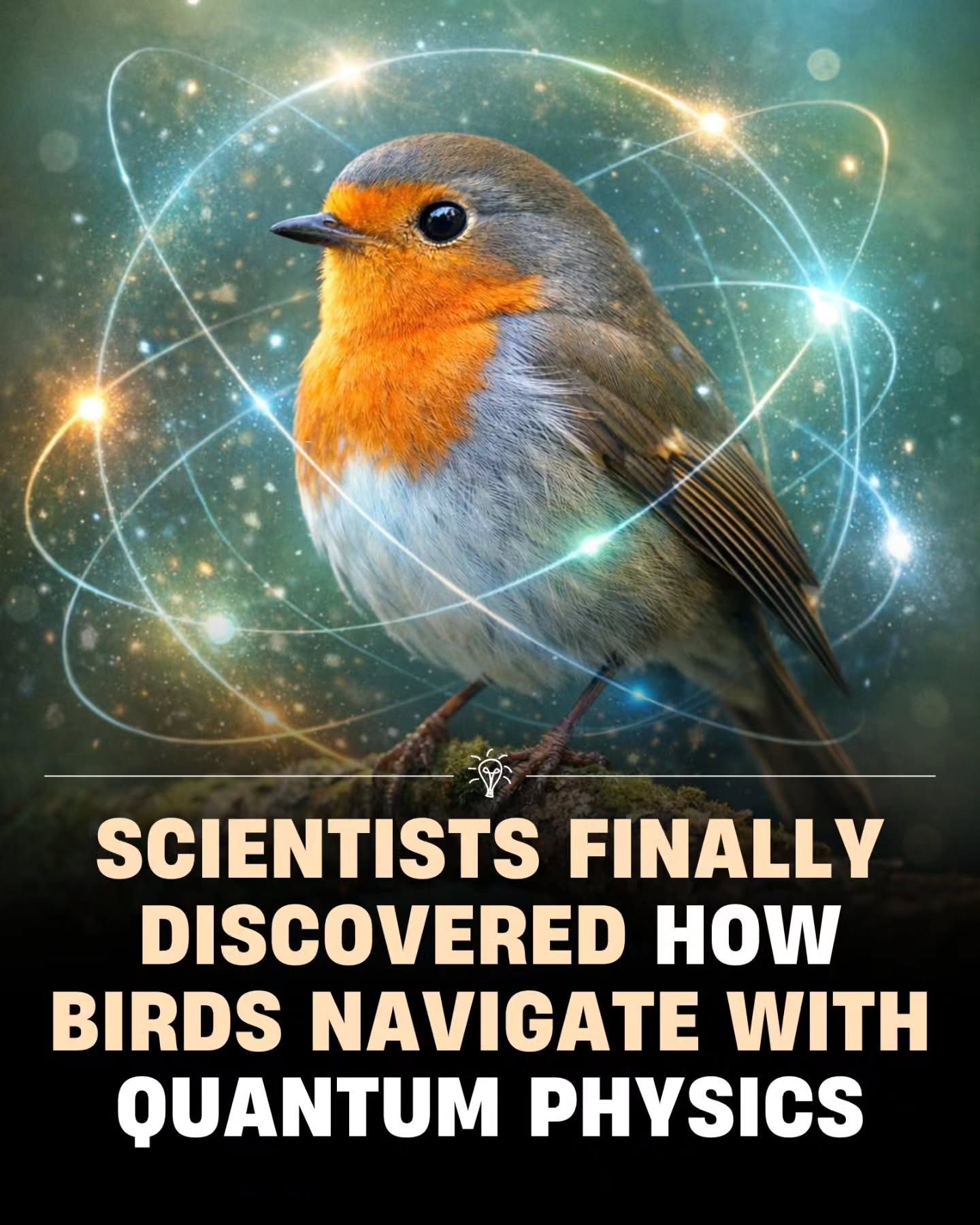
Bird navigation has long fascinated scientists and the public alike. The mystery of how birds traverse vast distances with remarkable precision has been a subject of study for decades. Initially, the prevailing theory suggested that birds used tiny iron crystals in their beaks as a form of natural compass. However, recent discoveries have revealed a much more complex and intriguing mechanism involving quantum physics.
The Early Theory of Iron Crystals
For many years, researchers believed that birds navigated using magnetoreception, a process facilitated by tiny particles of magnetite in their beaks. These particles, it was thought, interacted with the Earth's magnetic field, providing birds with a built-in compass. This theory seemed plausible and offered a straightforward explanation for birds' navigational abilities. However, as scientific understanding advanced, this theory began to show its limitations.
The Quantum Physics Breakthrough
Recent scientific advancements have uncovered a more sophisticated mechanism. It turns out that the real compass within birds is not located in their beaks but in their retinas. A protein called cryptochrome-4 plays a crucial role in this process. This protein is sensitive to Earth's magnetic field and can detect it through a process involving entangled electrons.
Cryptochrome-4 and Entangled Electrons
Entangled electrons are particles that remain connected so that the state of one can instantly affect the state of the other, no matter the distance between them. This phenomenon, a cornerstone of quantum physics, allows birds to perform a remarkable feat: they can literally "see" the Earth's magnetic field. The cryptochrome-4 protein in their retinas acts as a quantum sensor, using entangled electrons to detect the magnetic field and project it as a kind of heads-up display in their visual field. This ability provides birds with an incredibly accurate navigational tool that humans can only dream of.
Magnectic Field Visualization
The ability to visualize the magnetic field would revolutionize human navigation. Imagine being able to see a compass overlay on the world around you, much like how augmented reality displays information in real-time. Birds essentially have this capability, allowing them to navigate with unparalleled precision. This visualization makes it easier for them to orient themselves and plan their routes, even across vast, unfamiliar territories.
Why This Matters
Understanding how birds navigate is not just a fascinating scientific curiosity; it has practical implications as well. By studying the mechanisms birds use, scientists can develop new technologies and applications that could enhance human navigation. For instance, advanced sensors and navigation systems could be inspired by the quantum processes in bird retinas, leading to more precise and efficient tools for travel, exploration, and even urban planning.
Practical Tips for Applying These Insights
While we may not be able to replicate birds' exact navigation abilities, there are ways to incorporate these insights into our daily lives. Here are a few practical tips:
1. Enhance Situational Awareness
Use visual aids and digital overlays to enhance your understanding of your surroundings. While this doesn't involve quantum physics, it can improve your situational awareness, much like how birds see their environment.
2. Utilize Advanced Navigation Tools
Invest in advanced navigation tools that use the Earth's magnetic field for orientation. These tools, while not as sophisticated as birds' quantum sensors, can still provide valuable guidance.
3. Embrace Open-Source Technology
Open-source technology and community-driven projects often lead to innovative solutions. Participate in or support projects that aim to develop new navigation technologies inspired by natural phenomena, such as bird navigation.
4. Learn from Nature
Observe and learn from the natural world. Birds' navigation abilities are just one example of how nature has developed incredible solutions to complex problems. By studying these solutions, we can gain inspiration and insight for our own technological advancements.
5. Explore Quantum Technology
Quantum technology is a rapidly evolving field with the potential to revolutionize many aspects of our lives, including navigation. Stay informed about developments in quantum physics and how they might be applied to real-world problems.
Important Takeaways
The discovery that birds navigate using quantum physics has opened up new avenues for scientific research and technological development. Here are some key takeaways:
- Birds use a protein called cryptochrome-4 in their retinas to detect the Earth's magnetic field.
- Entangled electrons play a crucial role in this process, allowing birds to "see" the magnetic field.
- Understanding this mechanism has applications in enhancing human navigation technologies.
- Nature provides valuable insights and inspiration for technological advancements.
Conclusion
The way birds navigate using quantum physics is a remarkable example of how nature has perfected complex solutions to navigational challenges. By studying and understanding these processes, we can gain valuable insights that could lead to groundbreaking technologies and applications. Whether it's enhancing our situational awareness, utilizing advanced navigation tools, or embracing open-source technology, there are many ways to apply these insights to our daily lives. The next time you observe a bird soaring effortlessly through the sky, remember that it's not just a graceful sight—it's a testament to the incredible power of quantum physics in nature.
Questions readers ask
How do birds use quantum physics for navigation?
Birds employ a remarkable navigational system that utilizes quantum physics. A specific protein in their eyes functions as a quantum sensor, using entangled electrons to detect the Earth's magnetic field, enabling them to navigate accurately over long distances.
What is the role of the protein in a bird's eye in navigation?
The protein in a bird's eye acts as a quantum sensor. It leverages entangled electrons to sense the Earth's magnetic field, providing the bird with crucial navigational information, which is key to their precise travel over long distances.
What was the initial theory about how birds navigate?
The early theory proposed that birds used magnetoreception, facilitated by tiny particles of magnetite in their beaks, to interact with the Earth's magnetic field and act as a natural compass. However, this theory has since been revised with new discoveries.
How do birds detect the Earth's magnetic field?
Birds detect the Earth's magnetic field through a process involving a protein in their eyes that functions as a quantum sensor. This protein uses entangled electrons to sense the magnetic field, providing the bird with the ability to navigate accurately.
What are entangled electrons, and why are they important for bird navigation?
Entangled electrons are pairs of electrons that remain connected in such a way that the state of one can instantly affect the state of the other, no matter the distance between them. In birds, these entangled electrons are crucial for detecting the Earth's magnetic field, enabling precise navigation.
What has replaced the iron crystal theory in explaining bird navigation?
Recent discoveries have revealed that birds use a more complex mechanism involving quantum physics. Specifically, a protein in their eyes acts as a quantum sensor, utilizing entangled electrons to detect the Earth's magnetic field, replacing the earlier theory of iron crystals in their beaks.
Why is a bird's ability to navigate so remarkable?
Birds can traverse vast distances with incredible precision. Their remarkable navigational abilities are attributed to a sophisticated system involving quantum physics in their eyes, which allows them to detect the Earth's magnetic field and navigate accurately.
Related deep dives
Similar reads based on topic and creator.




Recent articles
Fresh deep dives from the latest Reels we unpacked.




Comments
Be the first to comment.