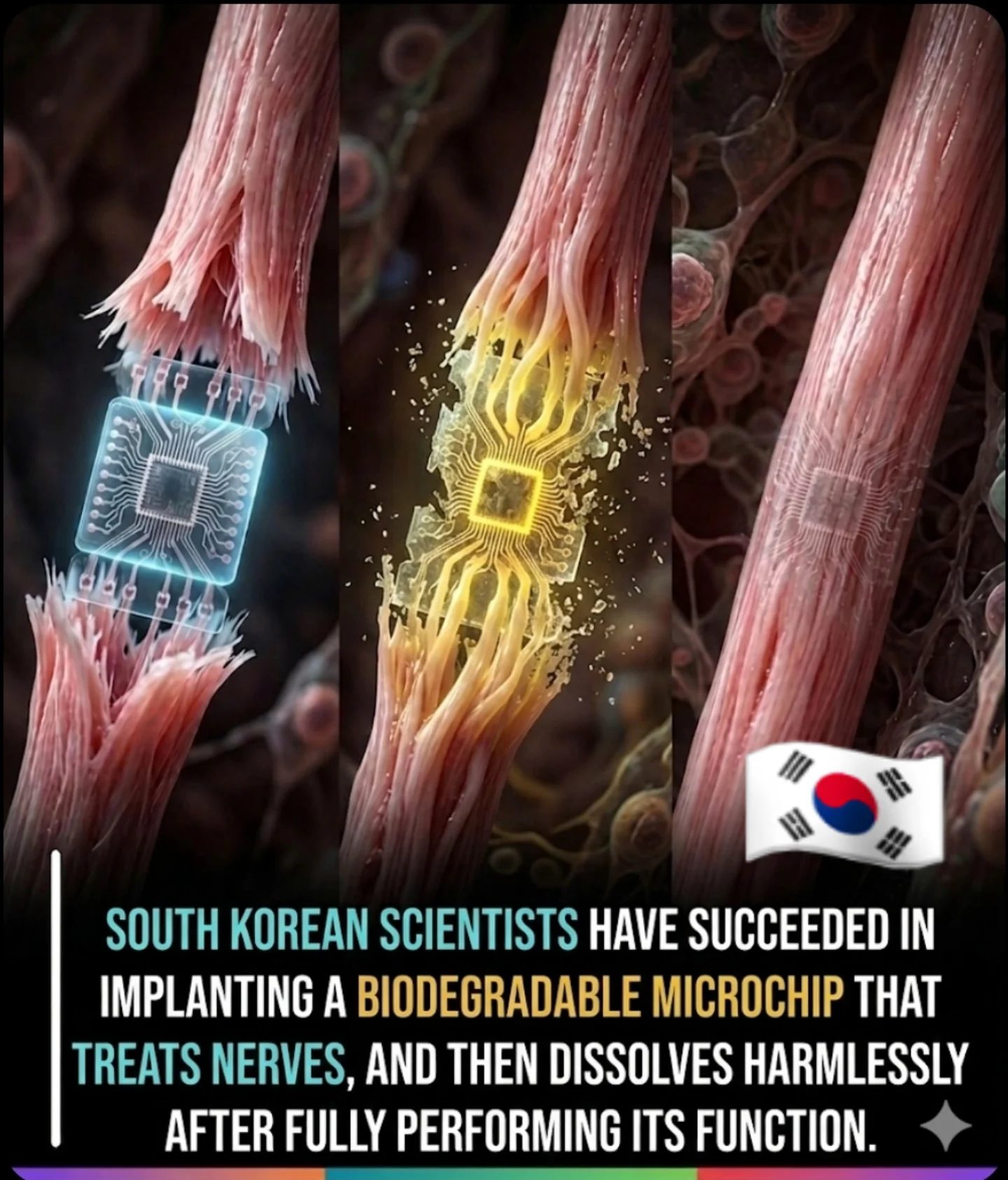
Biodegradable Microchips: The Future of Medical Implants
Biodegradable microchips represent a groundbreaking advancement in medical technology, particularly in the realm of nerve treatment. Traditionally, electronic implants like pacemakers or nerve stimulators pose significant challenges. These devices often require a second surgery for removal or remain in the body indefinitely, which can lead to long-term risks such as infection or tissue damage. South Korean researchers have developed a revolutionary solution using biocompatible materials, opening new possibilities for medical implants.
Context/Why This Matters
The development of biodegradable microchips is a significant milestone in medical technology. These implants are designed to perform their medical functions and then naturally decompose, eliminating the need for removal surgeries and reducing the risk of long-term complications. This innovation has the potential to transform the way we treat various medical conditions, particularly those involving nerve damage.
Main Discussion
The Science Behind Biodegradable Microchips
Biodegradable microchips are made from biocompatible materials such as silk proteins and thin silicon membranes. These materials are designed to perform their medical tasks and then naturally break down. The process involves three key stages:
- Activation: The microchip bridges a damaged nerve, sending electrical pulses to accelerate healing.
- Dissolution: Once the nerve has regenerated, the chip begins to fragment and dissolve into the surrounding tissue.
- Absorption: The components are safely absorbed or excreted by the body, leaving the healed nerve intact without any foreign residue.
Applications and Benefits
The applications of biodegradable microchips are vast. They can be used to treat a variety of medical conditions, including:
- Nerve Damage: By bridging damaged nerves and sending electrical pulses, these microchips can accelerate the healing process.
- Muscle Stimulation: They can be used to stimulate muscle activity, aiding in the recovery from injuries or conditions like paralysis.
- Chronic Pain: Microchips can provide targeted pain relief by modulating nerve signals.
Advantages Over Traditional Implants
Biodegradable microchips offer several advantages over traditional implants:
- Reduced Risk of Infection: Since the microchips dissolve after performing their function, the risk of infection is significantly reduced.
- No Need for Removal Surgery: Traditional implants often require a second surgery for removal, which can be invasive and risky. Biodegradable microchips eliminate this need.
- Minimal Tissue Damage: The natural breakdown of the microchips ensures minimal tissue damage, promoting faster recovery.
Key Components and Materials
The key components of biodegradable microchips include silk proteins and thin silicon membranes. Silk proteins are known for their biocompatibility and biodegradability, making them an ideal material for medical implants. Thin silicon membranes provide the necessary electrical conductivity for transmitting signals to nerves and muscles.
Practical Tips
For Patients
If you are considering a biodegradable microchip for a medical condition, here are some practical tips:
- Consult Your Doctor: Discuss the benefits and potential risks with your healthcare provider. They can provide personalized advice based on your medical history.
- Follow Post-Implantation Care Instructions: Even though the microchip dissolves, it's important to follow post-implantation care instructions to ensure proper healing.
For Medical Professionals
Medical professionals can stay updated on the latest developments in biodegradable microchip technology by:
- Attending Conferences and Workshops: These events provide valuable insights into the latest research and clinical applications.
- Reading Scientific Journals: Stay informed about the latest studies and advancements in medical technology.
Important Takeaways
- Innovative Technology: Biodegradable microchips represent a significant advancement in medical technology, offering a safer and more efficient alternative to traditional implants.
- Reduced Risks: These microchips reduce the risk of infection, eliminate the need for removal surgery, and minimize tissue damage.
- Widespread Applications: They can be used to treat a variety of medical conditions, including nerve damage, muscle stimulation, and chronic pain.
- Future Potential: The development of biodegradable microchips paves the way for "smart" internal bandages that treat injuries from the inside out and then simply vanish.
Conclusion
Biodegradable microchips are a groundbreaking development in the field of medical technology. By using biocompatible materials and a three-stage lifecycle, these microchips offer a safer and more efficient alternative to traditional implants. They have the potential to transform the way we treat various medical conditions, particularly those involving nerve damage. As research continues, the applications and benefits of biodegradable microchips are likely to expand, paving the way for a new era in medical treatment.
Questions readers ask
What are biodegradable microchips and how do they aid in nerve treatment?
Biodegradable microchips are tiny electronic devices designed to treat nerve damage by bridging injured nerves and delivering electrical pulses to promote healing. Unlike traditional implants, they dissolve and are absorbed by the body after their purpose is fulfilled, eliminating the need for removal surgeries and reducing long-term risks.
How do biodegradable microchips compare to traditional nerve treatment methods?
Traditional nerve treatment methods often involve implants that require a second surgery for removal or remain in the body, posing risks of infection or tissue damage. Biodegradable microchips, however, offer a non-invasive alternative by dissolving and being absorbed by the body post-treatment, simplifying the process and reducing risks.
What materials are used to create biodegradable microchips?
Biodegradable microchips are crafted from biocompatible materials that the body can safely absorb. These materials are designed to be non-toxic and cause minimal discomfort or irritation, making them suitable for medical applications, especially in nerve regeneration.
What are the origins of biodegradable microchip technology in nerve treatment?
South Korean researchers, notably IQUTech, have pioneered the development of biodegradable microchips for nerve treatment. This innovation represents a significant leap in medical technology by addressing the challenges posed by traditional electronic implants.
What happens to the microchips after they have served their purpose in nerve treatment?
After the microchips have facilitated nerve regeneration and healing, they gradually dissolve and are absorbed by the body. This process eliminates the need for surgical removal and reduces the risk of long-term complications associated with permanent implants.
What are the potential benefits of biodegradable microchips in nerve tissue regeneration?
Biodegradable microchips provide several benefits, including targeted delivery of electrical pulses to promote nerve healing, reduced risk of infection and tissue damage, and a non-invasive removal process through natural absorption by the body.
Related deep dives
Similar reads based on topic and creator.




Recent articles
Fresh deep dives from the latest Reels we unpacked.




Comments
Be the first to comment.