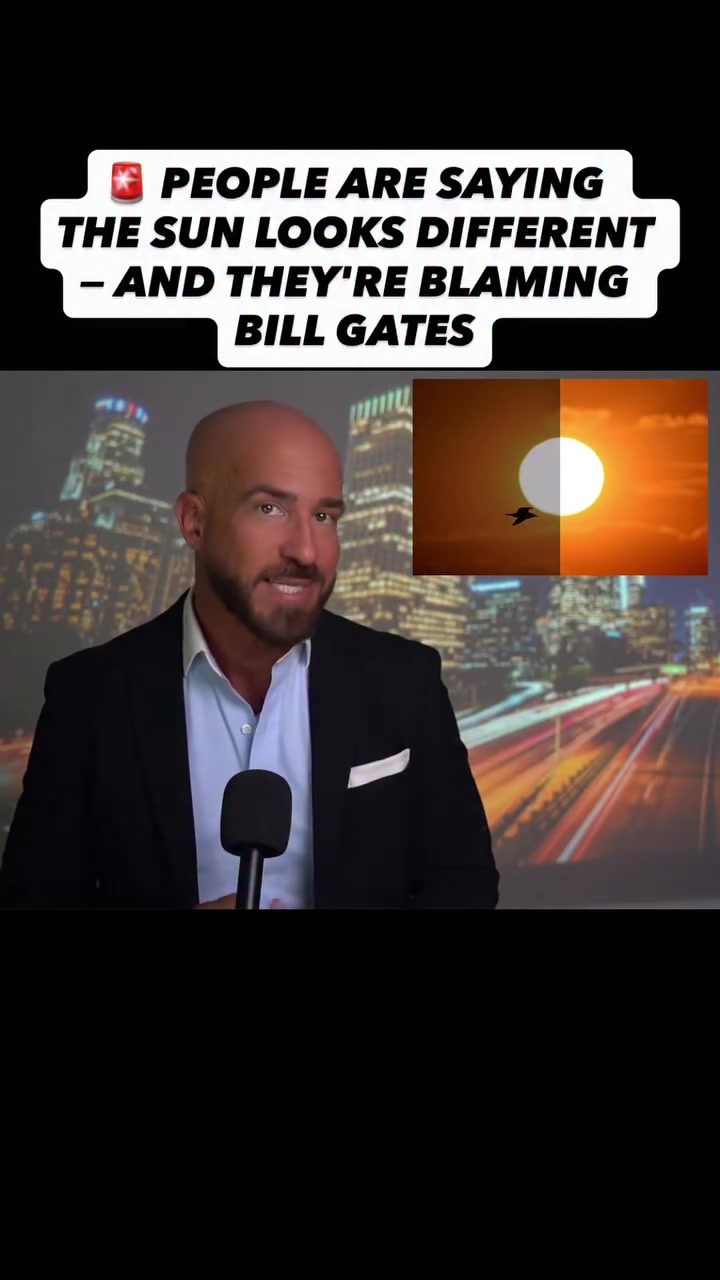
How the Sun Looks Different, and Why Some People Blame Bill Gates
People are noticing changes in the sun's appearance, describing it as whiter and harsher, more like an LED light than the warm yellow sun of their past. This observation has sparked debates and even conspiracy theories, with some people blaming Bill Gates for the perceived changes. Let's explore the details behind these claims and the scientific context surrounding them.
Why This Matters
The idea that the sun's appearance has changed is not just a matter of personal observation. It touches on broader discussions about climate change, solar geoengineering, and the role of influential figures in shaping our planet's future. Understanding these dynamics is crucial for navigating the complex landscape of environmental concerns and technological interventions.
The Changing Perception of the Sun
Many people report that the sun looks different now compared to what they remember from their past. They describe it as appearing whiter and harsher, almost like an LED spotlight. This perception has led to a variety of speculations and theories about why the sun might look this way.
Reports from the Public
Public observations often describe the sun as having a different hue and intensity. Some people notice a whiter, more intense light, which they compare to the harshness of an LED spotlight. This change is particularly noticeable when compared to the warmer, yellowish tint of the sun they remember from their childhood.
Scientific Explanations
Scientists attribute the perceived changes in the sun's appearance to several factors. Atmospheric conditions, pollution, and climate factors can all influence how the sun looks and feels. Additionally, advancements in camera technology have made it possible to capture and analyze the sun's light in greater detail, which might contribute to the perception of change.
The Role of Bill Gates and Solar Geoengineering
The discussion about the sun's appearance has taken a controversial turn with the involvement of Bill Gates and the concept of solar geoengineering.
Solar Geoengineering
Solar geoengineering involves reflecting a portion of sunlight away from Earth to cool the planet. This idea has been discussed by some of the world's most powerful people as a potential solution to mitigate the effects of climate change. The concept gained significant attention when Bill Gates became associated with funding research into this area.
Gates' Involvement
Bill Gates has backed experimental research into solar geoengineering, which aims to create a massive chemical cloud that could cool the Earth. This involves injecting millions of tons of light-reflecting particles into the stratosphere using thousands of planes. The goal is to mimic the effects of a giant volcanic eruption, which is known to cool the Earth by blocking sunlight.
Controversy and Concerns
The idea of solar geoengineering is highly controversial. Critics raise ethical and practical concerns about who gets to decide how much sunlight reaches the planet. The involvement of powerful figures like Bill Gates in these discussions adds another layer of complexity, as it raises questions about the influence of wealthy individuals on global environmental policies.
Ethical Considerations
One of the primary concerns is who gets to decide how much sunlight reaches the planet. This decision has far-reaching implications for ecosystems, agriculture, and human health. The involvement of powerful individuals and corporations in these discussions raises questions about accountability and transparency.
Practical Concerns
The technical feasibility and potential side effects of solar geoengineering are also areas of concern. Injecting particles into the stratosphere could have unintended consequences, such as altering weather patterns or affecting the ozone layer. Furthermore, the long-term effects of such interventions are not fully understood, making it a risky endeavor.
Practical Tips for Understanding the Sun's Appearance
If you're noticing changes in the sun's appearance, here are some practical tips to help you understand what you're seeing:
- Observe the Sun Safely: Never look directly at the sun without proper eye protection. Use solar filters or specialized equipment designed for safe solar observation.
- Compare with Old Photos: Look at old photographs or videos to see if the sun's appearance has changed over time. This can provide a visual reference for comparing current observations.
- Consider Atmospheric Conditions: Factors like pollution, haze, and weather conditions can affect how the sun looks. Pay attention to these variables when making observations.
- Stay Informed: Keep up with scientific research and discussions about climate change and solar geoengineering. Understanding the broader context can help you interpret what you're seeing.
Important Takeaways
- Public Observations: Many people notice that the sun looks whiter and harsher, similar to an LED spotlight.
- Scientific Explanations: Atmospheric conditions, pollution, climate factors, and advances in camera technology contribute to the perceived changes.
- Solar Geoengineering: The idea of reflecting sunlight to cool the Earth is highly controversial and involves complex ethical and practical considerations.
- Bill Gates' Involvement: Gates has backed research into solar geoengineering, raising questions about the influence of powerful individuals on global environmental policies.
Conclusion
The perception that the sun looks different has sparked a range of discussions and theories, from personal observations to high-profile debates about solar geoengineering. While scientific explanations provide some context, the involvement of figures like Bill Gates adds layers of complexity and controversy. Understanding these dynamics is essential for navigating the complex landscape of environmental concerns and technological interventions. Whether you're a casual observer or deeply engaged in these discussions, staying informed and critically evaluating the evidence can help you form a balanced perspective on this intriguing topic.
Questions readers ask
Why do some people think the sun looks different now?
Some people have noticed that the sun appears whiter and harsher, similar to an LED light, which has led to speculation about changes in its appearance. This perception has sparked conversations and theories about what might be causing this visual shift.
What is Bill Gates' involvement in the perception of the sun's appearance change?
Some people have pointed to Bill Gates' advocacy for technological interventions to address climate change as a potential reason for the perceived changes in the sun's appearance. However, it is important to note that this is not based on scientific evidence.
Is there a scientific reason for the sun's perceived harshness?
Scientific explanations for the sun's perceived harshness often point to atmospheric conditions and technological advancements. Changes in the Earth's atmosphere, such as increased pollution or changes in aerosol concentrations, can alter how sunlight is scattered and perceived by our eyes.
What is solar geoengineering and how does it relate to perceptions of the sun's appearance?
Solar geoengineering refers to deliberate interventions aimed at reflecting sunlight away from the Earth to counteract global warming. Some people have linked these concepts to the perceived changes in the sun's appearance, but again, these are not proven by scientific evidence.
How do atmospheric conditions affect the appearance of the sun?
Atmospheric conditions, including pollution levels, humidity, and the presence of particulates, can significantly affect how sunlight reaches our eyes. These factors can scatter and absorb different wavelengths of light, leading to a perceived change in the sun's color and intensity.
Are there any technological factors influencing the perception of the sun's appearance?
Advances in technology, such as the increased use of LED lighting and digital devices, have changed our visual environment and may influence how we perceive natural light sources like the sun. Additionally, improvements in camera technology and image processing can capture and enhance differences in sunlight that might go unnoticed by the human eye.
What should we consider when discussing the sun's changing appearance?
It's essential to focus on reliable information and scientific explanations when discussing perceived changes in the sun's appearance. While personal observations are valuable, they should be contextualized with scientific data and expert analysis to understand the true nature of changes in our planet's atmosphere and sunlight.
Recent articles
Fresh deep dives from the latest Reels we unpacked.




Comments
Be the first to comment.