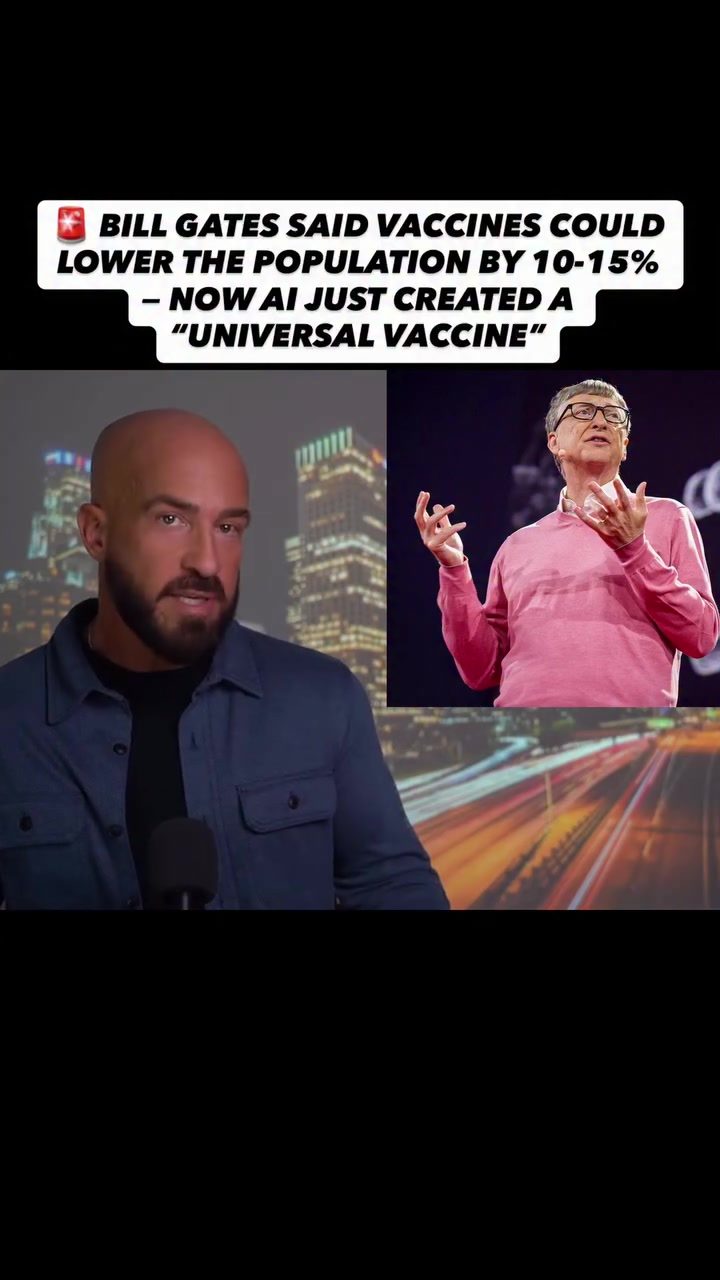
Misleading claims about vaccines, population control, and AI
In recent discussions, the notion of population control through vaccinations has resurfaced, particularly in relation to statements made by Bill Gates. Gates has been quoted as saying, "If we do a really great job on new vaccines, health care, reproductive health services, we could lower [the population] by perhaps 10 or 15 percent." This statement, taken out of context, has sparked debates and misinformation about the true intentions behind vaccines and population management.
Context: Population growth and healthcare initiatives
The concern around population growth is not new. Gates pointed out that the world's population, which was around 6.8 billion at the time of his speech, was projected to reach about 9 billion. His comments were part of a broader discussion on global health initiatives, including improvements in vaccines, healthcare, and reproductive health services. The goal, as Gates articulated, was to enhance overall health outcomes, which could naturally lead to a reduction in population growth rates. This is a common demographic trend where improved health and healthcare services often result in lower birth rates.
Gates also highlighted his focus on innovation, particularly in areas like vaccines and gene editing. He described these as part of his "second career," emphasizing the potential of technological advancements to address significant health challenges. This includes working on cures for diseases like polio, HIV, and sickle cell anemia, acknowledging that while some diseases are close to eradication, others require new scientific breakthroughs. Gates' emphasis on innovation underscores the role of technology in advancing healthcare, not just in controlling population growth.
Addressing misinterpretations
The misinterpretation of Gates' statements often arises from a literal reading of his words without considering the broader context. When he mentioned reducing the population by 10 or 15 percent, he was referring to the natural demographic shifts that occur with improved healthcare and reproductive services, not a sinister plot to reduce the population through vaccines. This nuance is often overlooked, leading to conspiracy theories that suggest vaccines are a tool for population control.
The role of artificial intelligence in vaccine development
The development of vaccines has significantly benefited from advancements in technology, particularly artificial intelligence (AI). Researchers from the University of Cambridge and the University of Southampton have developed what is being called a "universal vaccine." This vaccine is designed to provide protection against a wide range of coronaviruses, including COVID-19 and its variants. Unlike traditional vaccines, which often require updates as viruses mutate, this AI-designed vaccine aims to stay effective against multiple variants and even future coronavirus threats.
The creation of this universal vaccine involved using AI to analyze genetic data from various coronaviruses. This analysis helped scientists develop a super antigen—a component of the vaccine that targets features common across the entire virus group. This approach represents a significant leap forward in vaccine technology, leveraging AI to create more robust and adaptive immunizations.
Practical tips for understanding vaccine information
Navigating the landscape of vaccine information can be challenging, especially with the proliferation of misinformation. Here are some practical tips to help you stay informed:
-
Seek reliable sources: Look for information from reputable sources such as the World Health Organization (WHO), Centers for Disease Control and Prevention (CDC), and peer-reviewed scientific journals.
-
Understand the context: Always consider the broader context of statements made by public figures. Quotes can often be taken out of context, leading to misinterpretations.
-
Evaluate the science: Check the scientific basis of claims. Look for evidence from clinical trials and research studies to support any statements about vaccines and their effects.
-
Verify claims: Use fact-checking websites to verify information and debunk myths. Organizations like Snopes and FactCheck.org can be valuable resources.
Important takeaways
The misinterpretation of Bill Gates' statements about vaccines and population control highlights the importance of context and nuance in understanding complex issues. Vaccines are a crucial tool in global health initiatives, aimed at improving health outcomes and reducing disease burden. The development of AI-designed vaccines represents a promising advancement in vaccine technology, offering the potential for more effective and adaptable immunizations.
Conclusion
Vaccines play a critical role in improving global health outcomes, and the development of new technologies like AI-designed vaccines holds great promise. It is essential to approach discussions about vaccines with a clear understanding of the context and scientific evidence. Misinterpretations and conspiracy theories can obscure the true benefits of vaccines and hinder efforts to improve public health. By staying informed and evaluating information critically, we can better appreciate the role of vaccines in saving lives and enhancing overall health.
Questions readers ask
Did Bill Gates suggest that vaccines are used for population control?
No, Bill Gates has not suggested that vaccines are used for population control. He has advocated for improved healthcare and reproductive health services, which he believes could lead to lower birth rates naturally, not through direct population control measures.
What did Bill Gates mean by lowering the population through vaccines?
In 2015, Bill Gates discussed how improved healthcare and reproductive health services, including vaccines, could lead to a reduction in birth rates. By promoting better health, the need for large families decreases, which in turn could lower overall population growth by about 10-15%.
Does Bill Gates advocate for a 'universal vaccine'?
Bill Gates has spoken about the development of a universal vaccine, particularly in the context of diseases like influenza. This would be a vaccine that provides broad protection against many strains of a virus, reducing the need for annual vaccinations and simplifying public health efforts.
How does Bill Gates view the relationship between vaccines and population management?
Bill Gates sees vaccines as a tool for improving global health, which in turn can lead to more people choosing to have fewer children. This is a natural consequence of better health and living conditions, not a direct result of the vaccines themselves.
What are Bill Gates' global health initiatives focused on?
Bill Gates' global health initiatives focus on innovation in healthcare and vaccines as a means of improving health outcomes, reducing child mortality, and empowering communities to make informed decisions about family planning. These initiatives are designed to enhance health outcomes and quality of life, not to control populations.
Why does Bill Gates believe improving health services can lower birth rates?
Bill Gates believes that when people have access to better healthcare, they experience improved health outcomes and reduced infant mortality. This can then lead to more people choosing to have smaller families, as they are less reliant on having multiple children to ensure survival of some.
What has Bill Gates said about vaccines and innovation?
Bill Gates has frequently emphasized the importance of innovation in vaccine development, stating that new vaccines can provide better protection against diseases. This innovation can lead to improved health outcomes and a reduction in the spread of diseases, which can contribute to lower birth rates naturally.
Recent articles
Fresh deep dives from the latest Reels we unpacked.




Comments
Be the first to comment.