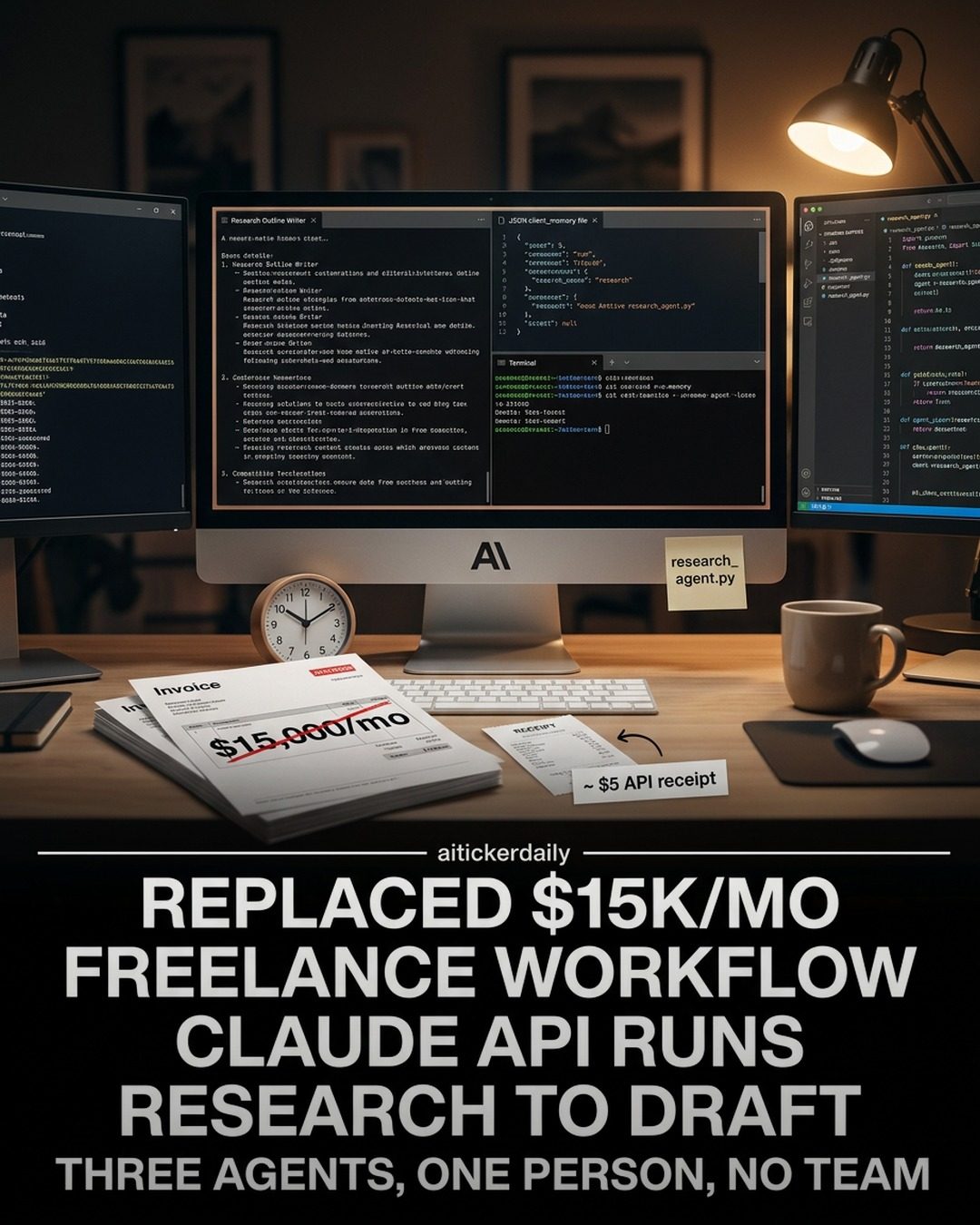
AI-Powered Content Creation Workflow
AI-powered content creation workflows are transforming the way content is produced. This workflow leverages AI agents to automate various stages of content creation, from research to drafting, saving significant time and resources. The system aims to replace a $15,000 per month freelance workload with a single person and three AI agents. Here's a breakdown of how this innovative process works.
Context / Why this matters
AI-powered content creation is a game-changer in the digital age. By automating repetitive tasks, AI allows for faster, more efficient content production. This is particularly impactful in fields where timely content is crucial, such as journalism, marketing, and academic writing. The ability to replace a $15,000 per month freelance workload with AI agents highlights the potential cost savings and increased productivity that AI can bring to content creation workflows.
Main discussion
The Three AI Agents
The workflow uses three specialized AI agents: a research agent, an outline agent, and a writer agent. Each agent is designed to handle a specific part of the content creation process, ensuring that the output is cohesive and of high quality.
Research Agent
The research agent is tasked with gathering and organizing information. It can scour the web for relevant data, ensuring that the content is well-researched and accurate. This agent is particularly useful for creating detailed and informative content, such as research papers, blog posts, and articles.
Outline Agent
Once the research agent has gathered the necessary information, the outline agent steps in to structure the content. It creates a coherent outline that guides the writing process, ensuring that the final draft is well-organized and easy to follow. This step is crucial for maintaining clarity and coherence in long-form content.
Writer Agent
The writer agent is responsible for drafting the content. Using the structured outline and the gathered information, it generates a complete draft. This agent can handle various writing styles and tones, making it versatile for different types of content, from formal reports to creative writing.
The Workflow in Action
The workflow begins with the research agent running the necessary queries to gather data. The gathered data is then passed to the outline agent, which structures the information into a comprehensive outline. Finally, the writer agent uses this outline to draft the content, ensuring a seamless and efficient process.
Memory and Context
The system leverages JSON memory for retainers, which allows it to store and recall information from previous tasks. This memory feature ensures that the AI agents can build on previous work, maintaining consistency and reducing redundancies. The context.md moat is also an important aspect of the workflow, as it helps in creating a secure and private environment for storing and accessing sensitive information.
Practical tips
Optimizing AI Agents
To get the most out of the AI-powered content creation workflow, it is important to optimize each agent's performance. Regular updates and fine-tuning can help improve the accuracy and efficiency of the research, outline, and writer agents.
Research Agent
Ensure that the research agent is programmed to search a wide range of reliable sources. Regularly update the search parameters to include the latest and most relevant information.
Outline Agent
Regularly review the outlines generated by the agent to ensure they are logical and coherent. Make adjustments as needed to improve the structure of the content.
Writer Agent
Fine-tune the writer agent to accommodate different writing styles and tones. Provide feedback on the generated drafts to improve the quality of the output.
Leveraging JSON Memory
Make the most of the JSON memory for retainers by storing and recalling important information. This can save time and effort, as the AI agents can build on previous work without starting from scratch.
Utilizing the Weekday AI Briefing
Stay updated with the fast-moving world of AI by following the weekday AI briefing. This daily update provides valuable insights into the latest developments in AI models, chips, deals, and policy, helping you stay ahead in the rapidly evolving field of AI.
Important takeaways
AI-powered content creation workflows offer a fast and efficient way to produce high-quality content. By leveraging three specialized AI agents—the research, outline, and writer agents—the workflow can automate the entire content creation process, from research to drafting. This system not only saves time and resources but also ensures that the content is well-researched, well-structured, and of high quality.
The use of JSON memory for retainers and the context.md moat further enhances the efficiency and security of the workflow. Regular updates and fine-tuning of the AI agents can help optimize their performance, ensuring that the final output meets the desired standards.
Conclusion
AI-powered content creation workflows are revolutionizing the way content is produced. By automating various stages of the process, these workflows offer significant cost savings and increased productivity. The ability to replace a $15,000 per month freelance workload with three AI agents highlights the potential of this innovative approach.
Embrace the power of AI in content creation by leveraging specialized AI agents, optimizing their performance, and staying updated with the latest developments in AI. By doing so, you can produce high-quality content efficiently and effectively, staying ahead in the competitive world of content creation.
Questions readers ask
How do AI agents streamline content creation workflows?
AI agents automate and optimize various stages of content creation, from research to writing. By handling tasks like gathering information, creating outlines, and drafting content, these agents enable faster and more efficient production, significantly reducing the time and resources required.
What specific roles do the AI assistants play in this process?
In the AI-powered content creation workflow, there are three specialized AI assistants: one for research, one for outlining, and one for writing. Each assistant is tailored to handle specific tasks, ensuring a seamless and efficient content creation process.
How does this system compare to hiring a freelance writer?
The AI-powered content creation system is designed to replace the workload of a $15,000 per month freelance writer. By using three AI assistants and one human operator, this system can handle the same tasks at a fraction of the cost, making it a cost-effective solution for content creation.
Which industries can benefit from using AI content assistants?
AI content assistants are beneficial across various industries, especially those that require timely and high-quality content. Key industries include journalism, marketing, and academic writing, where the ability to produce content quickly and efficiently is crucial.
What is the role of a human in an AI-powered content creation workflow?
In this system, the human operator works alongside the three AI assistants to oversee the process and ensure the quality of the final output. Their role includes providing guidance, making critical decisions, and adding a human touch to the content, ensuring that it meets the desired standards.
Can AI content assistants replace all aspects of content creation?
AI content assistants handle most aspects of content creation, from research to drafting. However, a human is still needed for creative direction, strategic decision-making, and final approval. The AI's capabilities are best used to streamline the process, allowing humans to focus on higher-level tasks.
What are the key benefits of using AI for content creation?
Using AI for content creation offers several benefits, including faster production times, cost savings, and the ability to handle large volumes of work. By automating repetitive tasks, AI allows for more efficient content generation, making it an attractive option for industries with high content demands.
Related deep dives
Similar reads based on topic and creator.




Recent articles
Fresh deep dives from the latest Reels we unpacked.




Comments
Be the first to comment.