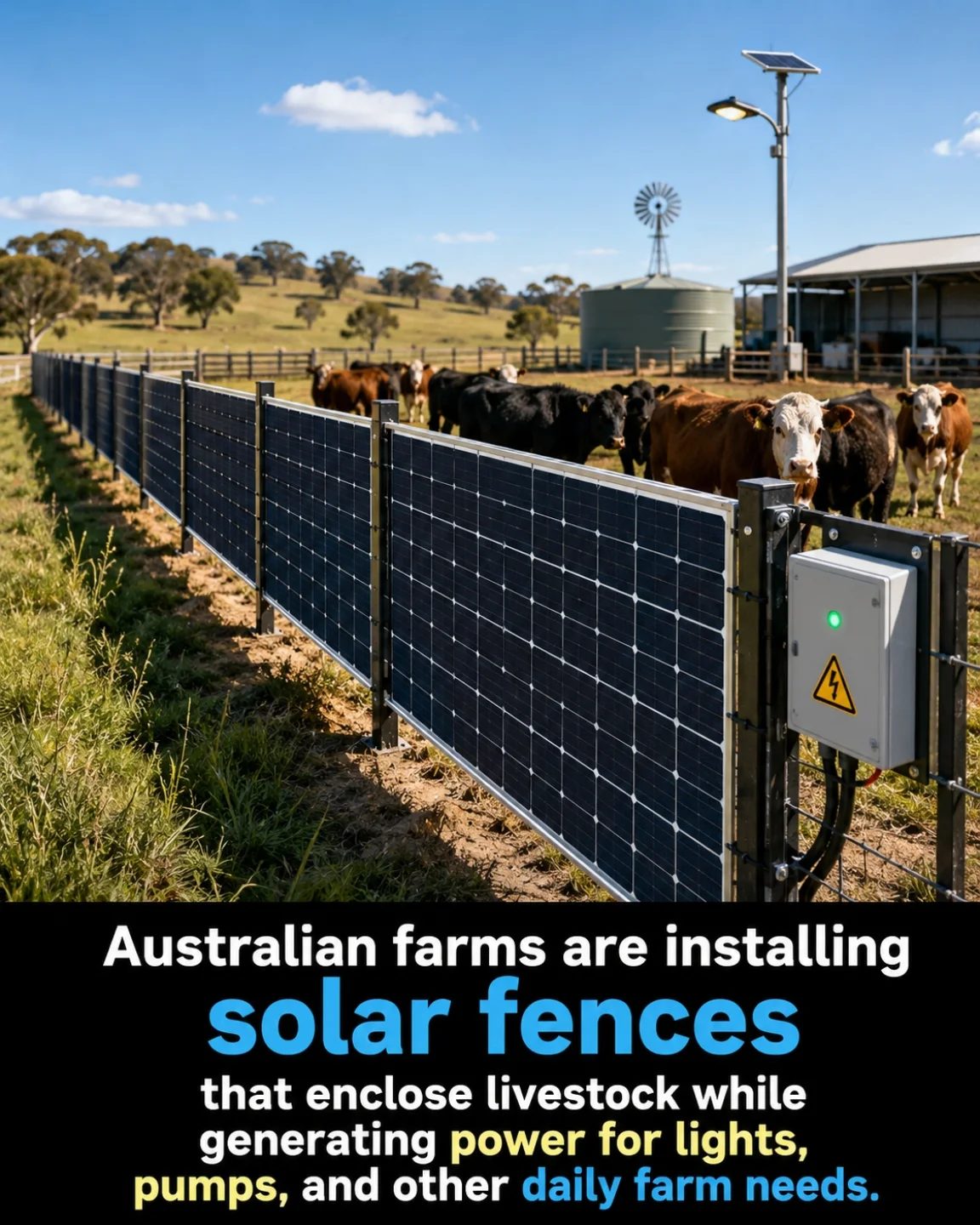
Solar Farm Fencing
Solar fences are becoming a popular innovation on Australian farms. These fences not only serve the traditional purpose of enclosing livestock, but they also generate power from sunlight, aiding in daily farm operations.
Why This Matters
Solar fencing offers a sustainable and cost-effective solution for farms, particularly in remote or off-grid locations where accessing conventional power sources can be challenging. By harnessing solar energy, farms can reduce their reliance on diesel generators and grid electricity, leading to significant savings in operational costs. Additionally, the environmental benefits of using renewable energy cannot be overlooked, as it helps lower carbon emissions and promotes sustainable farming practices.
Main Discussion
How Solar Fences Work
Solar fences operate by integrating solar panels into traditional fencing structures. These panels convert sunlight into electricity, which can then be used to power various agricultural needs. The electricity generated by the solar panels is stored in batteries for use during periods of low sunlight or at night. This ensures a steady power supply for farm operations.
Key Applications
The power generated by solar fences is utilized for a variety of farm needs, including:
- Lighting: Adequate lighting is essential for farm security, safety, and managing nighttime operations. Solar-powered lighting solutions eliminate the need for traditional power sources.
- Water Pumps: Many farms rely on water pumps for irrigation and livestock watering. Solar energy can power these pumps, ensuring a continuous water supply without the need for fuel.
- Daily Operations: Beyond lighting and water pumps, solar fences can support other daily operations such as powering farm equipment, security systems, and even living quarters for farm workers.
Practical Tips
Assessing Farm Needs
Before installing solar fences, it’s important to assess your farm’s specific power needs. This involves calculating the amount of electricity required for lighting, water pumps, and other operational needs. This assessment will help determine the capacity and number of solar panels needed to meet these demands effectively.
Evaluating Solar Exposure
The efficiency of solar panels depends on the amount of sunlight they receive. Before installation, evaluate the areas of your farm that receive the most sunlight throughout the day. Optimal solar exposure will ensure that your solar fences generate enough power to meet your farm’s needs.
Cost Analysis
While the initial investment in solar fencing can be high, the long-term savings in operational costs are substantial. Conduct a thorough cost analysis to weigh the upfront expenses against the long-term benefits. Consider factors such as reduced fuel costs and lower electricity bills, as well as the potential for government incentives or subsidies for renewable energy projects.
Maintenance and Upkeep
Solar fences require regular maintenance to ensure optimal performance and longevity. This includes cleaning the solar panels to remove dirt, debris, and other obstructions that can reduce their efficiency. Regular checks on the battery system and electrical components are also crucial to prevent downtime and ensure continuous power supply.
Important Takeaways
- Solar fences provide a dual benefit of securing livestock and generating renewable energy.
- They are particularly useful for farms in remote or off-grid locations.
- Proper assessment of farm needs and solar exposure is key to effective implementation.
- Long-term cost savings and environmental benefits make solar fences a compelling investment.
- Regular maintenance is essential to keep the system running efficiently.
Conclusion
Solar fences represent a forward-thinking solution for modern farming. By combining traditional fencing with renewable energy technology, farms can enhance security, reduce operational costs, and promote sustainability. As more farms adopt this innovative approach, the agricultural industry is poised to benefit significantly from the integration of solar power into daily operations.
Questions readers ask
How does solar fencing work on Australian farms?
Solar fencing combines traditional livestock enclosures with integrated solar panels. These panels convert sunlight into electricity, which can then be used to power farm operations, including lighting, machinery, and other equipment. The system is particularly beneficial for remote farms that have limited access to grid electricity.
What are the cost benefits of solar fencing for farms?
Solar fencing can lead to significant cost savings by reducing the need for diesel generators and grid electricity. By generating their own power, farms can lower their operational expenses and avoid the high costs associated with fuel and transportation, especially in remote areas.
Can solar fencing really lower a farm’s carbon footprint?
Yes, solar fencing contributes to lowering a farm’s carbon footprint by utilizing renewable energy from the sun. It decreases the reliance on fossil fuels, such as diesel, which reduces greenhouse gas emissions. This shift towards clean energy aligns with sustainable farming practices and environmental conservation efforts.
How does solar fencing benefit livestock and farm operations?
Solar fencing ensures that livestock remains safely enclosed while providing a reliable power source for various farm activities. This includes powering fences, lighting, and other equipment necessary for daily operations. The consistent energy supply enhances efficiency and productivity on the farm.
What makes solar fencing a good solution for remote farms in Australia?
For remote farms, solar fencing is an excellent solution due to its ability to generate power on-site, reducing dependency on grid electricity or diesel. This is especially advantageous in areas where traditional power infrastructure is scarce or unreliable. Solar fencing ensures a steady power supply, making it an ideal choice for off-grid locations.
Can solar fencing be integrated with existing farm setups?
Yes, solar fencing can be integrated with existing farm setups. Many solar fencing systems are designed to be flexible and can be adapted to various farm layouts. This allows farmers to gradually transition to solar power without overhauling their entire infrastructure, making the adoption process more manageable and cost-effective.
What are some additional benefits of solar fencing for farms?
Beyond cost savings and environmental benefits, solar fencing offers additional advantages such as reduced maintenance costs compared to diesel generators, as solar panels require minimal upkeep. Additionally, it can enhance farm resilience by providing a reliable power source during grid outages, ensuring continuous operations.
Related deep dives
Similar reads based on topic and creator.



Recent articles
Fresh deep dives from the latest Reels we unpacked.




Comments
Be the first to comment.