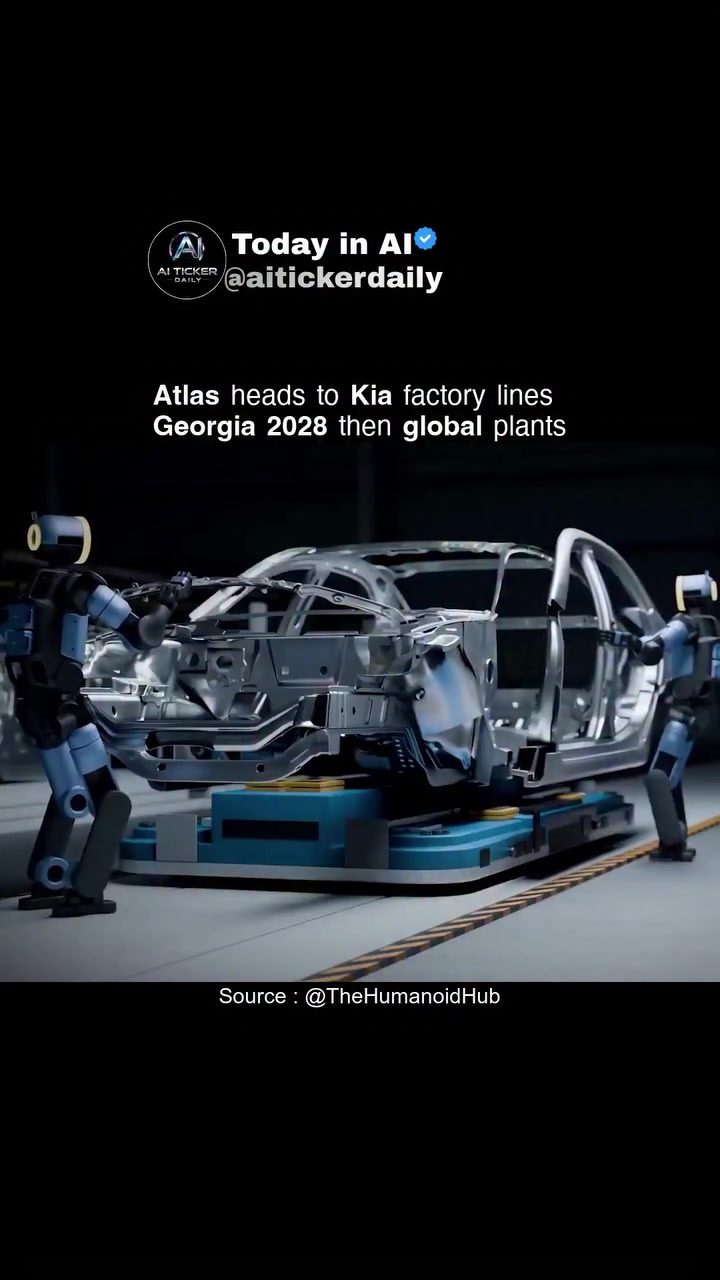
Atlas Robots in Kia's Factories: Revolutionizing Automotive Manufacturing
Automation in the automotive industry is on the cusp of a significant leap with the integration of Atlas robots, developed by Boston Dynamics, into Kia’s factory lines. This advanced humanoid robot is set to transform the manufacturing process, bringing a new level of efficiency and innovation to car production.
The Atlas Robot and Its Role in Automotive Manufacturing
Atlas, Boston Dynamics' full-size humanoid robot, is designed to handle a variety of tasks in the automotive manufacturing process. These robots are equipped with advanced sensors and AI capabilities, allowing them to perform intricate tasks with precision and speed. The initial deployment of Atlas robots is planned for 2028 at Hyundai Motor Group Metaplant America in Georgia. This strategic move is part of a broader plan to expand the use of these robots to Kia AutoLand in Georgia and other global plants in subsequent phases.
The Integration Process
The integration of Atlas robots into Kia’s manufacturing process involves several critical steps:
-
Initial Deployment in Georgia: The first phase of this initiative will see Atlas robots operating at Hyundai Motor Group Metaplant America in Georgia. This location is chosen for its strategic importance and the existing infrastructure that supports advanced manufacturing techniques.
-
Expansion to Global Plants: Following the successful implementation in Georgia, the plan is to expand the use of Atlas robots to other global plants. This includes Kia AutoLand in Georgia and other facilities worldwide, ensuring a uniform level of automation and efficiency across all manufacturing sites.
Why This Matters
The integration of Atlas robots into Kia’s factory lines marks a significant milestone in the automotive industry. The use of humanoid robots in manufacturing processes offers several benefits, including increased efficiency, reduced labor costs, and improved safety for human workers. These robots can handle repetitive and hazardous tasks, freeing up human workers to focus on more complex and creative aspects of the manufacturing process.
Understanding the Technology
Atlas robots are equipped with advanced sensors and AI capabilities that enable them to perform a wide range of tasks. These include:
-
Precision Tasks: Atlas robots can handle intricate tasks such as welding, painting, and assembly with high precision. Their advanced sensors and AI algorithms ensure that each task is performed accurately, reducing the risk of errors and defects.
-
Adaptability: These robots are designed to adapt to different environments and tasks, making them highly versatile. They can be programmed to perform a variety of tasks, from handling materials to operating machinery, ensuring flexibility in the manufacturing process.
-
Safety Features: Atlas robots are equipped with safety features that ensure they can operate in close proximity to human workers without posing a risk. These features include sensors that detect human presence and automatically adjust the robot's movements to avoid collisions.
Practical Tips for Employers Considering Automation
For employers considering the integration of automation in their manufacturing processes, here are a few practical tips to ensure a smooth transition:
-
Assess Your Needs: Before integrating robots into your manufacturing process, it’s crucial to assess your specific needs and identify the tasks that can benefit most from automation. Consider factors such as the complexity of the tasks, the volume of production, and the required precision.
-
Training and Support: Provide adequate training and support for your staff to ensure a smooth transition. This includes training on how to operate and maintain the robots, as well as ongoing support to address any issues that may arise.
-
Infrastructure and Maintenance: Ensure that your infrastructure can support the integration of robots. This includes having the necessary power supply, network connectivity, and physical space for the robots to operate. Additionally, develop a maintenance plan to ensure the robots remain in optimal condition.
Important Takeaways
The integration of Atlas robots into Kia’s factory lines represents a pivotal moment in the automotive industry. These robots, with their advanced capabilities and adaptability, are set to revolutionize the manufacturing process, bringing unprecedented levels of efficiency and innovation. As the use of these robots expands globally, we can expect to see significant advancements in automotive manufacturing, benefiting both the manufacturers and consumers.
Conclusion
The deployment of Atlas robots in Kia's factories is a game-changer in the automotive industry. With their advanced capabilities and adaptability, these robots are set to transform the manufacturing process, improving efficiency and safety. As Kia and other automotive manufacturers continue to integrate these robots into their operations, we can look forward to a future where automation and human ingenuity work hand in hand to create the next generation of vehicles.
Questions readers ask
What are Atlas robots and how do they contribute to Kia's manufacturing process?
Atlas robots are humanoid robots developed by Boston Dynamics, designed to perform intricate tasks with precision and speed. They contribute to Kia's manufacturing process by enhancing efficiency and innovation, particularly in car production.
When and where will Kia first implement Atlas robots in their manufacturing facilities?
Kia plans to integrate Atlas robots into their manufacturing facilities starting in 2028 at Hyundai Motor Group Metaplant America. This is the first phase of a broader plan that will expand to other global plants.
What advanced features do Atlas robots possess that make them suitable for automotive manufacturing?
Atlas robots are equipped with advanced sensors and AI capabilities. These features enable them to handle a variety of tasks, from complex assembly to precise quality control, with exceptional accuracy and speed.
How will the integration of Atlas robots impact Kia's global manufacturing operations?
The integration of Atlas robots is expected to significantly improve efficiency and innovation across Kia's global manufacturing operations. By streamlining tasks and reducing human error, these robots will help Kia maintain high production standards and adapt to changing market demands.
What is the significance of the collaboration between Kia and Boston Dynamics in the future of automotive manufacturing?
The collaboration between Kia and Boston Dynamics marks a significant step towards advanced factory automation. By leveraging Boston Dynamics' expertise in robotics, Kia aims to stay at the forefront of automotive manufacturing technology and set new industry benchmarks.
What are the potential benefits of using humanoid robots in Kia's factories?
Using humanoid robots like Atlas in Kia's factories can lead to increased productivity, reduced operational costs, and improved worker safety. These robots can handle dangerous or repetitive tasks, allowing human workers to focus on more strategic and creative aspects of production.
What are the next steps after the initial deployment of Atlas robots in 2028?
Following the initial deployment in 2028, Kia plans to expand the use of Atlas robots to other global manufacturing plants. This phased approach will allow Kia to refine the integration process, gather data, and ensure that the robots are effectively enhancing production across different facilities.
Related deep dives
Similar reads based on topic and creator.




Recent articles
Fresh deep dives from the latest Reels we unpacked.




Comments
Be the first to comment.