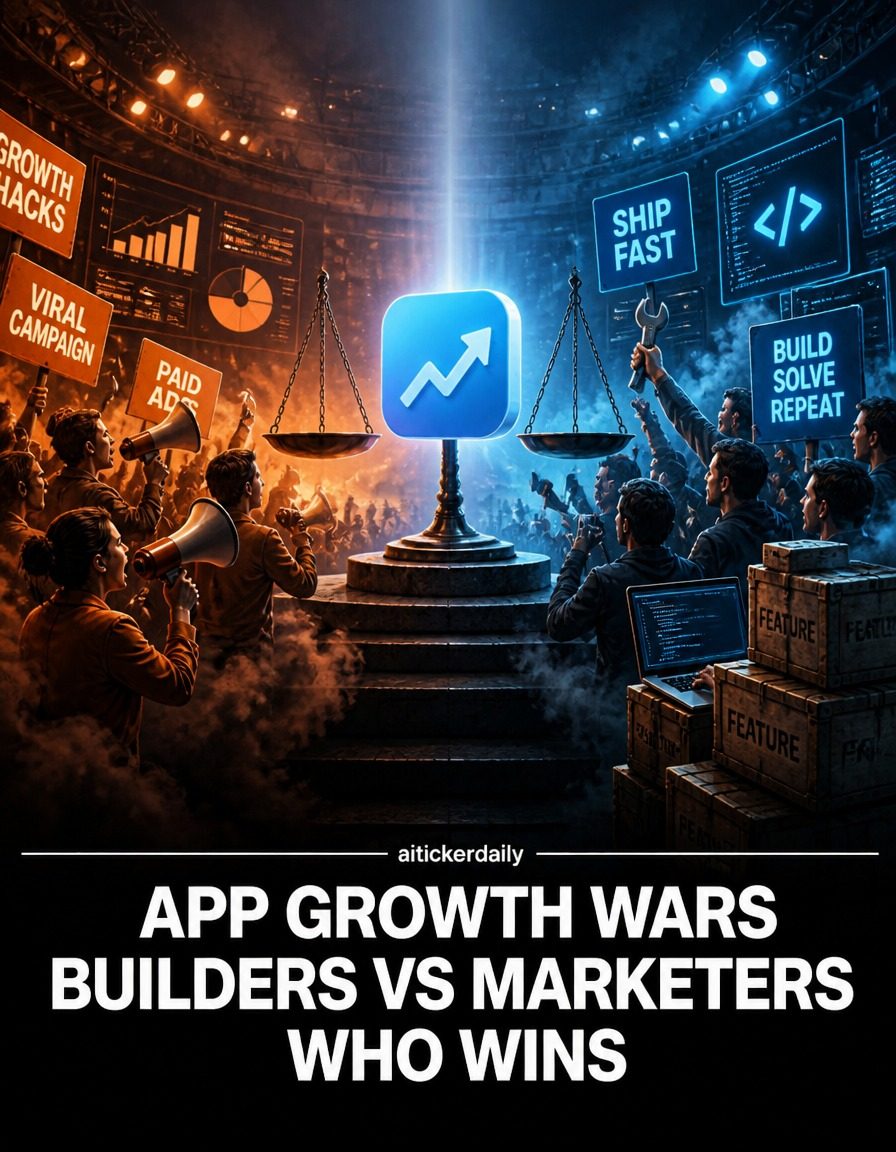
The debate between app builders and marketers is a long-standing one in the tech industry. Both sides have valid points, and understanding when each side is right is crucial for app success.
Why this matters
The "App Growth Wars" aren't just about which side is right; it's about finding the right balance between building and marketing. Each side has its own set of truths, and knowing when to prioritize one over the other can make or break an app's trajectory.
The Builder's Argument
App builders often argue that focusing on marketing too early can lead to "hollow growth." This happens when an app gains initial traction through advertising but fails to retain users because the product itself is not compelling. Builders advocate for a solid product foundation, one that can grow organically over time.
The Importance of Organic Growth
Builders emphasize that retention compounds over time. If users find value in the product, they are likely to stick around and possibly bring in more users through word-of-mouth. Marketing, on the other hand, can only do so much; it cannot fix a broken core experience. Builders advise keeping the product cycle short, shipping improvements frequently, and iterating based on user feedback.
When to Build
Builders win when the product is not yet ready for scale. Metrics like day-one and day-seven retention are crucial here. If users churn immediately, more marketing will only mean more people discovering a disappointing experience. The right time to focus on building is when the core user loop is broken or unclear. This is when the product needs the most attention, and building should take precedence over marketing.
The Marketer's Argument
Marketers, on the other hand, focus on the immediate gains that advertising can bring. They argue that once the product has a strong base, marketing can amplify its reach and bring in users that would otherwise never discover it.
The Power of Paid Ads
Paid advertising can provide a significant boost in initial user acquisition. It can bring in a large number of users quickly, which can be beneficial when launching a new product or entering a competitive market. Marketers point out that this initial boost can lead to a virtuous cycle where more users lead to more engagement, which can then lead to better organic growth.
When to Market
Marketers win when the product is ready to scale. Once the core loop is clear and the product is retaining users, marketing efforts can significantly amplify growth. This is the time to invest in advertising, social media campaigns, and other promotional activities. The goal here is to reach as many potential users as possible and convert them into loyal customers.
The Balance
Both sides have valid points, and the key to sustainable app success lies in finding the right balance. This means understanding when to prioritize building and when to focus on marketing.
Key Metrics to Watch
Retention Metrics: These are crucial for understanding user satisfaction and product health. Day-one and day-seven retention rates can tell you if your product is engaging users right from the start.
User Feedback: Pay attention to what users are saying. If there’s a lot of negative feedback, it might be time to focus on building.
Growth Metrics: Keep an eye on your user acquisition costs and the lifetime value of a customer. These metrics can help you decide when to invest more in marketing.
Practical Tips
Iterate Quickly: Don’t get stuck in the development cycle. Shipping faster means you can gather more feedback and make improvements quickly.
Listen to Users: Pay attention to user feedback and iterate based on their needs and wants. This not only improves the product but also shows users that you value their input.
Invest in Marketing Strategically: Don’t pour all your resources into marketing too early. Wait for the right moment when your product is ready to scale, and then invest in marketing to amplify growth.
Focus on the Core Loop: The core loop is the most important part of the user experience. Make sure it’s clear, engaging, and provides value to the user.
The Importance of a Balanced Strategy
A balanced approach is essential for long-term success. It means not getting swayed by the immediate gains of marketing or the long-term vision of building. It means understanding the strengths and weaknesses of both strategies and leveraging them at the right times.
Important Takeaways
- Both builders and marketers have valid points. App growth requires a balance between the two.
- Build a strong product foundation before scaling. Focus on organic growth and retention metrics.
- Use marketing to amplify growth once the product is ready to scale.
- Pay attention to user feedback and iterate quickly based on it.
- Invest in marketing strategically, not all at once.
Conclusion
The debate between app builders and marketers is nuanced, with each side having its own set of truths. The key to sustainable app success lies in finding the right balance. By understanding when to prioritize building and when to focus on marketing, you can create a product that not only gains traction but also retains users over time.
Questions readers ask
What is 'hollow growth' and why do builders want to avoid it?
Hollow growth refers to a situation where an app gains initial users through marketing efforts but fails to retain them due to a lackluster product. Builders want to avoid this by focusing on creating a strong, compelling product first, as this supports long-term, organic app growth. This means users are likely to stay and engage with the app, making marketing efforts more successful in the long run.
When should I prioritize marketing efforts for my app?
You should prioritize marketing once you have a solid, polished product that can support user growth. A good rule of thumb is to focus on marketing only after you have identified your ideal user and have incorporated their feedback in the app. Consider the following metrics: 1000 users, 70-80% user retention, and a 4+ app store rating.
What are some key app growth metrics that both builders and marketers should consider?
Both builders and marketers should consider metrics such as user acquisition cost (CAC), lifetime value (LTV), daily active users (DAU), monthly active users (MAU), and user retention rates, among others. Monitoring these metrics will provide you with essential insights into your app's performance and help you make informed decisions about your growth strategies.
What are some organic app growth strategies that builders recommend?
Builders often recommend focusing on optimizing app store listings, leveraging user referrals, and encouraging user reviews to boost organic growth. These strategies complement a solid product foundation and help attract and engage users in a sustainable manner. Additionally, builders emphasize the importance of creating a compelling, high-quality product that users will naturally want to share.
What are the potential drawbacks of focusing too much on app marketing tactics in the early stages?
Focusing too much on app marketing tactics in the early stages can lead to high user acquisition costs and poor user retention. This is because users may be drawn to the app initially due to advertisements but may lose interest if the app itself does not meet their expectations. To avoid this, it's important to find a balance between marketing and building a solid product.
How can builders and marketers work together to ensure balanced app development strategies?
Builders and marketers can work together by maintaining open communication and setting clear, shared goals. Regular cross-functional meetings can help ensure that both teams are aligned and that marketing efforts are in sync with the app's development. This collaboration can lead to more effective app growth strategies and a better overall product.
Related deep dives
Similar reads based on topic and creator.




Recent articles
Fresh deep dives from the latest Reels we unpacked.




Comments
Be the first to comment.