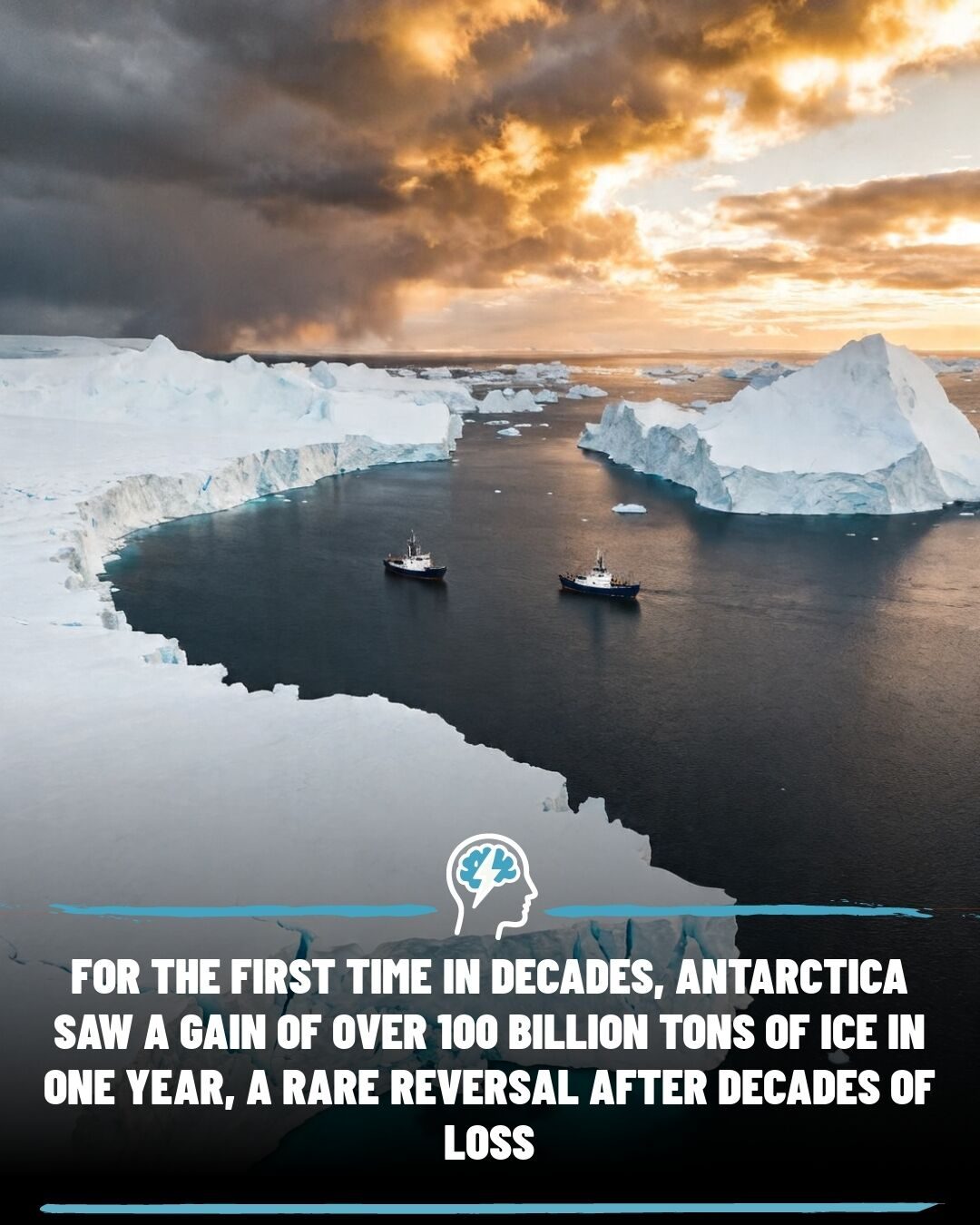
Antarctica Ice Gain
Antarctica recently experienced a surprising phenomenon: a gain of over 100 billion tons of ice per year from 2021 to 2023. This event marked the first time in decades that the Antarctic ice sheet showed a net increase in mass.
Context: Why This Matters
There has been a general expectation of continuous ice loss in Antarctica, driven by rising global temperatures and climate change. This recent gain, while significant, was temporary and driven by unusual weather patterns. Understanding ice loss and gain requires nuance, and this rare event highlights complex dynamics at play within the continent's ice sheet.
Unusual Weather Patterns Lead to Ice Gain
The increase in ice mass can be attributed to extreme snowfall and unusual weather patterns. Heavy precipitation, including snow and some rain, significantly impacted East Antarctica and the Antarctic Peninsula. This dumped enough frozen water to temporarily reverse the long-term trend of ice loss. This event highlights the influence of weather variability on the Antarctic ice sheet.
Temporarily Offset Sea Level Rise
This brief period of ice gain had a measurable impact on global sea levels. The additional ice mass offset sea level rise by about 0.3 millimeters per year. While this seems small, it is a meaningful pause in the overall trend of rising sea levels. It underscores the dynamic nature of Antarctica’s ice sheet and the potential for short-term changes to temporarily influence broader climate indicators.
Short-Term Fluctuations vs. Long-Term Trends
It is crucial to distinguish between short-term fluctuations and long-term trends. Despite the recent gain, the overall picture remains one of substantial ice loss. Over the 2002 to 2025 period, Antarctica shed approximately 135 billion tons of ice per year. This highlights that weather variability, though influential, does not alter the long-term trajectory of ice loss.
Understanding Antarctica’s Ice Dynamics
Antarctica is far more dynamic than commonly perceived. Regional variations, unusual weather events, and short-term fluctuations all exist within larger patterns of change. This complexity means that one headline or event cannot tell the whole story of Antarctica’s ice sheet.
Researchers study these fluctuations to understand what drives variability, which in turn improves the ability to project future changes. This kind of detailed, nuanced understanding is essential for accurate climate modeling and prediction.
The Role of Extreme Snowfall
Extreme snowfall played a pivotal role in the recent ice mass gain. Unusual weather patterns led to heavy precipitation, particularly in East Antarctica and the Antarctic Peninsula. This region experienced significant accumulations of both snow and rain, which contributed to the overall increase in ice mass. Understanding these localized weather patterns and their impact on ice dynamics is crucial for predicting future changes.
Implications for Climate Science
This finding underscores the complexity of climate science. It serves as a reminder that Antarctica’s ice sheet is subject to a range of influences, from weather patterns to broader climate trends. Researchers use such events to refine models and improve predictions about future changes in the ice sheet. This ongoing work is essential for understanding and mitigating the impacts of climate change.
Practical Tips for Understanding Climate Data
When interpreting climate data, it is important to consider the following:
- Look at long-term trends rather than short-term fluctuations. One unusual event does not indicate a permanent change in a long-term trend.
- Understand the impact of regional variations. Different parts of Antarctica can experience different weather patterns, leading to varied outcomes.
- Recognize the influence of weather variability. Extreme weather events can cause temporary changes in ice mass but do not necessarily alter the overall trajectory of ice loss or gain.
- Stay informed about the latest research. Climate science is continually evolving, and new data can provide valuable insights into how the ice sheet is changing.
Important Takeaways
The recent ice gain in Antarctica highlights several key points:
- Weather variability can lead to temporary changes in ice mass, even within a system experiencing long-term loss.
- Extreme snowfall and unusual weather patterns played a significant role in the recent ice gain.
- Short-term fluctuations do not negate the overall trend of ice loss in Antarctica.
- Understanding these dynamics is crucial for accurate climate modeling and prediction.
- Antarctica’s ice sheet is influenced by a range of factors, from localized weather patterns to broader climate trends.
Conclusion
The gain of over 100 billion tons of ice in Antarctica from 2021 to 2023 serves as a reminder of the complex and dynamic nature of the continent's ice sheet. While this event was temporary, it provides valuable insights into the factors driving short-term changes in ice mass. Researchers continue to study these fluctuations to improve our understanding of climate science and the future of Antarctica.
Questions readers ask
How much ice did Antarctica gain in the past few years, and what caused this?
From 2021 to 2023, Antarctica gained over 100 billion tons of ice per year. This increase was primarily due to unusual weather patterns, particularly extreme snowfall, which temporarily boosted the ice mass.
Is this ice gain permanent, or will it reverse?
The ice gain is not expected to be permanent. The increase was driven by temporary weather conditions, and the broader trend of climate change is likely to resume the pattern of ice loss in Antarctica over time.
How does this ice gain affect our understanding of Antarctica's climate?
This event underscores the complex and dynamic nature of Antarctica's climate. It highlights the need to consider short-term weather variability in addition to long-term climate trends when analyzing ice sheet changes.
What role does weather variability play in Antarctica's ice dynamics?
Weather variability, such as extreme snowfall, can significantly impact Antarctica's ice dynamics in the short term. These fluctuations can lead to temporary gains or losses in ice mass, illustrating the intricacy of the continent's climate system.
Does this ice gain contradict the effects of climate change in Antarctica?
The ice gain does not necessarily contradict the effects of climate change. While the overall trend in Antarctica is one of ice loss due to global warming, short-term weather events can cause temporary increases in ice mass.
How does this compare to previous years' data on Antarctica's ice mass?
This period marked the first time in decades that Antarctica showed a net increase in ice mass. Previously, the continent had been experiencing a general trend of ice loss, which is why this recent gain is considered unusual and significant.
What other factors, besides snowfall, might influence ice mass in Antarctica?
Other factors that can influence ice mass in Antarctica include ocean temperatures, wind patterns, and the dynamics of iceberg calving. These elements, along with snowfall, contribute to the complex nature of the continent's ice sheet dynamics.
Related deep dives
Similar reads based on topic and creator.




Recent articles
Fresh deep dives from the latest Reels we unpacked.




Comments
Be the first to comment.