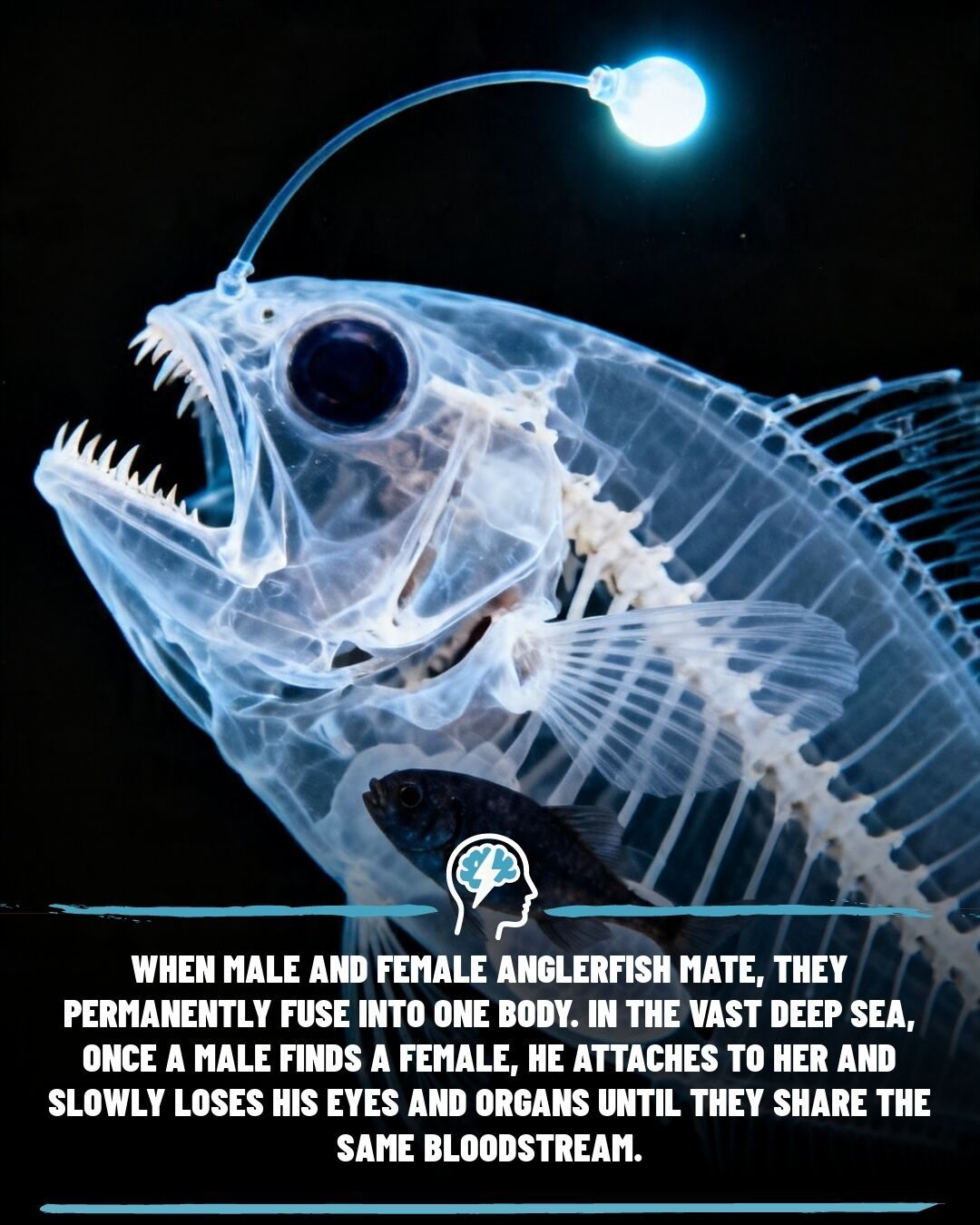
Anglerfish Mating
Deep-sea anglerfish have evolved one of the most extraordinary mating strategies in the animal kingdom. Living in the harsh, icy waters between 3,300 to 13,000 feet below sea level, these creatures inhabit an environment where food is scarce and encounters between individuals are exceedingly rare. This extreme setting has led to a unique and dramatic mating behavior that ensures the survival and reproduction of the species.
Why This Matters
The mating behavior of deep-sea anglerfish offers insights into the adaptive strategies that organisms use to thrive in the most challenging environments on Earth. Understanding these strategies helps us appreciate the incredible diversity of life and the lengths to which species will go to ensure their survival.
Main Discussion
The Deep-Sea Environment
Anglerfish inhabit the deep sea, a realm characterized by extreme cold, crushing pressure, and total darkness. In such an environment, finding a mate is extraordinarily difficult. This scarcity of mates has driven the evolution of the male anglerfish's unique mating strategy.
Sexual Parasitism
When a male anglerfish encounters a female, he bites into her body and never lets go. Over time, their tissues fuse together completely, and their circulatory systems merge. This process, known as sexual parasitism, transforms the male into a permanent attachment to the female. He becomes entirely dependent on her for survival, absorbing nutrients directly from her bloodstream. In exchange, he provides a constant supply of sperm whenever the female is ready to reproduce.
Fusion and Dependency
The fusion process is gradual. The male slowly loses his eyes and organs as he becomes more integrated with the female. This integration allows the male to share the same bloodstream with the female, ensuring his survival through direct nutrient absorption. The female, in turn, benefits from having a constant supply of sperm, which increases her chances of successful reproduction.
Multiple Males
Some female anglerfish have been found with multiple males fused to their bodies. This phenomenon further underscores the extreme measures these creatures take to ensure reproductive success in an environment where encounters are rare and resources are scarce.
Evolutionary Adaptation
The unique mating behavior of anglerfish is an example of adaptive radiation, where species develop unique traits in response to extreme environmental pressures. In the nutrient-poor deep sea, this strategy ensures that the female always has access to fertilization, solving the problem of finding a mate in an ocean of darkness.
Variation Across Species
It's important to note that not all anglerfish species display this behavior to the same degree. The extent of fusion and male dependence can vary across different species within the family. This variation highlights the diverse adaptive strategies that have evolved within the anglerfish family.
Practical Tips
While the mating behavior of anglerfish is not something that can be directly applied to human life, understanding it can provide valuable insights into the adaptability and resilience of life on Earth. Here are a few practical tips inspired by the deep-sea anglerfish:
Embrace Adaptability
The anglerfish's mating strategy is a testament to the power of adaptability. In an ever-changing world, being able to adapt to new circumstances and challenges is crucial for survival and success.
Recognize the Value of Partnerships
The deep-sea anglerfish's mating behavior shows the importance of partnerships in achieving common goals. Whether in personal or professional life, strong partnerships can provide the support and resources needed to thrive.
Think Creatively
The unique mating strategy of the anglerfish is a reminder that sometimes, the most creative and unconventional solutions are the ones that work best. Don't be afraid to think outside the box and explore unconventional approaches to challenges.
Important Takeaways
The deep-sea anglerfish's mating behavior is a remarkable example of evolutionary adaptation to extreme environmental conditions. This unique strategy ensures the survival and reproduction of the species in an environment where food is scarce and encounters between individuals are rare.
Key Points
- Deep-sea anglerfish inhabit the harsh, icy waters between 3,300 to 13,000 feet below sea level.
- The male anglerfish bites into the female's body and fuses with her, sharing the same bloodstream.
- This process, called sexual parasitism, ensures the male's survival and provides a constant supply of sperm for the female.
- Some females have been found with multiple males fused to their bodies.
- The extent of fusion and male dependence can vary across different species within the family.
Conclusion
The mating behavior of deep-sea anglerfish is a fascinating example of how life adapts to extreme conditions. By understanding these adaptations, we gain a deeper appreciation for the diversity and resilience of life on Earth. Whether in the deep sea or on land, every creature has evolved unique strategies to thrive in its environment. The anglerfish's story is a reminder of the incredible adaptations that make life possible in even the most challenging conditions.
Questions readers ask
How does the anglerfish mating process begin?
The anglerfish mating process starts with a small, mobile male anglerfish detecting the bioluminescent lure of a female. Drawn to her light, the male bites onto the female, and his body fuses with hers, becoming a permanent attachment. The male then atrophies, losing his eyes and internal organs, and relies on the female for sustenance.
What happens to the male anglerfish after fusion?
After fusion, the male anglerfish undergoes significant changes. He loses his eyes, digestive system, and other internal organs, becoming essentially a sperm-producing appendage. The male is sustained by the female's blood supply, ensuring his survival as long as the female lives.
Why do anglerfish males fuse with females permanently?
Anglerfish males fuse with females permanently due to the scarcity of encounters in their deep-sea habitat. This fusion ensures that the male's sperm is always available for fertilization, maximizing reproductive success in an environment where finding a mate is extremely difficult.
What is the deep sea habitat of anglerfish like?
Anglerfish inhabit the deep sea, ranging from 3,300 to 13,000 feet below the surface. This environment is characterized by extreme cold, high pressure, and near-total darkness, with food and other resources being scarce. These conditions have driven the unique mating behaviors observed in these creatures.
How do anglerfish ensure their species' survival in such harsh conditions?
Anglerfish ensure their species' survival through their unique mating strategy. By fusing permanently, males and females maximize their reproductive potential in an environment where encounters are rare. This adaptation helps maintain the population despite the challenges of their deep-sea habitat.
What is the significance of the bioluminescent lure in anglerfish mating?
The bioluminescent lure on the female anglerfish is crucial for attracting males in the dark depths of the ocean. This lure emits light, making it easier for males to locate females in an environment where visibility is almost non-existent, thereby facilitating the mating process.
What are the benefits of the permanent fusion for the anglerfish species?
The permanent fusion benefits the anglerfish species by ensuring that fertilization can occur at any time. This adaptation helps the female continuously produce offspring, enhancing the species' chances of survival in a resource-limited and harsh environment.
Related deep dives
Similar reads based on topic and creator.




Recent articles
Fresh deep dives from the latest Reels we unpacked.




Comments
Be the first to comment.