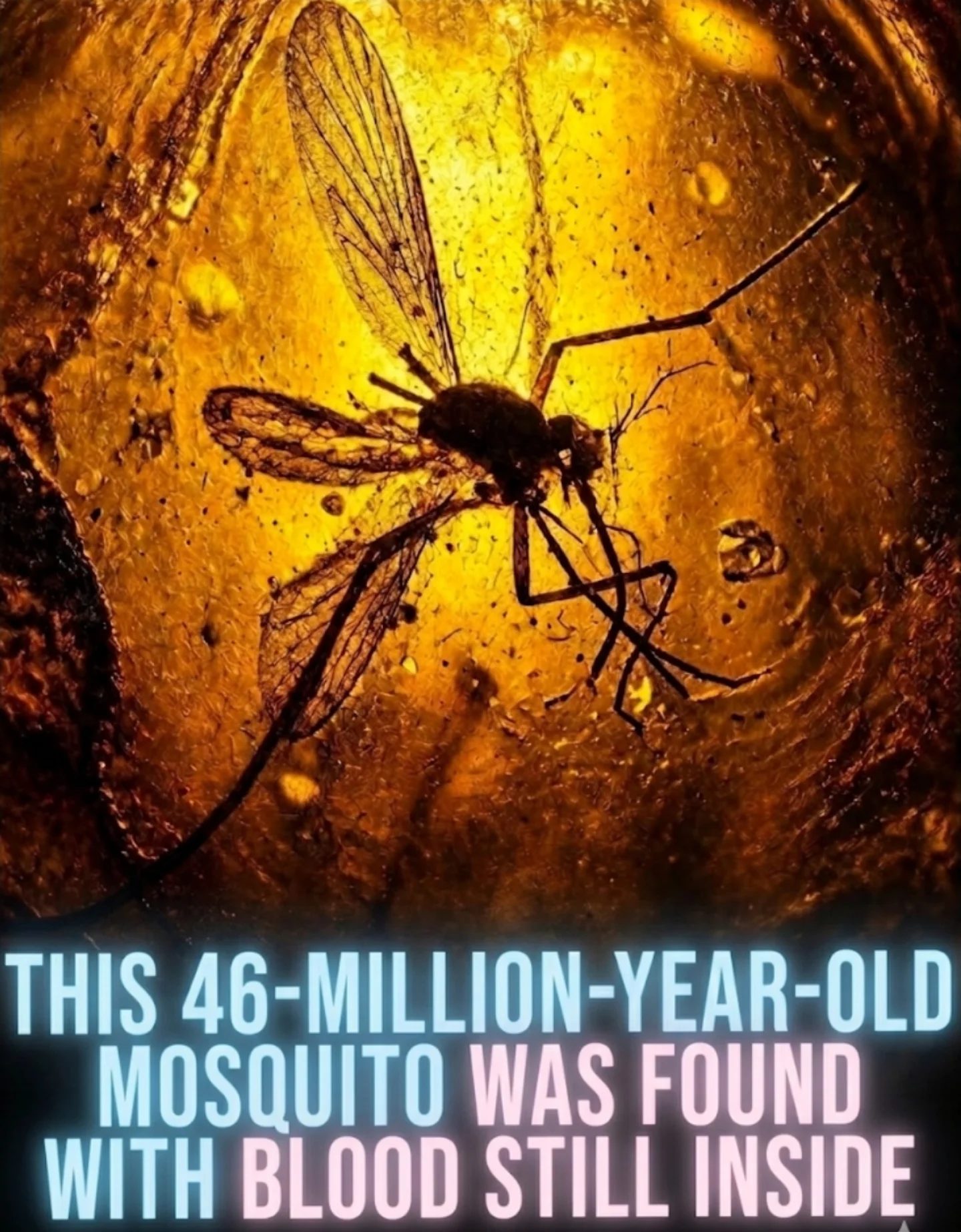
Fossilized Mosquito
A 46-million-year-old mosquito from Montana has revealed intriguing details about the past and the preservation of biological materials. This ancient insect, discovered in the Kishenehn Formation, has offered scientists a unique glimpse into the distant Eocene Epoch.
Why this matters
The extraordinary preservation of this mosquito provides valuable insights into the environmental conditions and biological processes of the past. It's a testament to how well-preserved fossils can offer detailed information about ancient ecosystems, predatory behaviors, and even the composition of blood.
Main discussion
Discovery and Preservation
The fossilized mosquito was found in shale sediment, not the more typical amber. This discovery is significant because shale sediment is not usually associated with the preservation of such delicate specimens. The mosquito's remarkable preservation includes a distended abdomen, indicating it had recently fed before its demise. This detail suggests that the mosquito's final moments were captured in exquisite detail, providing a snapshot of its last meal.
Analyzing the Blood
In 2013, researchers led by Dale Greenwalt conducted an analysis of the dark residue inside the mosquito's belly using advanced mass spectrometry. The results were groundbreaking: they identified iron-rich porphyrins, which are breakdown products of hemoglobin, the protein that carries oxygen in blood. This was the first time "blood-derived" molecules were found in a fossil of this age.
While the findings are exciting, it's important to understand that the residue is not liquid blood. Instead, it is a chemically stabilized, fossilized remnant of blood components. This distinction underscores the challenges and nuances of studying ancient biological materials.
Implications for DNA Research
The discovery of blood components in a 46-million-year-old mosquito raises questions about the potential for preserving DNA over such vast periods. However, DNA is a fragile molecule with a "half-life" of about 521 years. Even under ideal conditions, it completely degrades into unreadable fragments after roughly 6.8 million years. This means that the mosquito's DNA, if it ever existed in a recoverable form, would have long since degraded.
Unfortunately for fans of Jurassic Park, this timeline makes it extremely unlikely that dinosaur DNA could ever be recovered. The last non-avian dinosaurs went extinct about 66 million years ago, well beyond the survivability of DNA.
Practical tips
For those interested in paleontology or the study of fossils, here are a few tips:
- Understand the Context: Always consider the geological and environmental context of a fossil. The type of sediment and surrounding conditions can provide crucial information about how and why a fossil was preserved.
- Advanced Techniques: Utilize modern analytical techniques like mass spectrometry to gain deeper insights into the chemical composition of fossils. These methods can reveal details that are invisible to the naked eye.
- Preservation Conditions: Recognize that different materials and conditions can lead to varying degrees of preservation. Amber and shale, for example, offer different preservation qualities and can reveal different aspects of an organism's past.
Important takeaways
The 46-million-year-old mosquito from Montana offers a remarkable glimpse into the Eocene Epoch. Key takeaways include:
- Exceptional Preservation: The mosquito's preservation in shale sediment highlights the unique conditions that can lead to the detailed preservation of biological materials.
- Blood Components: The discovery of iron-rich porphyrins in the mosquito's abdomen marks the first time blood-derived molecules have been identified in a fossil of this age.
- DNA Limitations: The fragile nature of DNA and its relatively short half-life make it unlikely that intact DNA could be recovered from organisms that lived tens of millions of years ago. This includes dinosaurs, which went extinct well beyond the survivability of DNA.
Conclusion
The fossilized mosquito from the Kishenehn Formation in Montana is a remarkable specimen that offers valuable insights into the past. Its exceptional preservation and the discovery of blood-derived molecules provide a unique window into ancient ecosystems and biological processes. While the prospect of recovering dinosaur DNA remains a distant dream, the study of fossils like this mosquito continues to push the boundaries of our understanding.
Questions readers ask
How was the 46 million-year-old mosquito fossil preserved?
The mosquito fossil was preserved in shale sediment, which is significant because it is less typical than amber and offers a different set of conditions for preservation. The shale provided a unique environment that allowed for the exceptional preservation of biological materials, including remnants of the mosquito's last blood meal.
What makes the discovery of preserved blood in this fossil so remarkable?
The discovery is remarkable because it challenges conventional beliefs about how long biological components can remain intact in fossils. The presence of preserved blood in a 46 million-year-old fossil suggests that certain conditions can lead to the exceptional preservation of such delicate materials, offering new avenues for understanding ancient life.
What can the fossilized blood meal tell us about the ancient ecosystem?
The preserved blood meal provides a unique window into the ecosystem of the Eocene Epoch, approximately 46 million years ago. By analyzing the blood, scientists can gain insights into the types of animals that were present, their interactions, and the environmental conditions of that time.
Are there other instances of preserved blood in ancient fossils?
While rare, there have been other instances of preserved blood in ancient fossils. For example, preserved blood cells were found in fossilized dinosaur bones, highlighting that under certain conditions, biological materials can be exceptionally well-preserved over millions of years.
Why is the discovery of this ancient mosquito significant for paleontology?
This discovery is significant because it demonstrates the potential for shale fossils to contain exceptionally well-preserved biological materials. It opens new possibilities for paleontologists to extract and study ancient DNA and other biological components, providing a deeper understanding of past life forms and their environments.
How does this discovery compare to amber fossil discoveries?
Unlike amber fossils, which are renowned for preserving delicate structures in resin, the shale-preserved mosquito provides a different perspective on preservation. Amber often preserves entire organisms, but shale, as seen in this discovery, can preserve specific biological materials like blood, offering a unique set of insights into ancient ecosystems.
What is the significance of the location in Montana for this fossil discovery?
Montana is known for its rich paleontological history, with numerous significant fossil discoveries. The Kishenehn Formation, where this mosquito fossil was found, is particularly notable for its well-preserved fossils. This discovery adds to the region's reputation as a treasure trove for understanding the ancient world.
Related deep dives
Similar reads based on topic and creator.



Recent articles
Fresh deep dives from the latest Reels we unpacked.




Comments
Be the first to comment.