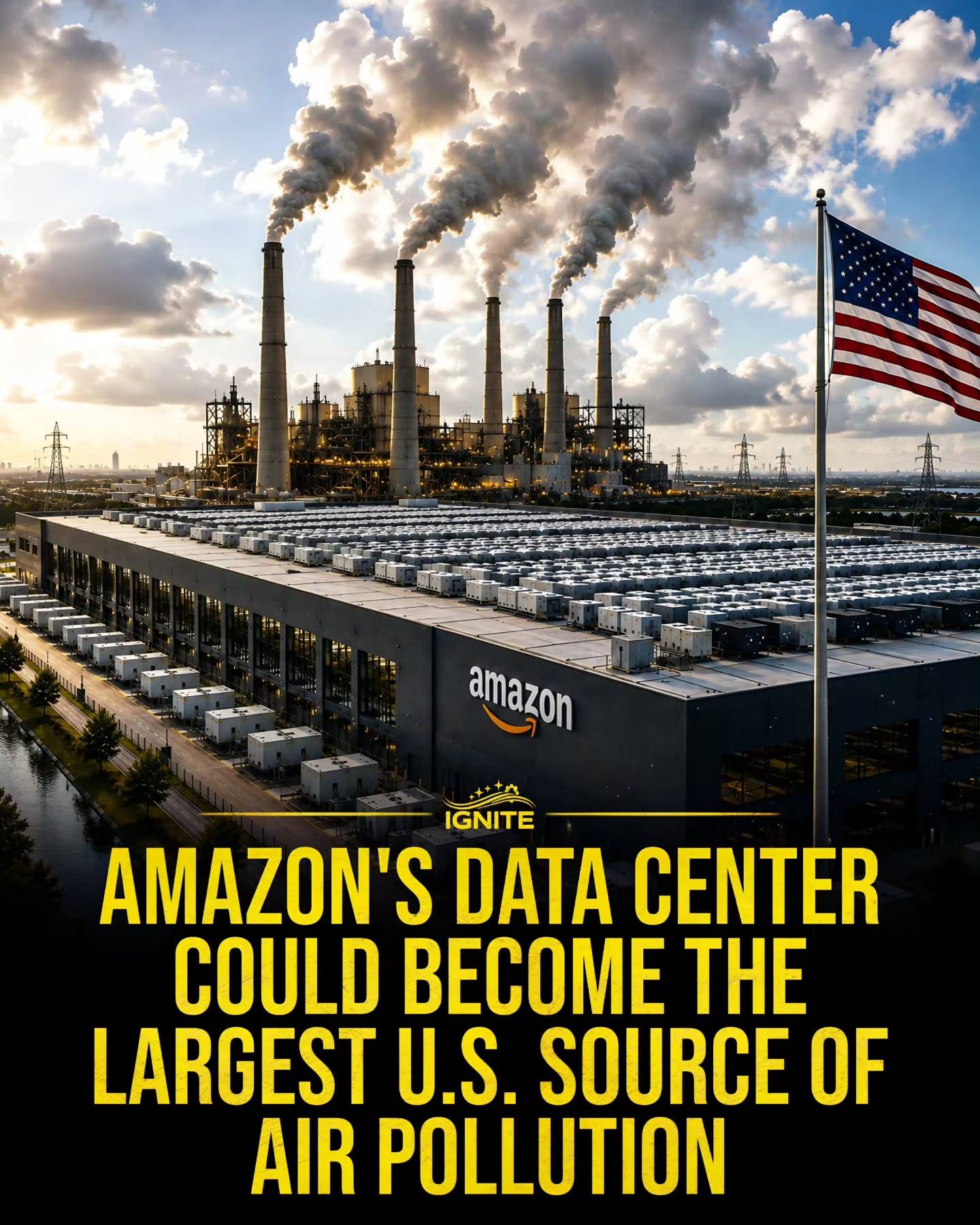
Amazon's Massive Texas Data Center and Air Pollution Concerns
Amazon's plans for a colossal new data center in Texas have sparked significant debate due to its potential to become a major source of air pollution. The proposed facility is anticipated to have its own power plant, which could release an astonishing 33 million tons of greenhouse gases annually. This staggering figure underscores the environmental implications of the growing demand for data and artificial intelligence (AI) infrastructure.
Why This Matters
Data centers are the backbone of the digital age, powering everything from streaming services to cloud storage. However, their power consumption and environmental impact are increasingly under scrutiny. Amazon's latest project in Texas brings these concerns to the forefront, as the scale of potential emissions raises critical questions about balancing technological progress with environmental responsibility.
The Scale of the Issue
To understand the magnitude of the problem, consider that 33 million tons of greenhouse gases annually is equivalent to the emissions of approximately 7.5 million passenger vehicles driven for a year. This is a significant contribution to air pollution, especially in a single facility.
The project's approval to build its own power plant further complicates the matter. While self-sufficient energy generation can offer stability and reliability, it also means that the emissions are directly tied to the data center's operations, making it a substantial contributor to local and regional air quality issues.
Environmental Challenges
Amazon's data centers, like those of many tech giants, are large consumers of energy. The environmental impact of these centers is multifaceted, encompassing not just air pollution but also water usage and land use. The potential for the Texas data center to become the largest U.S. source of air pollution highlights the need for sustainable practices in data infrastructure.
Main Discussion
The Role of Data Centers
Data centers are essential for the smooth operation of the internet and digital services. They house the servers that store, process, and transmit data, enabling everything from online banking to social media. However, their energy consumption is substantial. Data centers in the United States alone consume about 70 billion kilowatt-hours of electricity annually, roughly 1.8% of the country's total energy consumption.
Amazon's Data Centers
Amazon, being one of the world's largest tech companies, operates numerous data centers globally. These centers support a wide range of services, including Amazon Web Services (AWS), which is a cornerstone of the company's cloud computing offerings. The sheer scale of Amazon's operations means that any environmental impact from their data centers is magnified.
Texas Data Center Plans
The proposed data center in Texas is part of Amazon's ongoing expansion to meet the rising demand for cloud computing and AI services. The facility is designed to be one of the largest in the U.S., with an emphasis on reliability and scalability. However, the decision to build its own power plant raises significant environmental concerns.
Potential Emissions
The projected 33 million tons of greenhouse gas emissions annually from the Texas data center are alarming. To put this into perspective, the entire state of Texas emitted approximately 713 million metric tons of carbon dioxide in 2020. The data center alone could account for nearly 5% of the state's emissions, a staggering figure for a single facility.
Practical Tips
For companies looking to mitigate the environmental impact of their data centers, several strategies can be considered:
Sustainable Power Sources
One of the most effective ways to reduce emissions is by transitioning to renewable energy sources. This could involve investing in solar, wind, or hydroelectric power. Amazon, for instance, has committed to achieving net-zero carbon emissions by 2040, but specific actions like this can accelerate progress.
Energy Efficiency
Improving energy efficiency is another critical step. This can be achieved through better cooling systems, more efficient servers, and advanced power management technologies. Companies can also explore modular data center designs that allow for more efficient use of space and resources.
Carbon Offsets
In addition to reducing direct emissions, companies can invest in carbon offset programs. These initiatives support projects that reduce or sequester carbon, such as reforestation or renewable energy projects.
Important Takeaways
Balancing Progress and Sustainability
The environmental challenges posed by data centers underscore the need for a balanced approach to technological progress and sustainability. While data centers are essential for modern digital infrastructure, their environmental impact must be carefully managed.
The Role of Policy and Regulation
Policy and regulation play a crucial role in shaping the environmental performance of data centers. Governments and regulatory bodies can incentivize sustainable practices through tax breaks, subsidies, and stringent emission standards. Companies, in turn, must be proactive in adhering to these regulations and exceeding them where possible.
Conclusion
Amazon's plans for a massive data center in Texas raise critical questions about the environmental cost of technological progress. With the potential to become one of the largest sources of air pollution in the U.S., the project highlights the urgent need for sustainable practices in data infrastructure. By transitioning to renewable energy, improving energy efficiency, and investing in carbon offsets, companies can mitigate the environmental impact of their operations. Ultimately, balancing technological progress with environmental responsibility is essential for a sustainable future.
Questions readers ask
What are the projected greenhouse gas emissions from Amazon's Texas data center?
Amazon's Texas data center is projected to release approximately 33 million tons of greenhouse gases annually, raising significant environmental concerns.
How does Amazon's Texas data center plan to address its potential air pollution?
As of now, there is no public information on the specific measures that Amazon plans to take regarding air pollution mitigation. Proponents encourage Amazon to invest in renewable energy sources and carbon capture technologies.
What is the main concern regarding Amazon's Texas data center?
The primary concern is the potential impact on air quality due to the massive amount of greenhouse gases that the data center's power plant could emit.
Why is the location of the data center in Texas significant?
Texas's regulatory environment and energy infrastructure make it a strategic location for large-scale projects, but it also means that the state's air quality could be significantly affected by the emissions.
What role do data centers play in the digital age, and why are their environmental impacts important?
Data centers are crucial for powering digital services and infrastructure. Their environmental impacts are important to consider, as the growing demand for data and AI infrastructure could lead to significant increases in emissions and air pollution.
What are some potential solutions to mitigate the environmental impact of large data centers?
Some potential solutions include investing in renewable energy sources, implementing energy-efficient technologies, and adopting carbon capture and storage methods to reduce greenhouse gas emissions.
How does the power consumption of data centers relate to air pollution?
The power consumption of data centers, especially those with their own power plants, contributes to air pollution through the combustion of fossil fuels. This in turn leads to the emission of greenhouse gases and other pollutants.
Related deep dives
Similar reads based on topic and creator.




Recent articles
Fresh deep dives from the latest Reels we unpacked.




Comments
Be the first to comment.