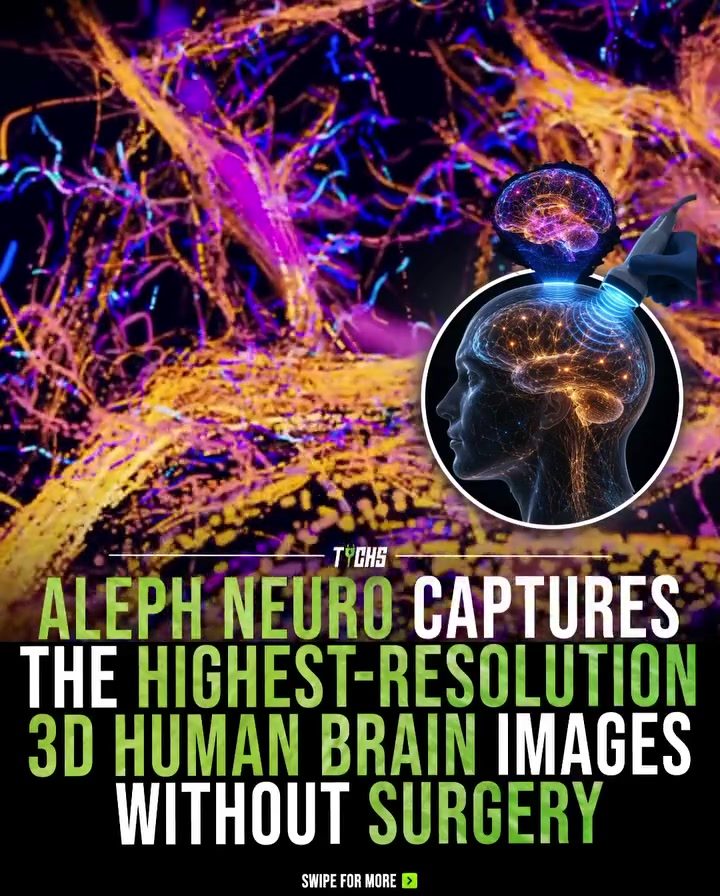
Brain Imaging Technology Advances with Aleph Neuro
Brain imaging has long been a crucial field in neuroscience, enabling researchers to study the human brain's structure and function. Recent advancements by Aleph Neuro are pushing the boundaries of what is possible, particularly in the area of non-invasive imaging. By combining innovative technologies, Aleph Neuro is paving the way for safer, more accessible, and higher-resolution brain imaging.
Why This Matters
High-resolution brain imaging is essential for advancements in neuroscience, brain disorder research, and the development of brain-computer interfaces. Traditional methods often require invasive procedures such as surgery or the implantation of devices, which can be risky and uncomfortable for patients. Aleph Neuro's breakthrough offers a non-invasive alternative, making it easier to conduct research and potentially leading to more widespread use of brain imaging in medical applications.
Main Discussion
Aleph Neuro's Breakthrough Technology
Aleph Neuro has developed a non-invasive brain-computer interface that promises to revolutionize brain imaging. The technology leverages Butterfly Network’s Ultrasound-on-Chip technology coupled with a contrast agent. This combination allows for the capture of highly detailed 3D images of the brain through the skull, without the need for invasive procedures.
How It Works
The system uses ultrasound waves to penetrate the skull and create detailed images of the brain. The contrast agent enhances the visibility of different brain structures, allowing for clearer and more accurate imaging. This approach not only improves the resolution of the images but also ensures that the process is safe and comfortable for patients.
The Role of Ultrasound-on-Chip Technology
Butterfly Network’s Ultrasound-on-Chip technology is a key component of Aleph Neuro’s system. This technology miniaturizes ultrasound capabilities, making it possible to integrate them into smaller, more portable devices. This portability is crucial for making brain imaging more accessible, as it allows for imaging to be conducted in a variety of settings, not just in specialized medical facilities.
High-Resolution 3D Imaging
One of the standout features of Aleph Neuro’s technology is its ability to produce the highest-resolution 3D brain images ever obtained without surgery. This level of detail is essential for studying the intricate structures and functions of the brain. High-resolution imaging can help researchers better understand brain disorders, develop new treatments, and advance brain-computer interface technology.
Non-Invasive Nature
The non-invasive nature of Aleph Neuro's technology is a significant advantage. Traditional brain imaging methods often require patients to undergo surgery or have implants placed inside the brain. These procedures can be risky and may have long-term effects on the patient's health. Aleph Neuro's approach eliminates these risks, making brain imaging safer and more accessible for a wider range of patients.
Practical Tips
For Researchers
If you are a researcher looking to incorporate advanced brain imaging into your studies, Aleph Neuro's technology offers several practical benefits:
- Improved Accessibility: The non-invasive nature of the technology means you can conduct imaging studies on a broader range of participants, including those who may not be candidates for surgery or implant-based procedures.
- Enhanced Detail: The high-resolution 3D images provide detailed views of brain structures, aiding in the identification of subtle differences and abnormalities.
- Versatility: The portability of the ultrasound-on-chip technology allows for imaging in various settings, making it easier to conduct studies in different environments.
For Medical Professionals
Medical professionals can benefit from Aleph Neuro's technology in several ways:
- Safer Imaging: The non-invasive approach reduces the risks associated with traditional imaging methods, making it a safer option for patients.
- Detailed Diagnostics: High-resolution images can provide more accurate diagnoses, helping to identify conditions such as tumors, strokes, and neurological disorders more effectively.
- Broader Patient Base: The technology's non-invasive nature means it can be used on a wider range of patients, including those who may not be suitable for surgery or implant-based procedures.
Important Takeaways
Advancements in Brain Imaging
The development of Aleph Neuro's non-invasive brain-imaging technology represents a significant advancement in the field of neuroscience. The combination of Ultrasound-on-Chip technology and a contrast agent allows for high-resolution 3D imaging without the need for invasive procedures.
Potential Applications
This technology has the potential to accelerate research into brain disorders and brain-computer interfaces. It could also make advanced brain imaging more accessible and safer for future medical applications, benefiting both researchers and patients.
Conclusion
Aleph Neuro's breakthrough in non-invasive brain imaging technology is a game-changer in the field of neuroscience. By combining advanced ultrasound technology with a contrast agent, Aleph Neuro has developed a system that can capture high-resolution 3D images of the brain without the need for surgery or implants. This non-invasive approach not only enhances the safety and accessibility of brain imaging but also opens up new possibilities for research and medical applications. As the technology continues to prove successful, it could revolutionize how we study and treat brain disorders, making significant strides in the field of neuroscience.
Questions readers ask
What makes Aleph Neuro's brain imaging technique a significant advancement?
Aleph Neuro's technique is significant because it offers a non-invasive method to capture high-resolution 3D brain images using ultrasound and a contrast agent. This approach eliminates the need for invasive procedures, making it a safer and more accessible option for patients and researchers alike.
How does Aleph Neuro's method compare to traditional brain imaging techniques?
Traditional brain imaging techniques often require invasive procedures, such as surgery or the implantation of devices, and can be risky and uncomfortable for patients. In contrast, Aleph Neuro's method uses non-invasive ultrasound technology to capture detailed 3D images through the skull, providing a safer and more comfortable alternative.
What are the potential benefits of Aleph Neuro's brain imaging breakthrough for research and treatment?
Aleph Neuro's breakthrough promises to advance brain disorder research and improve neuroscience by offering high-resolution, 3D brain images. This new technology can provide insights into brain structure and function, facilitating the development of new treatments and brain-computer interfaces.
Can Aleph Neuro's technique be used for brain imaging through the skull?
Yes, Aleph Neuro's technique is specifically designed to capture high-quality 3D images of the brain through the skull. It utilizes ultrasound and a contrast agent, which allows for clear and detailed imaging without the need for invasive procedures.
How might Aleph Neuro's brain imaging technology impact the development of brain-computer interfaces?
Aleph Neuro's high-resolution, non-invasive brain imaging technology can contribute to the development of brain-computer interfaces by providing detailed insights into brain structure and function. This information can help researchers create more effective and precise interfaces, enhancing communication and control for individuals with neurological conditions.
What advantages does ultrasound brain imaging offer in this context?
Ultrasound brain imaging offers several advantages, including non-invasiveness, portability, and relatively lower cost compared to traditional methods. Aleph Neuro's use of ultrasound, combined with a contrast agent, provides a safer and more accessible way to obtain detailed 3D brain images, benefiting both research and clinical applications.
What role does the contrast agent play in Aleph Neuro's brain imaging technique?
The contrast agent used in Aleph Neuro's technique enhances the visibility of brain structures during ultrasound imaging. By improving the contrast between different tissues, it allows for clearer and more detailed 3D images, thereby aiding in the diagnosis and study of brain disorders.
Related deep dives
Similar reads based on topic and creator.




Recent articles
Fresh deep dives from the latest Reels we unpacked.




Comments
Be the first to comment.