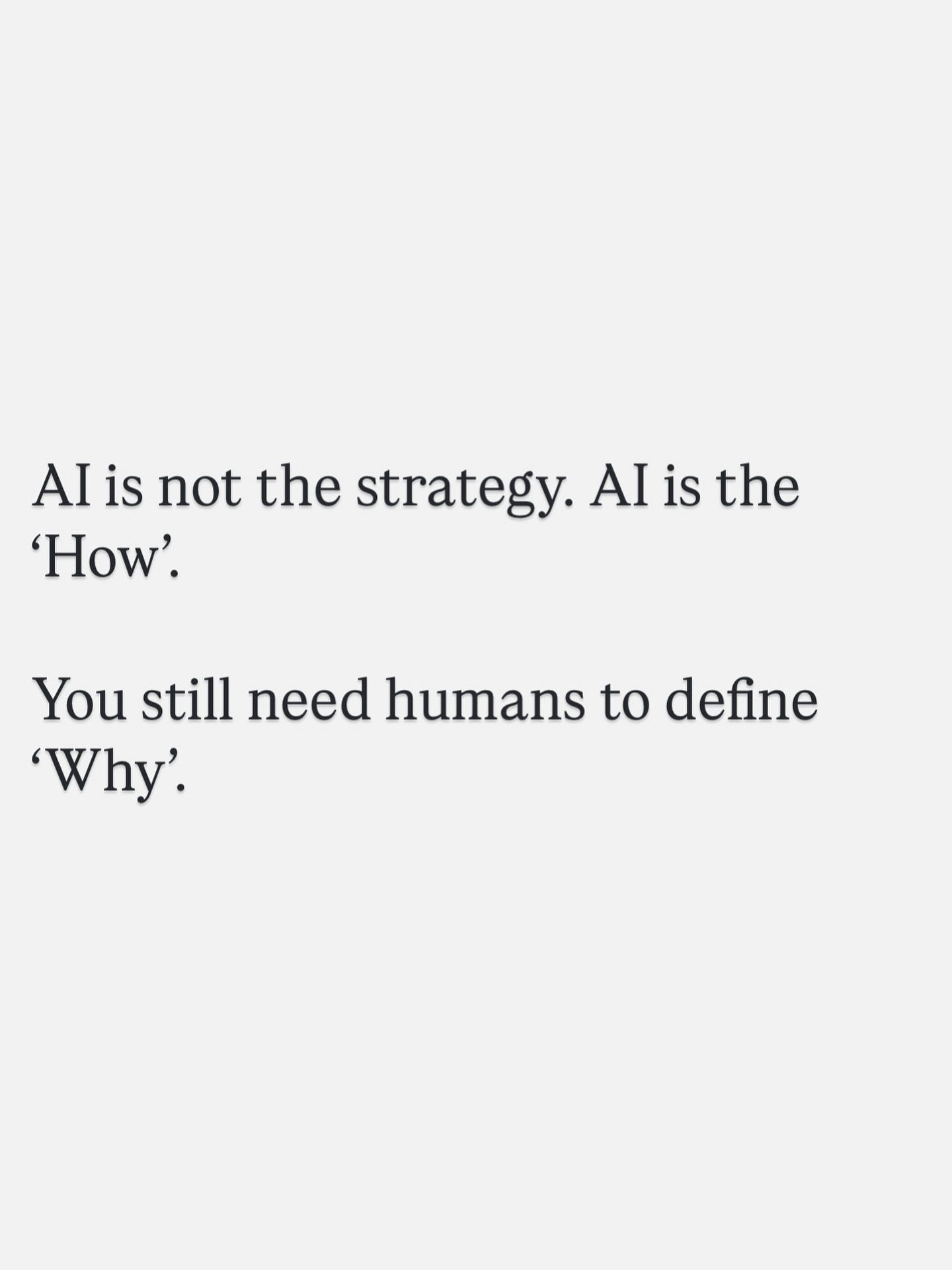
AI in Marketing Strategy: Understanding the 'How' and 'Why'
Every marketer understands the importance of a solid strategy. But with the rise of artificial intelligence (AI), there's been a lot of buzz around 'AI strategy.' However, it's crucial to clarify that AI itself is not a strategy. Instead, AI is a powerful tool that enables and enhances your overall marketing strategy. Here's a deeper dive into how AI fits into the broader scope of marketing strategy.
Why This Matters
In today's data-driven world, AI offers unprecedented opportunities to optimize marketing efforts. From predictive analytics to personalized customer experiences, AI can significantly improve efficiency and effectiveness. However, it's essential to understand that AI is just one part of the equation. Human insight and strategic thinking remain critical components of a successful marketing plan. By leveraging AI effectively, marketers can focus on high-level decision-making and creative problem-solving, while AI handles the data-heavy lifting.
The Role of AI in Marketing Strategy
AI as the 'How'
AI excels at execution, making it an ideal tool for implementing marketing strategies. It can automate repetitive tasks, analyze vast amounts of data, and provide actionable insights. For instance, AI can help in:
- Predictive Analytics: Forecasting trends and customer behavior to optimize campaign timing and messaging.
- Personalization: Tailoring content and offers to individual users based on their preferences and past behavior.
- Automation: Streamlining tasks like email marketing, social media posting, and ad placements to save time and resources.
AI's strength lies in its ability to process and analyze data quickly and accurately, making it an invaluable tool for executing marketing strategies.
Human Input for the 'Why'
While AI can handle the 'how,' humans are indispensable for defining the 'why.' This includes setting strategic goals, understanding the market landscape, and making creative decisions. Here's what humans bring to the table:
- Strategic Vision: Humans set the overall direction and goals of the marketing strategy. This includes defining the target audience, market positioning, and long-term objectives.
- Creative Thinking: Humans are essential for developing innovative and compelling marketing campaigns that resonate with audiences.
- Ethical Considerations: Humans ensure that AI is used responsibly and ethically, considering factors like data privacy and bias.
Practical Tips for Integrating AI
Integrating AI into your marketing strategy can be a game-changer, but it requires careful planning and execution. Here are some practical tips to help you get started:
1. Define Clear Objectives
Before diving into AI, clearly define what you want to achieve. Do you want to increase sales, improve customer retention, or enhance brand awareness? Clear objectives will guide your AI implementation and help you measure success.
2. Choose the Right Tools
There are numerous AI tools available, each with its own set of features and capabilities. Select tools that align with your objectives and can integrate with your existing systems. Some popular options include:
- Marketing Automation: Tools like HubSpot and Marketo for automating email campaigns and lead nurturing.
- Customer Analytics: Platforms like Google Analytics and Tableau for in-depth data analysis and visualization.
- Personalization: Solutions like Dynamic Yield and Optimizely for creating personalized user experiences.
3. Ensure Data Quality
AI is only as good as the data it processes. Invest in data collection and management practices to ensure your AI tools have access to accurate, up-to-date information. This includes:
- Data Cleaning: Regularly update and clean your data to remove duplicates and inaccuracies.
- Data Integrity: Ensure data is collected and stored securely, complying with relevant regulations (e.g., GDPR, CCPA).
4. Foster a Data-Driven Culture
To maximize the benefits of AI, foster a culture that values data and analytics. Encourage your team to use data-driven insights to inform decisions and continuously refine strategies. This includes:
- Training and Development: Provide ongoing training on data analysis and AI tools.
- Collaboration: Encourage cross-functional collaboration to share insights and best practices.
5. Stay Ethical and Transparent
Ensure that your use of AI is ethical and transparent. This includes being clear about how data is collected and used, and respecting user privacy. Regularly review and update your AI practices to ensure they remain compliant with evolving regulations and industry standards.
Important Takeaways
- AI is a Tool, Not a Strategy: AI enhances your marketing strategy but does not replace the need for human input and strategic thinking.
- Define Clear Objectives: Clearly define what you want to achieve with AI to guide your implementation and measure success.
- Human Insight is Crucial: Humans set the strategic direction and ensure ethical use of AI, while AI handles data-heavy tasks.
- Invest in Data Quality: Ensure your AI tools have access to accurate, up-to-date data to drive effective strategies.
Conclusion
Understanding the role of AI in your marketing strategy is crucial for leveraging its full potential. By focusing on AI as the 'how' and humans as the 'why,' you can create a powerful, cohesive strategy that maximizes efficiency and effectiveness. Remember, AI is a tool to enhance your marketing efforts, not a replacement for strategic thinking and human insight. With the right approach, AI can be a game-changer in your marketing strategy, driving growth and innovation.
Questions readers ask
How does AI enhance overall marketing strategy?
AI enhances marketing strategy by providing insights from large datasets, which helps in identifying trends, predicting customer behavior, and optimizing campaigns for better performance. It allows marketers to make data-driven decisions and focus on creative aspects while AI handles data-intensive tasks.
What are some examples of AI marketing tools?
There are several AI marketing tools available, such as HubSpot's Marketing Hub, which uses AI for content personalization and predictive lead scoring. Other examples include Albert AI for automated campaign optimization and Market Muse for AI-driven content creation and strategy.
How can AI help in targeted marketing?
AI can analyze customer data to identify patterns and preferences, enabling marketers to create more personalized and targeted campaigns. By using AI, marketers can segment audiences more effectively and deliver tailored content, increasing the likelihood of engagement and conversions.
What role does AI play in marketing automation?
AI enhances marketing automation by enabling more sophisticated and personalized customer journeys. It can automate tasks like email marketing, social media posting, and customer segmentation, ensuring that the right message reaches the right audience at the right time, all while reducing manual effort.
Can AI replace human input in marketing strategy?
While AI offers powerful capabilities, it cannot replace human input entirely. Marketers are essential for defining objectives, interpreting AI insights, and making strategic decisions. AI complements human skills by handling data-driven tasks and providing insights, but it requires human oversight and creativity.
How does AI help in optimizing marketing campaigns?
AI optimizes marketing campaigns by continuously analyzing performance data and making real-time adjustments. It can identify which elements of a campaign are working best and allocate resources more effectively. This dynamic optimization leads to improved ROI and more efficient use of marketing budgets.
What are the benefits of using AI in content creation for marketing?
AI can assist in content creation by generating ideas, drafting copy, and even creating visual content. It can also analyze existing content to identify what resonates best with audiences, helping marketers create more effective and engaging content. However, AI's creativity is still best used in collaboration with human expertise.
Related deep dives
Similar reads based on topic and creator.




Recent articles
Fresh deep dives from the latest Reels we unpacked.




Comments
Be the first to comment.