Artificial Intelligence and the $8 Microcontroller
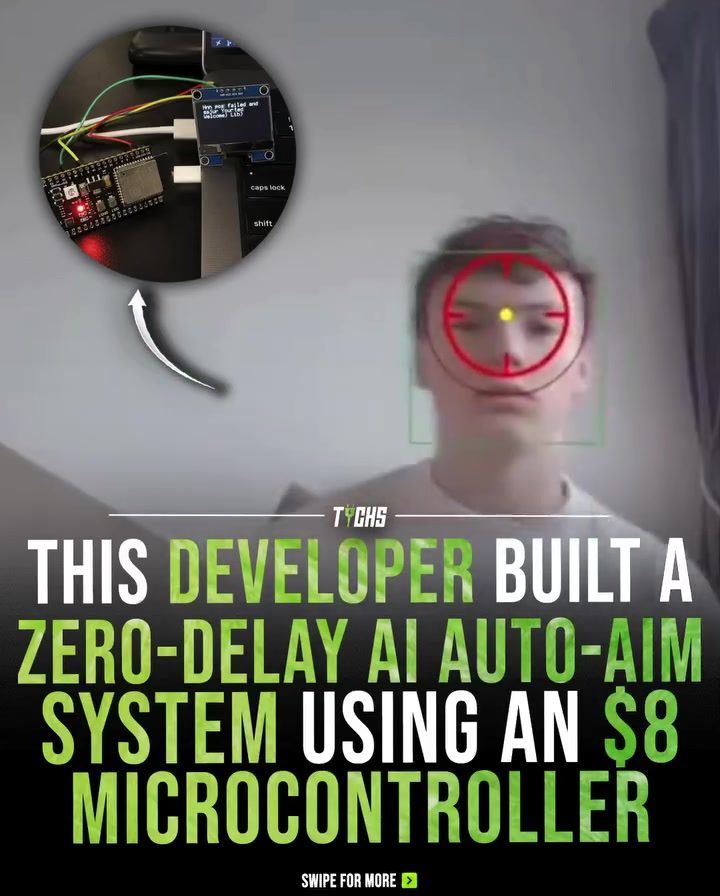
AI-powered microcontrollers are revolutionizing how we interact with technology. One extraordinary example is the ESP32 microcontroller. This tiny, affordable device, priced around $8, is capable of running local computer vision with remarkably low latency, showcasing the immense potential of embedded AI.
Context / Why this matters
The advancement of AI and edge computing is transforming how we approach real-time perception and automation. The ESP32 microcontroller is a testament to this transformation, demonstrating that high-performance computing and AI capabilities are no longer confined to powerful computers or cloud services. This shift towards embedded AI is making technology more accessible and efficient, paving the way for innovative applications in various fields.
Real-Time Computer Vision with the ESP32
The ESP32 microcontroller is capable of running local computer vision tasks. This means that the device can process visual data in real-time directly on the device, without the need for external servers or powerful GPUs. This is particularly impressive given the device’s low cost and minimal hardware.
Custom On-Device AI Algorithms
At the heart of this technology is a custom on-device AI algorithm. This algorithm enables the ESP32 to perform real-time human tracking, a task that traditionally requires significant computational resources. By running this algorithm locally, the system eliminates the need to send data to a cloud service or a powerful GPU. This not only enhances the speed and efficiency of the system but also ensures privacy and security by keeping the data on the device.
Zero-Delay Performance
One of the most striking features of this system is its zero-delay performance. The ESP32 microcontroller can process visual data with remarkably low latency, ensuring that the system responds to changes in real-time. This is crucial for applications that require immediate feedback, such as augmented reality (AR) or autonomous systems.
Efficient Local Inference
The ESP32 microcontroller showcases efficient local inference, which is the process of making predictions based on input data. The device's ability to perform this task efficiently, despite its limited hardware, is a testament to the advancements in AI technology. This efficiency makes the ESP32 a powerful tool for edge computing.
Fast Object Tracking
Object tracking is another key feature of the ESP32 microcontroller. The system can track objects in real-time, making it suitable for a wide range of applications, from surveillance to robotics. The ability to perform fast object tracking on low-cost hardware opens up new possibilities for AI applications that were previously limited by cost and hardware constraints.
Practical Applications and Future Potential
The ESP32 microcontroller's capabilities extend far beyond just auto-aim systems. Its applications are vast and varied, from smart home devices to industrial automation. Here are a few practical applications and future possibilities:
Smart Home Devices
The ESP32 can be integrated into smart home devices, enabling them to perform intelligent tasks such as facial recognition or object tracking. This can enhance the security and convenience of smart homes, making them more efficient and user-friendly.
Industrial Automation
In industrial settings, the ESP32's ability to perform local computer vision tasks can be used for quality control, monitoring, and automation. Its zero-delay performance and efficient local inference make it an ideal choice for applications that require real-time processing and decision-making.
Augmented Reality
The ESP32's low latency and real-time object tracking capabilities make it a valuable component in augmented reality (AR) devices. These devices can use the ESP32 to overlay digital information onto the real world, creating immersive and interactive experiences.
Autonomous Systems
Autonomous systems, such as drones and robots, can benefit greatly from the ESP32's capabilities. Its real-time object tracking and efficient local inference make it an ideal choice for applications that require autonomous decision-making and navigation.
Important Takeaways
The ESP32 microcontroller demonstrates the immense potential of embedded AI and edge computing. The device's ability to run local computer vision tasks with zero-delay performance, efficient local inference, and fast object tracking makes it a powerful tool for a wide range of applications. The advancements in AI technology, as showcased by the ESP32, are making technology more accessible and efficient, paving the way for innovative applications in various fields.
Conclusion
The demonstration of an $8 microcontroller running local computer vision tasks is a game-changer in the field of AI and edge computing. The ESP32 microcontroller's capabilities, including zero-delay performance, efficient local inference, and fast object tracking, make it a versatile and powerful tool. As technology continues to evolve, the ESP32 and similar devices will play a crucial role in shaping the future of AI and automation.
Questions readers ask
What is the ESP32 microcontroller and why is it significant?
The ESP32 microcontroller is an affordable, high-performance device priced around $8, known for its ability to run local AI tasks such as computer vision with minimal delay. Its significance lies in making powerful AI capabilities accessible for a wide range of applications, from hobbyist projects to professional developments.
How does the ESP32 microcontroller enable real-time tracking?
The ESP32 uses on-device AI to process and analyze data in real-time, allowing for instant responses. This capability is particularly useful for applications requiring precise and immediate tracking, such as human tracking AI or AI auto-aim features in gaming or robotics.
What are some practical applications of the ESP32 microcontroller?
The ESP32's ability to perform embedded AI tasks makes it suitable for various applications, including AI-enabled drones, automated surveillance systems, and enhanced robotics. Developers can leverage its capabilities to create innovative projects such as zero-delay aim systems or other real-time tracking solutions.
Can the ESP32 microcontroller be used by beginners?
Yes, the ESP32 is user-friendly and well-documented, making it accessible for beginners. Numerous resources and community support are available to help developers get started with AI microcontroller projects, from basic tutorials to complex embedded AI systems.
What is 'on-device' AI and why is it beneficial?
On-device AI refers to the processing of AI tasks directly on the microcontroller itself, rather than relying on external servers. This approach benefits users by reducing latency, minimizing data transfer, and enhancing privacy, as sensitive information is processed locally.
Related deep dives
Similar reads based on topic and creator.




Recent articles
Fresh deep dives from the latest Reels we unpacked.




Comments
Be the first to comment.