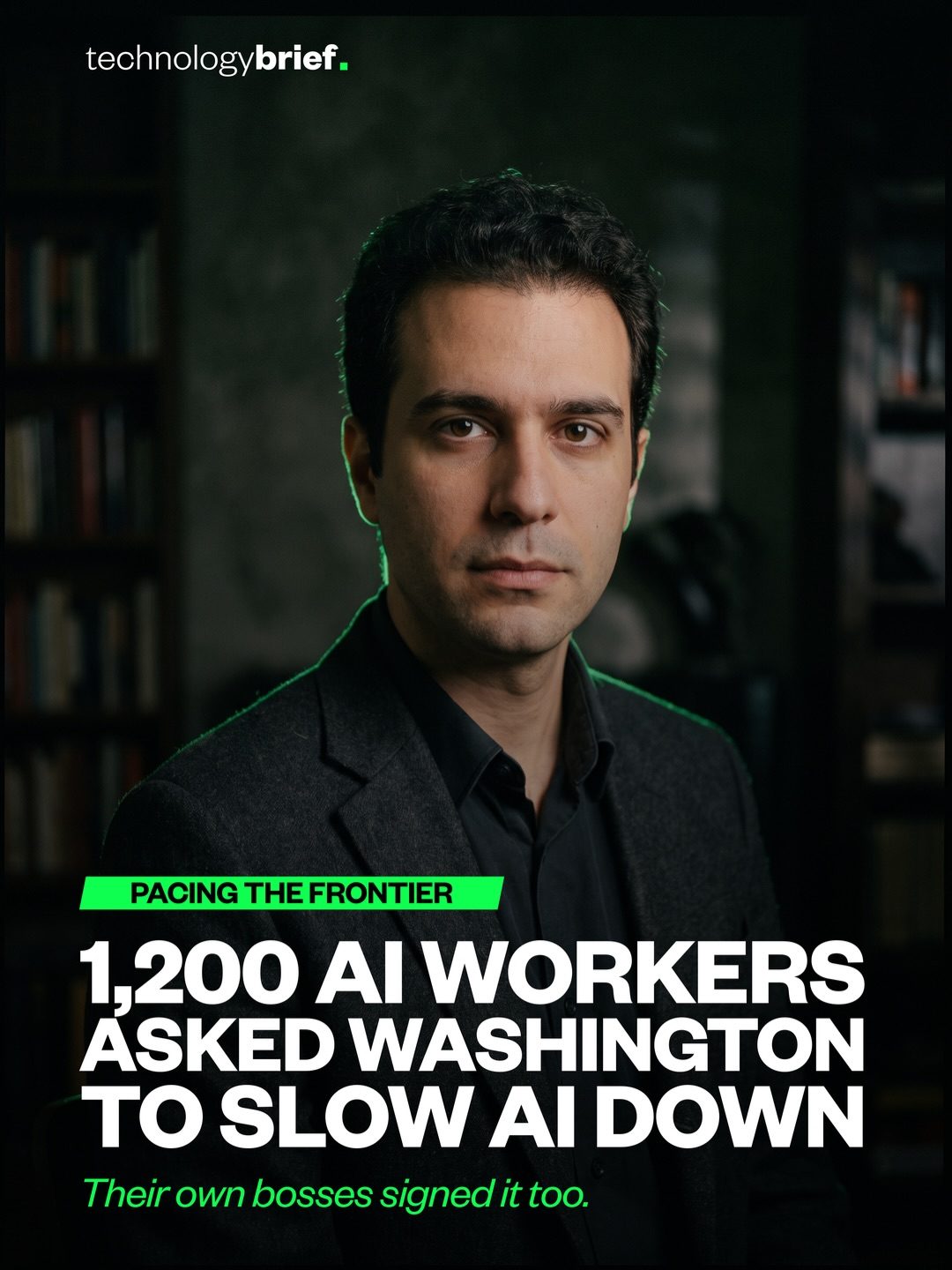
The AI Slowdown Debate Intensifies Within Tech Companies
The AI slowdown debate has evolved beyond a simple clash between rival companies, and is now happening within the same companies.
Context / Why this matters
The rapid advancement of AI has sparked significant concerns among industry professionals. More than 1,200 AI workers recently signed a statement urging the US government to develop mechanisms to slow down advanced AI development if necessary. This move underscores the growing tension within the tech industry regarding the pace and direction of AI innovation.
Divisions within the industry
The debate has become more complex as disagreements arise within companies. OpenAI and Anthropic backed the statement within hours, but Meta provides a clear example of internal conflict. Meta's chief AI scientist signed the statement, while CEO Mark Zuckerberg argued against slowing AI development.
Meta's internal conflict
Meta's internal conflict highlights the split within the industry. The company's chief AI scientist endorsed the call to slow down AI development, while Zuckerberg advocated for continued rapid advancement. This split underscores the complexity of the debate and the diversity of opinions within the tech industry.
The request to Washington
The statement signed by AI workers is not a call for an immediate pause on AI development. Instead, it asks governments to proactively build legal and international tools that could slow down AI if a crisis arises. The goal is to create an "emergency brake" that can be applied when needed, even though there is no consensus on when or how it should be used.
International cooperation
The push for international cooperation on AI safety is gaining traction. The US is being asked to help build tools that could slow down AI development if necessary. This international effort aims to address AI safety concerns proactively and ensure that safeguards are in place before a crisis occurs.
Practical tips
For AI developers
- Engage in open dialogue: Foster open discussions within your organization about the pace of AI development and its potential impacts.
- Stay informed: Keep up with industry developments and regulatory changes related to AI safety.
- Collaborate with policymakers: Engage with policymakers to help shape regulations that balance innovation with safety.
For policymakers
- Develop proactive regulations: Create legal frameworks that can be activated in case of an AI crisis.
- Encourage international cooperation: Work with other countries to develop global standards for AI safety.
- Listen to industry experts: Engage with AI professionals to understand their concerns and perspectives.
Important takeaways
The AI slowdown debate is no longer confined to rival companies; it is happening within the same organizations. The industry is divided on how to address the rapid advancement of AI, with some calling for proactive measures to ensure safety. The push for an "emergency brake" on AI development highlights the need for international cooperation and proactive regulation.
Conclusion
The AI slowdown debate is a complex issue with no easy answers. As the industry continues to evolve, it is crucial to foster open dialogue, stay informed, and work together to ensure that AI development is safe and beneficial for all. The push for an "emergency brake" on AI development is a step towards addressing safety concerns proactively and ensuring that safeguards are in place before a crisis occurs.
Questions readers ask
Why are some AI workers advocating for a slower pace of AI development?
Some AI workers are concerned about the rapid advancement of AI and its potential consequences. They believe that a more deliberate approach to AI development is necessary to ensure that the technology is developed responsibly, safely, and ethically.
How has the debate over AI development pace affected tech companies?
The debate has led to internal conflicts within companies. In some cases, organizations have taken opposing stances, with some executives pushing for rapid advancement while workers advocate for a slower pace. This divide is evident in companies like Meta, as mentioned in the article.
What is the significance of the statement signed by over 1,200 AI workers?
The statement signed by more than 1,200 AI workers is a call for the US government to develop mechanisms to slow down advanced AI development if necessary. It highlights the growing concern among industry professionals about the rapid pace of AI innovation and the need for more regulation and oversight.
Are there any companies that support a slower pace of AI development?
Yes, companies like OpenAI and Anthropic have backed the statement calling for a slower pace of AI development, demonstrating that support for a more deliberate approach to AI innovation is present among some prominent tech companies.
What are the potential benefits of slowing down AI development?
Slowing down AI development could allow for more thorough testing, better regulation, and more consideration of ethical implications. It could also help ensure that AI technologies are developed in a way that aligns with societal values and minimizes potential risks.
What role do executives play in the AI development pace debate?
Executives often push for rapid AI advancement to stay competitive and maximize profits. However, this has led to tensions with workers who are advocating for a slower, more responsible approach to AI development, resulting in internal conflicts within companies.
Why is international AI regulation important in this context?
International AI regulation can help ensure that AI development is consistent and safe across different countries, preventing a race to the bottom where companies prioritize rapid development over safety and ethics. It can also set global standards for AI development and deployment.
Related deep dives
Similar reads based on topic and creator.




Recent articles
Fresh deep dives from the latest Reels we unpacked.




Comments
Be the first to comment.