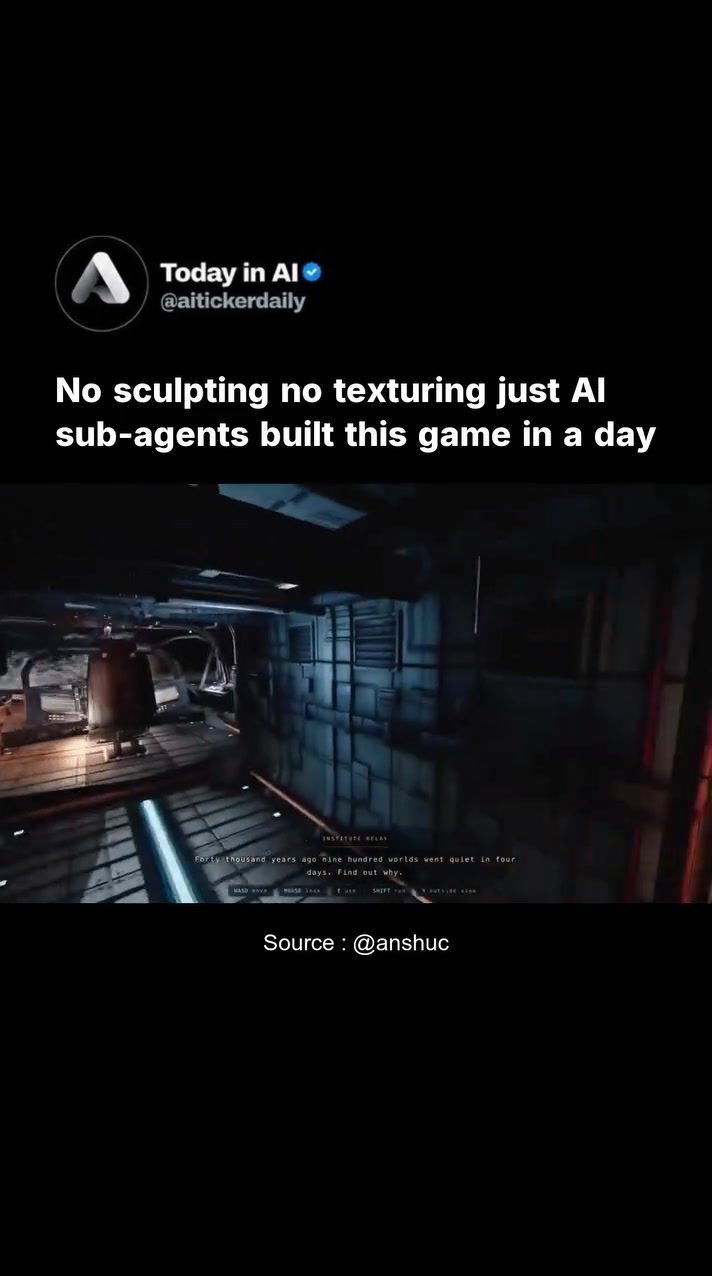
AI-Generated Game Development
AI has revolutionized the way video games are created, with recent advancements making it possible to generate entire games with minimal human intervention. This article explores how AI sub-agents can handle every aspect of game development, from 3D modeling to texturing, and how this technology is being utilized to create expansive, explorable game worlds.
Context / Why this matters
The development of video games traditionally involves a lengthy and meticulous process of sculpting and texturing 3D models. This process requires skilled artists and designers, and can often take weeks or even months to complete. However, recent advancements in AI technology have made it possible to automate this process, allowing for the creation of complex and detailed game environments in a fraction of the time.
Main discussion
The Role of AI in Game Development
AI sub-agents have been used to build a full No Man's Sky style exploration game in a matter of days. This groundbreaking development showcases the potential of AI in game development, allowing for the creation of complex and detailed game environments in a fraction of the time. This was achieved using Opus 5, a tool that leverages AI sub-agents to handle every 3D model and texture through Blender MCP.
The Asset Pipeline
The entire asset pipeline was generated end to end by AI agents, rather than traditional artists. This includes ships, planet surfaces, and all other in-game assets. The AI agents were able to handle every aspect of the game's creation, from modeling to texturing, without any manual intervention. This not only speeds up the development process but also opens up new possibilities for game design, allowing for the creation of more diverse and dynamic game worlds.
The game features diverse environments, including grassy landscapes, futuristic cockpits, and space scenes. This diversity is a testament to the versatility of AI in game development and highlights the potential for creating immersive and dynamic game worlds.
The Game Itself
The game, titled 'ITHIRKA II', is an exploration-style game set in a vast and diverse world. The game features a variety of environments, from grassy landscapes to futuristic cockpits and space scenes. The game also includes in-game elements such as 'HOUSE 1444', 'LANDING AVAILABLE', 'LEAVE THE HELM', and 'MOON FLY W/S THROTTLE', which add to the immersive experience.
The Process
The game was created using Opus 5, a tool that leverages AI sub-agents to handle every 3D model and texture through Blender MCP. The AI sub-agents were able to handle every aspect of the game's creation, from modeling to texturing, without any manual intervention. This not only speeds up the development process but also opens up new possibilities for game design, allowing for the creation of more diverse and dynamic game worlds. The entire process was completed in a single day, with the creator publishing a full write-up of how they did it.
Practical tips
For those looking to explore AI-generated game development, here are some practical tips to get started:
-
Learn the Basics: Before diving into AI-generated game development, it's important to have a solid understanding of traditional game development processes. This includes 3D modeling, texturing, and game design principles.
-
Experiment with AI Tools: There are a variety of AI tools available for game development, each with its own strengths and weaknesses. Experiment with different tools to see which one works best for your needs.
-
Start Small: When first experimenting with AI-generated game development, it's best to start with small projects. This will allow you to get a feel for the process and gradually build up to more complex projects.
-
Collaborate with Others: AI-generated game development is a complex process that often requires collaboration. Consider working with others who have experience in AI, game development, and design.
-
Stay Updated: The field of AI in game development is constantly evolving. Stay updated with the latest trends and tools to ensure you're using the most effective and efficient methods.
Important takeaways
AI has the potential to revolutionize the way video games are created, allowing for the creation of complex and detailed game environments in a fraction of the time. This not only speeds up the development process but also opens up new possibilities for game design, allowing for the creation of more diverse and dynamic game worlds.
The entire asset pipeline can be generated by AI agents, from ships to planet surfaces, without any manual sculpting or texturing. This makes the development process faster and more efficient, and allows for the creation of diverse and dynamic game worlds.
Conclusion
AI is transforming the game development industry, allowing for the creation of complex and immersive game worlds in a fraction of the time. With the right tools and knowledge, anyone can explore this exciting new field and create their own games. The potential for AI in game development is vast, and the possibilities are endless.
Questions readers ask
What are AI sub-agents and how do they contribute to game development?
AI sub-agents are specialized AI components designed to handle specific tasks within the game development process. They contribute by managing various aspects such as 3D modeling, texturing, and world-building, allowing for rapid and efficient game creation. These sub-agents work together to automate complex tasks, significantly speeding up the development timeline.
How does AI technology revolutionize the game creation process?
AI technology revolutionizes game creation by automating time-consuming tasks like 3D modeling and texturing. This automation reduces the need for extensive manual labor and allows for the generation of complex, explorable game worlds in a fraction of the time traditionally required. This enables developers to focus on other creative aspects of game design.
Can AI really generate a full game, including 3D models and textures, in just one day?
Yes, recent advancements in AI have made it possible to generate entire games, complete with 3D models and textures, in just one day. This remarkable speed is achieved through the coordinated efforts of AI sub-agents that handle different aspects of game development concurrently, ensuring a swift and efficient process.
What are the benefits of using AI in game world creation?
Using AI in game world creation offers several benefits, including the ability to create expansive and detailed environments quickly. AI can generate diverse landscapes, intricate 3D models, and realistic textures, providing developers with a vast array of assets to populate their game worlds. This not only saves time but also enhances the richness and complexity of the game environments.
How do AI sub-agents handle the texturing process in game development?
AI sub-agents handle the texturing process by using advanced algorithms to create detailed and realistic textures for 3D models. These algorithms analyze the model's geometry and apply appropriate textures, ensuring that the final product looks visually appealing and cohesive. This automated process eliminates the need for manual texturing, further speeding up the game development cycle.
What does the future hold for AI in game design?
The future of AI in game design is promising, with potential advancements in AI-driven storytelling, NPC behavior, and procedural content generation. As AI technology continues to evolve, we can expect even more sophisticated and immersive gaming experiences. Developers may increasingly rely on AI to handle complex tasks, allowing for greater creativity and innovation in game design.
What skills do developers need to leverage AI in game creation?
Developers looking to leverage AI in game creation should have a strong foundation in programming and a good understanding of AI concepts. Familiarity with machine learning frameworks and tools specific to game development, such as Unity or Unreal Engine, is also beneficial. Additionally, knowledge of 3D modeling and game design principles can help developers effectively integrate AI into their workflows.
Related deep dives
Similar reads based on topic and creator.




Recent articles
Fresh deep dives from the latest Reels we unpacked.




Comments
Be the first to comment.