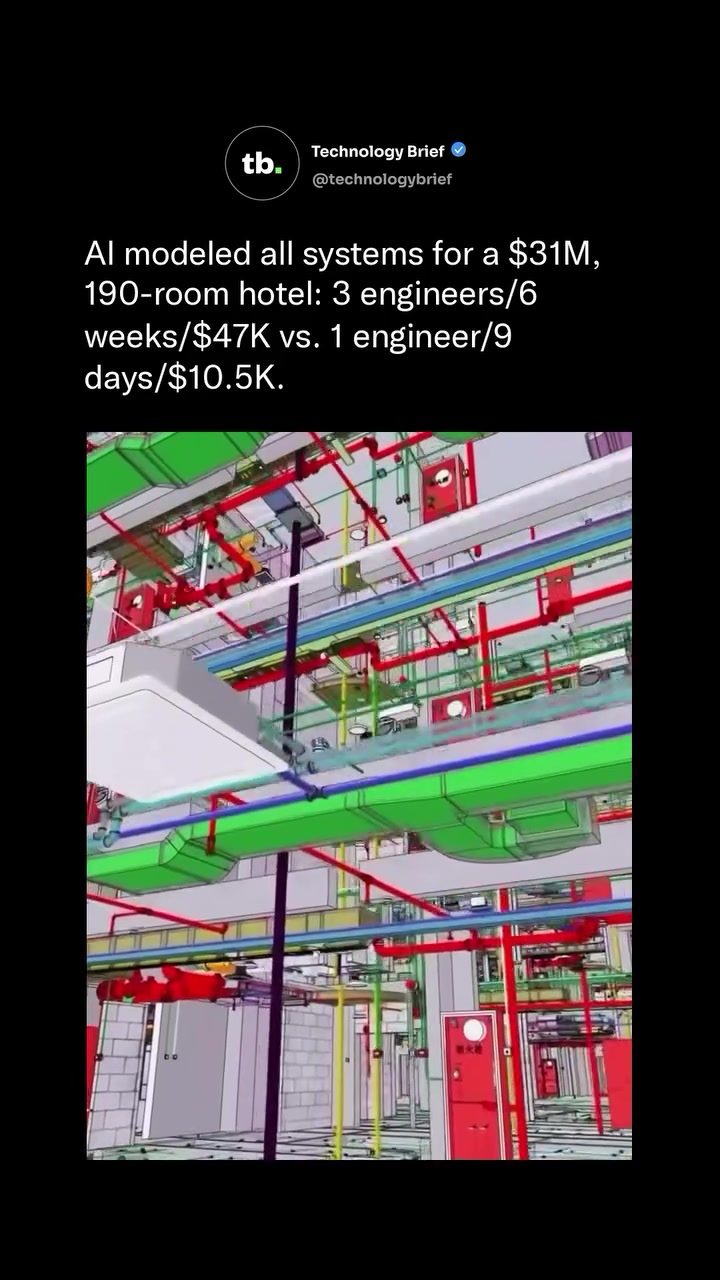
AI Modeling for Hotel Systems
AI modeling revolutionizes hotel design by automating the creation of Building Information Models (BIM). This technology significantly reduces the time and resources required to plan complex systems within a hotel, such as HVAC, plumbing, and electrical infrastructure. By leveraging AI, design teams can streamline the modeling process, leading to more efficient project management and cost savings.
Context / Why this matters
AI modeling is transforming the hotel design industry by enhancing efficiency and reducing costs. Traditionally, creating a Building Information Model (BIM) for a large hotel involves extensive manual labor. Engineers spend weeks placing every duct, pipe, and wire, a process that is both time-consuming and costly. However, with AI, this process can be automated, allowing for faster and more accurate modeling. This technology is particularly valuable in the hotel industry, where complex systems must be integrated seamlessly to ensure comfort, safety, and efficiency for guests.
Main discussion
The Role of AI in Hotel System Design
AI models like Kimi K3 from China’s Moonshot AI are designed to handle the complexities of hotel system design. These models can read blueprint photos and written descriptions, then construct the 3D model autonomously. This capability is made possible by the model's ability to hold an entire project's worth of documentation in memory, allowing for simultaneous coordination of multiple systems.
Traditional vs. AI-Assisted Modeling
Traditional workflows for hotel system design are labor-intensive. For a 190-room, $31 million hotel, this process typically involves three engineers working for six weeks, with a total cost of approximately $47,000. In contrast, AI-assisted modeling can complete the same task with just one engineer in about nine days at a cost of around $10,500. This shift not only reduces labor costs but also minimizes the risk of errors and delays.
The Impact of AI on Construction Change Orders
One of the most significant benefits of AI modeling is the reduction in construction change orders. Fully coordinated models can cut change orders by 60 to 80 percent. This is because clashes between systems, such as ductwork, fire suppression, plumbing, and electrical, are resolved on the screen before any construction begins. This proactive approach ensures that all systems are properly coordinated, reducing the need for costly and time-consuming changes during construction.
Enhancing Efficiency with Context Window
The long-context capability of AI models like Kimi K3 allows them to hold an entire project's worth of documentation in memory. This is crucial for multi-system coordination, as it enables the AI to understand and integrate all the complex interactions between different systems. This capability is what makes AI-assisted modeling so effective in hotel system design.
Practical Tips
Choosing the Right AI Model
When selecting an AI model for hotel system design, it's essential to consider the model's parameters and context window. A model with a higher parameter count and a larger context window will be more capable of handling complex projects. Additionally, ensuring that the model can integrate with your existing modeling tools is crucial for a seamless workflow.
Training and Integration
To fully utilize AI in hotel system design, it's important to train the AI model on relevant data. This includes blueprint photos, written descriptions, and any other documentation related to the project. By providing comprehensive and accurate data, you can enhance the AI's ability to generate precise and reliable models.
Review and Validation
While AI can significantly speed up the modeling process, it's still important to review and validate the output. This ensures that the model accurately reflects the project's requirements and adheres to industry standards. By combining AI assistance with human expertise, you can achieve the best results.
Collaboration with Engineers
Even with advanced AI models, collaboration with experienced engineers is essential. Engineers can provide valuable insights and ensure that the AI-generated models are practical and feasible. This collaboration can help identify potential issues early in the design process, leading to a smoother construction phase.
Important Takeaways
Time and Cost Savings
AI modeling offers significant time and cost savings compared to traditional methods. By automating the modeling process, design teams can complete projects faster and with fewer resources, leading to substantial cost reductions.
Enhanced Accuracy
AI models can generate highly accurate and detailed 3D models, reducing the risk of errors and clashes between systems. This ensures that all systems are properly coordinated, minimizing the need for changes during construction.
Reduced Construction Change Orders
Fully coordinated AI-generated models can significantly reduce construction change orders, leading to smoother and more efficient construction processes. This proactive approach helps avoid costly and time-consuming delays.
Multi-System Coordination
The long-context capability of AI models allows for seamless coordination between multiple systems, ensuring that all systems are integrated correctly. This is particularly important in complex projects like hotel design, where various systems must work together seamlessly.
Conclusion
AI modeling is a game-changer in the hotel design industry. By automating the creation of Building Information Models, AI can significantly reduce the time and resources required for hotel system design. This technology not only enhances efficiency but also improves accuracy and reduces construction change orders. As AI models continue to evolve, their impact on the industry will only grow, making them an essential tool for modern hotel design.
Questions readers ask
How does AI enhance the efficiency of hotel design processes?
AI enhances the efficiency of hotel design processes by automating the creation of detailed Building Information Models (BIMs). This automation significantly reduces the time and resources needed to plan complex systems such as HVAC, plumbing, and electrical infrastructure, leading to streamlined project management and cost savings.
What specific hotel systems can be improved by AI modeling?
AI modeling can greatly improve the design and planning of various hotel systems, including HVAC, plumbing, and electrical infrastructure. By automating the 3D modeling of these systems, AI helps in creating more accurate and efficient designs, which can be crucial for the overall functionality and comfort of the hotel.
How does AI reduce costs in the hotel design process?
AI reduces costs in the hotel design process by automating the labor-intensive tasks involved in creating Building Information Models (BIMs). This automation minimizes the need for extensive manual labor, which can take weeks, and significantly lowers the time and resources required for detailed planning, thus reducing overall project costs.
Can AI modeling improve the accuracy of hotel design plans?
Yes, AI modeling can significantly improve the accuracy of hotel design plans. By automating the 3D modeling process, AI ensures that every detail, from ductwork to wiring, is precisely placed. This level of accuracy is crucial for the smooth execution of construction projects and the efficient operation of hotel systems.
What are the benefits of using BIM in hotel design?
Using BIM in hotel design offers numerous benefits, including enhanced project management, improved collaboration among design teams, and streamlined planning of complex systems. BIM provides a comprehensive digital representation of the hotel, enabling better coordination and reducing the risk of errors and rework, ultimately leading to a more efficient and effective design process.
How does AI impact the planning of HVAC systems in hotels?
AI greatly impacts the planning of HVAC systems in hotels by automating the 3D modeling process. This automation ensures that all ducts, vents, and other components are accurately placed, leading to more efficient and effective HVAC designs. By reducing the time and resources required for this complex planning, AI helps in creating comfortable and efficient hotel environments.
What role does AI play in the automation of electrical design in hotels?
AI plays a crucial role in the automation of electrical design in hotels by automating the 3D modeling of electrical infrastructure. This includes the precise placement of wires, outlets, and other electrical components, ensuring that the design is both efficient and safe. By automating this process, AI helps in reducing the time and resources required, leading to cost savings and more effective electrical system planning.
Related deep dives
Similar reads based on topic and creator.




Recent articles
Fresh deep dives from the latest Reels we unpacked.




Comments
Be the first to comment.