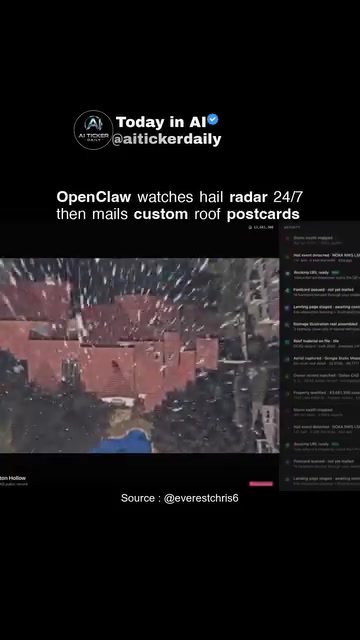
Hail Damage Assessment: The Role of AI in Roof Protection
Hail damage to roofs can be a significant concern for homeowners, especially in areas prone to severe weather. Assessing and repairing hail damage promptly is crucial to prevent further structural issues and water intrusion. Recently, advancements in artificial intelligence (AI) have introduced innovative solutions for monitoring and addressing hail damage, particularly through the use of AI-driven hail radar monitoring and personalized roof assessments.
Context: Why Hail Damage Assessment Matters
Hailstorms can cause extensive damage to roofs, leading to costly repairs and potential safety hazards. Timely and accurate assessment of hail damage is essential for homeowners to take necessary actions to protect their properties and ensure their safety. Traditional methods of hail damage assessment often involve manual inspections, which can be time-consuming and may not always provide a comprehensive view of the damage. This is where AI and technology come into play, offering a more efficient and detailed approach to hail damage assessment.
The Role of AI in Hail Damage Assessment
AI-Driven Hail Radar Monitoring
AI-powered systems, such as the OpenClaw-style agent, can monitor hail radar around the clock, providing real-time data on storm paths and potential damage. These systems can target high-value homes in the storm's path, ensuring that areas at high risk of damage are prioritized for assessment. This continuous monitoring allows for a proactive approach, enabling homeowners to receive timely information about potential hail damage.
Personalized Roof Assessments
One of the key features of AI-driven hail damage assessment is the ability to generate custom, personalized roof postcards. These postcards are mailed to homeowners and include satellite imagery of their roofs, along with a QR code that links to a personalized video pitch.
The postcards detail the damage assessment, repair costs, and relevant National Oceanic and Atmospheric Administration (NOAA) information. This personalized approach provides homeowners with a clear and detailed understanding of the damage to their roofs, helping them make informed decisions about necessary repairs.
Satellite Imagery and Damage Assessment
Satellite imagery plays a crucial role in AI-driven hail damage assessment. High-resolution satellite images can capture the extent and severity of hail damage, providing a comprehensive view of the affected areas. These images are analyzed using advanced algorithms to identify impact points and estimate repair costs. The detailed analysis helps in creating a visual representation of the damage, making it easier for homeowners to understand the scope of the repairs needed.
NOAA Data Integration
AI systems can integrate NOAA data, providing valuable information about weather patterns, storm intensity, and potential damage. This integration allows for more accurate assessments and better preparation for future hailstorms. Homeowners receive relevant NOAA information along with the damage assessment, helping them stay informed about weather conditions and potential risks.
Practical Tips for Homeowners
Regular Roof Inspections
Even with AI-driven assessments, it's important for homeowners to conduct regular roof inspections. This helps in identifying any potential issues early and ensuring that repairs are made promptly. Routine inspections can also help in maintaining the overall health of the roof, extending its lifespan.
Understanding Damage Severity
Homeowners should familiarize themselves with the different levels of hail damage to better understand the severity of the impact. Minor damage may only require cosmetic repairs, while severe damage could necessitate a complete roof replacement. Knowing the difference can help in budgeting and planning for repairs.
Using Technology to Stay Informed
Leveraging AI and technology can provide homeowners with timely and detailed information about hail damage. Subscribing to services that offer AI-driven assessments, such as OpenClaw, can ensure that homeowners receive personalized and accurate reports, helping them stay informed and prepared.
Important Takeaways
- AI-driven hail radar monitoring provides real-time data on storm paths and potential damage.
- Personalized roof assessments, including satellite imagery and repair cost estimates, help homeowners make informed decisions.
- Integrating NOAA data enhances the accuracy of damage assessments and prepares homeowners for future weather events.
- Regular roof inspections and understanding damage severity are crucial for maintaining roof health.
Conclusion
AI-driven hail damage assessment offers a comprehensive and efficient solution for homeowners, providing detailed and timely information about the extent and severity of hail damage. By leveraging advanced technologies, homeowners can better protect their properties and ensure long-term roof health. Staying informed and proactive through regular inspections and AI assessments can significantly mitigate the risks associated with hail damage.
Questions readers ask
How does AI enhance the monitoring of hailstorms for homeowners?
AI enhances hailstorm monitoring by providing real-time data and alerts, enabling homeowners to track the intensity, location, and potential impact of hailstorms in their area. These AI-driven hail radar monitoring systems help in prioritizing high-risk areas, allowing for proactive measures to protect homes from potential damage.
Can AI systems accurately detect hail damage on roofs?
Yes, AI systems can accurately detect hail damage on roofs using advanced algorithms and image analysis. These systems analyze photographs or drone footage of the roof, identifying dents, cracks, and other signs of hail impact, providing homeowners with a comprehensive roof damage assessment.
How does AI assist in the prioritization of high-risk areas during hailstorms?
AI assists in prioritizing high-risk areas by analyzing weather patterns, historical data, and real-time storm information. By identifying areas more susceptible to severe hail damage, AI helps homeowners and insurance providers focus their efforts on the most vulnerable regions, ensuring that resources are allocated efficiently.
What are the benefits of using AI for hail damage assessments compared to traditional methods?
AI offers several benefits, including increased accuracy, speed, and consistency in assessing hail damage. Unlike traditional manual inspections, AI systems can process large amounts of data quickly, providing detailed and personalized assessments. This reduces the time and effort required, making the evaluation process more efficient.
How can AI be integrated with hail damage insurance claims for homeowners?
AI can streamline insurance claims for homeowners by providing detailed and accurate reports on hail damage. These AI-generated assessments can be shared directly with insurance providers, speeding up the claims process. AI home insurance damage reports help ensure that homeowners receive fair and prompt compensation for repairs, reducing the hassle associated with traditional claims procedures.
What type of technology is used in AI-driven hail damage assessment and monitoring?
AI-driven hail damage assessments utilize a combination of technologies, including satellite imagery, drone footage, and radar data. These technologies are processed using machine learning algorithms to detect and analyze hail damage patterns, weather conditions, and potential risks, offering homeowners a comprehensive view of the impact on their roofs.
How can AI help in the timely mitigation of hail damage to roofs?
AI helps in the timely mitigation of hail damage by providing real-time detection and assessment of roof damage. AI systems can alert homeowners to potential issues as soon as a hailstorm occurs, allowing for quicker inspections and repairs. This proactive approach ensures that any damage is addressed promptly, preventing further structural issues and water intrusion.
Related deep dives
Similar reads based on topic and creator.


Recent articles
Fresh deep dives from the latest Reels we unpacked.




Comments
Be the first to comment.