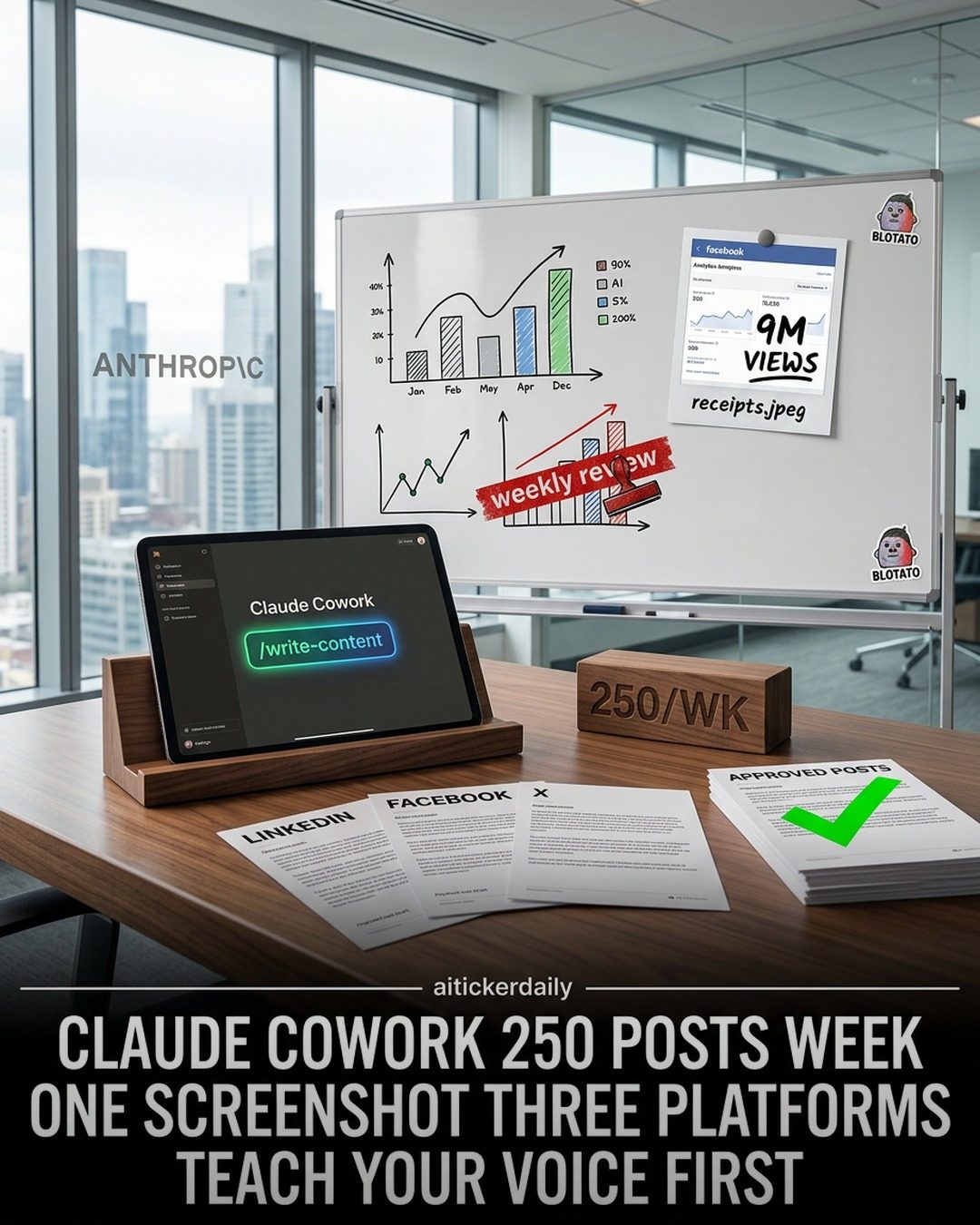
AI-Powered Content Creation Workflow
Generating 250 pieces of content per week without a team might sound impossible, but Sabrina Ramonov makes it a reality using AI. This workflow leverages AI tools and strategic processes to create content for various platforms efficiently. Here's a deep dive into the key components of her AI-powered content creation system.
Context / Why This Matters
In today's fast-paced digital world, maintaining a consistent and engaging social media presence is crucial. AI-powered content creation not only streamlines this process but also ensures that the content is tailored to different platforms, maximizing its impact. Understanding how to implement such a system can help content creators and marketers alike achieve unprecedented efficiency and reach.
AI Content Creation Workflow
Sabrina Ramonov's workflow is centered around AI tools that automate and optimize content creation. The process begins with a voice input to teach the AI, followed by analyzing data and screenshots. This data is then used to generate content that is tailored for platforms like LinkedIn, Facebook, and X.
Data and Screenshots
Data and screenshots serve as the foundation of this workflow. Screenshots from social media platforms, such as Facebook analytics, are used to generate posts. For example, a screenshot of a Facebook page with 9 million organic views can be used to create posts across multiple platforms. This approach eliminates the need to manually gather data from multiple sources.
Voice Input
Voice input plays a critical role in teaching the AI. By providing voice commands, the AI can learn and adapt to generate content that aligns with the creator's style and preferences. This hands-on approach ensures that the AI-generated content remains authentic and aligned with the brand's voice.
Tailored Content
The AI then generates tailored content for different platforms. LinkedIn, for instance, might receive a longer narrative post, while Facebook and X get shorter, more concise variants. This tailored approach ensures that the content is optimized for each platform's audience and preferences.
Filesystem Triggers for AI Content
Filesystem triggers are a key component of this workflow. They automate the process of generating content by using files such as screenshots, analytics data, and receipts as input. This system reduces the need for manual work and ensures that content creation is efficient and streamlined.
Automating Content Creation
Filesystem triggers automate content creation by using files as input. For example, a screenshot saved in the downloads folder can trigger the generation of LinkedIn, Facebook, and X posts. This approach ensures that content creation is seamless and integrated into the user's workflow.
Expanding Input Data
Filesystem access expands the range of input data. Analytics screenshots, customer messages, chart images, and receipt-style proof posts can all be used as input for generating content. This flexibility ensures that the AI can generate content from a wide variety of sources, making the system highly adaptable.
Scaling AI Content Production
Scaling AI content production involves more than just creating a large volume of content. It requires a pipeline that integrates various tools and APIs, along with human oversight and editorial judgment.
Pipeline Integration
A successful pipeline integrates various tools and APIs, such as Blotato, Canva, and calendar APIs. These tools work together to create a seamless content creation process. The pipeline ensures that content is generated efficiently and effectively, reducing the need for manual intervention.
Human Editorial Judgment
Despite the automation, human editorial judgment remains essential. The strategy and decision-making processes, such as determining what to post, are still handled by the operator. AI multiplies editorial judgment by generating content that aligns with the operator's guidelines and preferences.
Practical Tips
Implementing an AI-powered content creation workflow requires a strategic approach. Here are some practical tips to help you get started:
-
Start with Voice Input: Teach your AI by providing voice commands. This ensures that the AI-generated content aligns with your brand's voice and style.
-
Utilize Filesystem Triggers: Automate content creation by using filesystem triggers. Save screenshots and data in specific folders to trigger the generation of posts.
-
Tailor Content for Platforms: Customize your content for different platforms. LinkedIn, Facebook, and X each have unique audience preferences, so tailor your content accordingly.
-
Integrate Tools and APIs: Use tools like Blotato, Canva, and calendar APIs to create a seamless content creation pipeline. These tools can help automate and optimize the process.
-
Maintain Human Oversight: While AI can generate content, human editorial judgment is still essential. Regularly review and refine the content to ensure it meets your standards.
Important Takeaways
-
Efficiency: AI-powered content creation significantly enhances efficiency, allowing for the generation of 250 pieces of content per week with zero staff.
-
Automation: Filesystem triggers and voice input automate the content creation process, reducing the need for manual work.
-
Tailored Content: Generating tailored content for different platforms ensures that the content is optimized for each audience.
-
Human Oversight: Human editorial judgment remains crucial for maintaining content quality and relevance.
Conclusion
AI-powered content creation offers a revolutionary approach to managing social media content. By leveraging AI tools and strategic processes, content creators and marketers can generate a high volume of tailored content efficiently. This system not only saves time and resources but also ensures that the content is optimized for different platforms, maximizing its impact. Whether you're a solo creator or part of a larger team, integrating AI into your content creation workflow can transform the way you approach digital content management.
Questions readers ask
How does Sabrina Ramonov manage to create 250 pieces of content weekly?
Sabrina Ramonov achieves this by using an AI-powered content creation workflow. This involves leveraging AI tools to streamline the content generation process, allowing her to produce a large volume of content efficiently. She also utilizes data analysis to tailor the content for various platforms, ensuring maximum reach and engagement.
What role do AI tools play in Sabrina Ramonov's content creation process?
AI tools are integral to Sabrina Ramonov's process, helping to automate and enhance various aspects of content creation. These tools assist in generating ideas, writing, and even optimizing content for different platforms, allowing her to maintain a consistent and engaging social media presence.
How does Sabrina Ramonov utilize voice input and screenshots in her content creation process?
Voice input allows Sabrina to quickly dictate her ideas and content, while screenshots help in capturing visual elements that can be incorporated into the content. These methods enable a more dynamic and efficient content creation process, reducing the time spent on manual input.
What are some of the strategies Sabrina Ramonov employs to maximize content reach and engagement?
Sabrina Ramonov uses data-driven insights to tailor content for different platforms, ensuring that each piece resonates with the intended audience. By analyzing performance metrics and user behavior, she can optimize her content strategy to enhance reach and engagement across various platforms.
Which AI-powered content generation tools does Sabrina Ramonov use in her workflow?
While the specific tools are not mentioned, Sabrina Ramonov likely uses a combination of AI writing software, data analysis tools, and platforms that support voice input and screenshot integration. These tools work together to automate and enhance the content creation process, making it more efficient and effective.
How does Sabrina Ramonov ensure that her content is tailored to different platforms?
Sabrina Ramonov employs a strategic approach that involves analyzing data from different platforms to understand what types of content perform best. She then uses this information to tailor her content, ensuring that each piece is optimized for the specific platform it is meant for, whether it be social media, blogs, or other digital spaces.
Related deep dives
Similar reads based on topic and creator.




Recent articles
Fresh deep dives from the latest Reels we unpacked.




Comments
Be the first to comment.