AI-Powered Potato Sorting: Revolutionizing Industrial Automation with a Lightweight Vision System
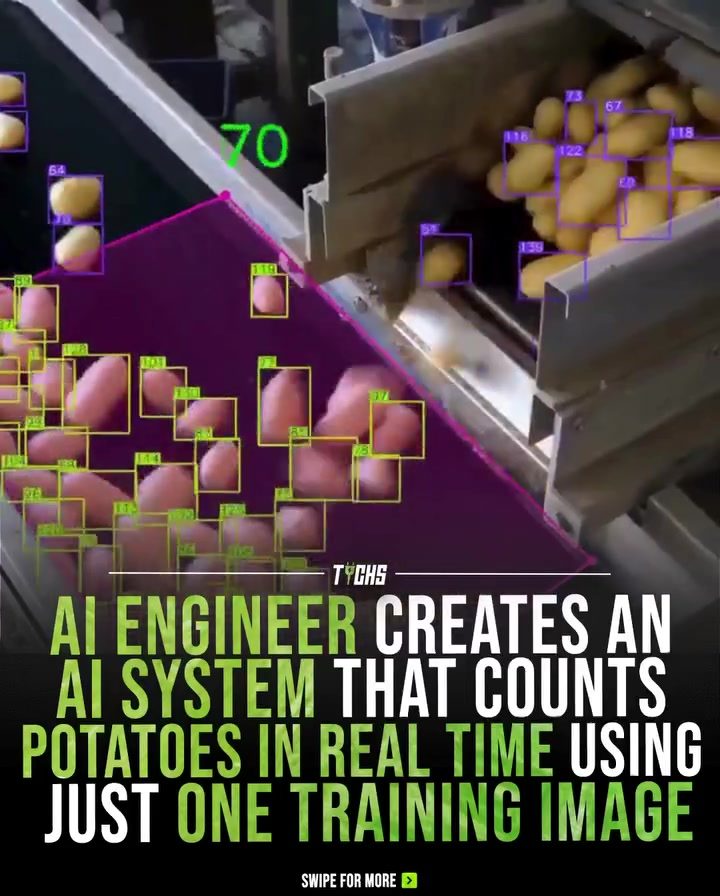
Industrial automation has long been a cornerstone of efficiency in modern manufacturing, and the integration of AI is pushing the boundaries even further. One groundbreaking application is the real-time counting of potatoes using a lightweight vision system. This innovative setup, developed by an AI engineer, leverages cutting-edge technology to streamline the sorting process, making it faster, more efficient, and less dependent on extensive datasets or powerful hardware.
Context: Why This Matters
In the realm of industrial automation, the ability to automate repetitive tasks is crucial for improving productivity and reducing human error. Traditional methods of counting and sorting items like potatoes often require significant manual labor and can be time-consuming. By introducing a lightweight AI vision system, the process becomes not only more efficient but also more accurate. This application demonstrates the practical use of computer vision in automating specific industrial tasks, offering a glimpse into the future of smart manufacturing.
Anatomy of the AI Potato Counting System
The AI system in question is a testbed for practical computer vision applications. It uses a combination of YOLOv11 Nano and Meta’s Segment Anything Model (SAM 2) to achieve its counting capabilities. This combination allows the system to learn what a potato looks like from just a single annotated frame, making it extremely efficient and lightweight.
YOLOv11 Nano
YOLOv11 Nano is a lightweight version of the YOLO (You Only Look Once) algorithm, designed for real-time object detection. It's known for its speed and efficiency, making it ideal for applications where quick detection and processing are crucial. In this case, YOLOv11 Nano is used to detect potatoes moving along a conveyor belt.
Meta’s SAM 2
Meta’s SAM 2, or Segment Anything Model 2, is a powerful tool for image segmentation. It allows the system to understand the shape and boundaries of the objects it detects, which is essential for accurate counting. By using just one training image, the system can learn to segment and count potatoes with remarkable precision.
Integration into the Potato Sorting Machine
The TCHS potato sorting machine integrates this AI vision system seamlessly. The system is designed to work with a conveyor belt, where potatoes are continuously moving. As the potatoes pass under the camera, the AI system uses bounding boxes to highlight individual potatoes and then counts them in real-time. This real-time counting is displayed on the screen, providing immediate feedback and ensuring that the counting process is both accurate and efficient.
Real-Time Counting and Its Advantages
The real-time counting capability of this AI system offers several advantages:
- Efficiency: By automating the counting process, the system reduces the need for manual labor, allowing human workers to focus on other tasks.
- Accuracy: The use of advanced AI models ensures that the counting is accurate, minimizing errors that can occur with manual counting.
- Speed: The system's ability to process and count potatoes in real-time means that the sorting process is faster, increasing overall productivity.
- Scalability: The lightweight nature of the system makes it easy to scale, allowing it to be used in various industrial settings without requiring extensive resources.
Practical Tips for Implementing AI in Industrial Automation
Implementing AI in industrial automation can seem daunting, but with the right approach, it can be a smooth and rewarding process. Here are some practical tips for getting started:
- Start Small: Begin with a specific, well-defined task like potato counting. This allows you to test the waters and understand the capabilities and limitations of the technology without overwhelming your system.
- Leverage Existing Models: Use pre-trained models like YOLOv11 Nano and SAM 2 to save time and resources. These models are already optimized for various tasks and can be fine-tuned for your specific needs.
- Focus on Efficiency: Aim for lightweight and efficient solutions. This ensures that your system can run smoothly without requiring powerful hardware or extensive datasets.
- Test and Iterate: Continuously test your system and make iterative improvements. Real-world applications often require adjustments and fine-tuning to achieve optimal performance.
- Collaborate with Experts: Work with AI engineers and computer vision specialists to ensure that your system is reliable and effective. Their expertise can help you navigate the complexities of AI implementation.
Important Takeaways
The AI-powered potato counting system developed by TCHS demonstrates the power of practical computer vision in automating industrial tasks. By using a combination of YOLOv11 Nano and Meta’s SAM 2, the system can count potatoes in real-time using just one training image, making it both efficient and cost-effective.
Key takeaways from this application include:
- The importance of lightweight and efficient AI models in industrial automation.
- The practicality of using pre-trained models to save time and resources.
- The benefits of real-time counting in terms of speed, accuracy, and scalability.
- The potential for AI to automate repetitive tasks, freeing up human labor for more complex tasks.
Conclusion
The AI-powered potato counting system showcases how practical computer vision can revolutionize industrial automation. By leveraging advanced AI models and integrating them into existing machinery, this system offers a glimpse into the future of smart manufacturing. As technology continues to evolve, the possibilities for AI in industrial settings are endless, making it an exciting time for innovation and efficiency.
Questions readers ask
How does AI potato counting enhance industrial automation systems?
AI potato counting systems, such as those using YOLOv11 Nano and Meta's Segment Anything Model, automate the sorting process, making it faster and more accurate, thus improving overall efficiency. By reducing the need for manual labor and minimizing errors, these systems help streamline operations in agricultural and manufacturing sectors.
What are the benefits of using lightweight AI algorithms like YOLOv11 Nano in potato counting?
Lightweight AI algorithms, such as YOLOv11 Nano, enable real-time processing without requiring high-end hardware. This makes the technology more accessible and cost-effective for industrial applications, especially in scenarios where powerful computing resources are limited. Additionally, these algorithms are designed to work efficiently with minimal data, making them ideal for practical, real-world applications.
Can a single camera be used for AI-driven potato counting and sorting?
Yes, a single camera can be effectively used for AI-driven potato counting and sorting. Advanced algorithms like YOLOv11 Nano and Meta’s Segment Anything Model are capable of processing images from a single camera feed to provide real-time, precise sorting and counting. This setup simplifies the hardware requirements and reduces overall system complexity.
How does real-time image processing improve potato sorting in industrial settings?
Real-time image processing allows for instantaneous analysis and sorting of potatoes, ensuring that each potato is correctly identified and categorized as it moves through the system. This immediate feedback loop helps in maintaining a consistent and efficient sorting process, reducing bottlenecks and ensuring that only the highest quality potatoes reach the market.
What role does Meta's Segment Anything Model play in AI potato counting?
Meta's Segment Anything Model (SAM) enhances AI potato counting by providing advanced segmentation capabilities, allowing the system to accurately distinguish between individual potatoes and other objects in the image. This precision is crucial for ensuring that the counting process is accurate and reliable, even in complex or cluttered environments.
What are the hardware requirements for implementing an AI potato counting system?
The hardware requirements for an AI potato counting system are minimal due to the use of lightweight algorithms. Typically, a single camera and a modest computing device, such as a standard laptop or embedded system, are sufficient to run these systems. This low hardware dependency makes it a practical and affordable solution for various industrial settings.
How does AI-driven potato counting contribute to agriculture and industrial sectors?
AI-driven potato counting enhances agricultural and industrial sectors by automating the time-consuming task of counting and sorting potatoes. This leads to improved productivity, reduced labor costs, and consistent quality control. By integrating advanced vision systems, these technologies ensure that the sorting process is both efficient and reliable, supporting the broader goals of industrial automation.
Related deep dives
Similar reads based on topic and creator.




Recent articles
Fresh deep dives from the latest Reels we unpacked.




Comments
Be the first to comment.