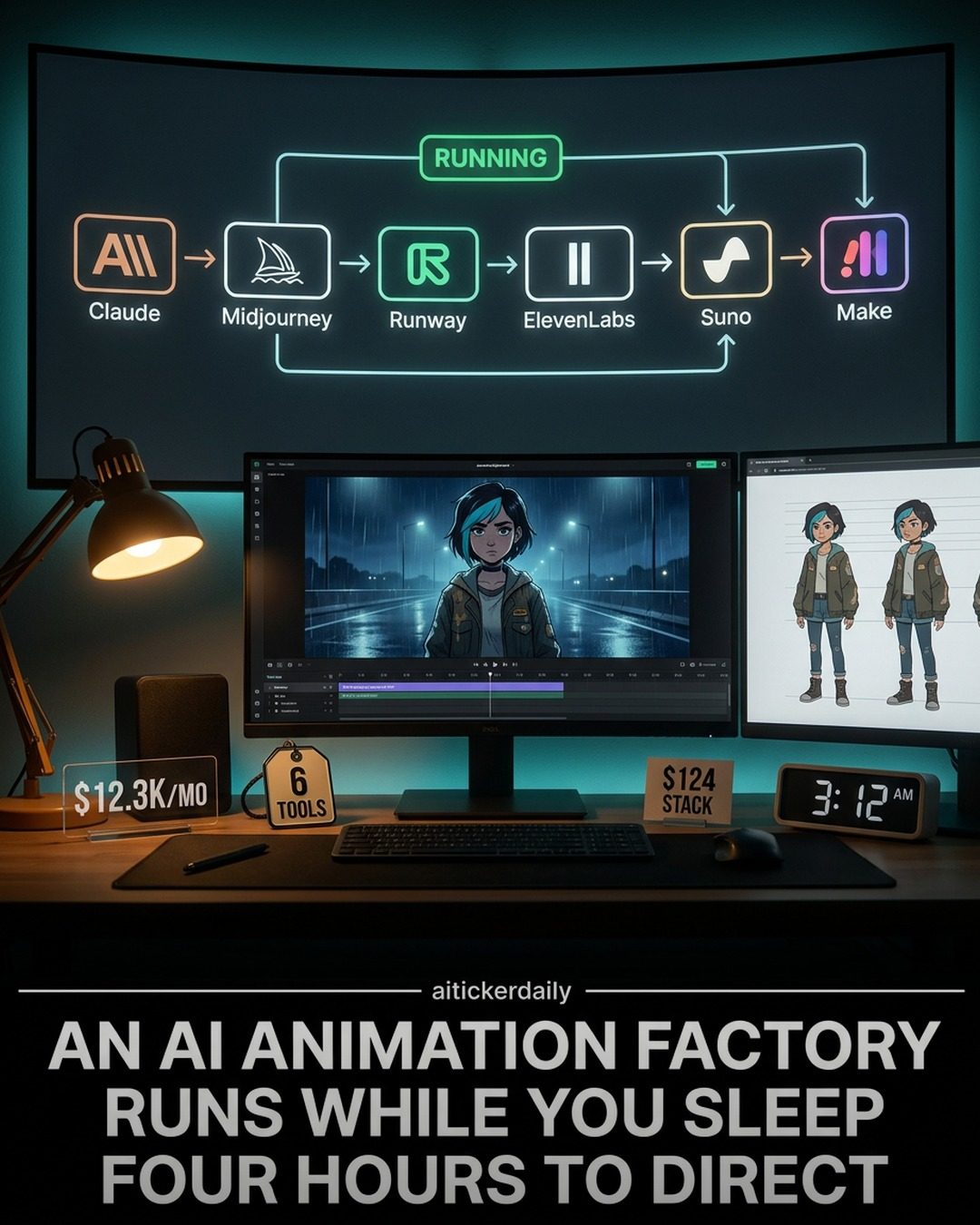
AI Animation Factory: Streamlining Production with Six Tools
Creating high-quality animation content can be a time-consuming and resource-intensive process. However, with the right tools and workflow, it's possible to streamline production and generate impressive results efficiently. An AI animation factory leverages six key tools to create a seamless pipeline for animation production. This setup not only simplifies the process but also opens up multiple revenue streams, making it a compelling option for animators and content creators.
Why This Matters
The integration of AI tools in animation production offers numerous advantages. It reduces the time and effort required to create content, allowing for faster turnaround times and increased output. Additionally, the use of AI can enhance the quality and consistency of the animation, leading to better viewer engagement and higher revenue potential.
Main Discussion
The Six Tools in the Pipeline
The AI animation factory utilizes a combination of six powerful tools to create a comprehensive production pipeline. Each tool plays a specific role in the workflow, from scriptwriting to final publishing.
Claude: Scriptwriting and Scene Descriptions
Claude is an AI tool that specializes in generating episode scripts and scene descriptions. It can craft compelling narratives, dialogue, and tone notes, which are essential for crafting engaging brand explainers and other types of animated content. Specifically, Claude can break down the problem, mechanics, numbers, and call-to-action in a way that enhances the storytelling.
Midjourney: Visuals and Character Designs
Midjourney is a tool that takes care of the visual aspects of the animation. It creates character turnaround sheets, environment establishing shots, and other visual elements. For example, Midjourney blends Western feature aesthetics with Ghibli-style for series, and uses flat vector-influenced designs for brands. It provides 4 variations per scene, allowing for flexibility and choice in the final product. Its prompt discipline ensures cinematic lighting and consistent character design.
Runway and ElevenLabs: Motion and Voice
Runway and ElevenLabs work in tandem to bring motion and voice to the animation. Runway handles the animation process, ensuring smooth and dynamic movements. Meanwhile, ElevenLabs provides the voice, adding depth and realism to the characters. Together, these tools breathe life into the animations, making them more engaging and immersive.
Suno: Scoring and Background Music
Suno is responsible for scoring and background music, which are crucial elements in setting the mood and enhancing the viewer's experience. The right music can evoke emotions, drive the narrative, and make the animation more memorable. Suno ensures that the soundtrack complements the visuals and dialogue, creating a cohesive and engaging final product.
Make: Publishing and Content Management
Make is the final tool in the pipeline, handling the publishing and content management. It ensures that the final product is polished and ready for distribution. Make can publish content overnight, allowing for a seamless workflow from creation to distribution.
The Workflow
The workflow of the AI animation factory is designed to be efficient and streamlined. Here’s a breakdown of the process:
-
Scriptwriting and Scene Descriptions: Claude generates the script and scene descriptions, providing a solid foundation for the animation. It outlines the narrative, dialogue, and tone, ensuring a cohesive and engaging story.
-
Visuals and Character Designs: Midjourney creates the visual elements, including character designs and environment shots. It generates 4 variations per scene, allowing for flexibility in the final product.
-
Motion and Voice: Runway and ElevenLabs work together to bring motion and voice to the animation. Runway handles the animation, while ElevenLabs provides the voice, ensuring a smooth and engaging final product.
-
Scoring and Background Music: Suno scores the animation, adding a musical backdrop that complements the visuals and dialogue, making the content more immersive.
-
Publishing and Content Management: Make handles the final publishing and content management, ensuring that the animation is polished and ready for distribution. Content is published overnight, allowing for a seamless workflow.
Revenue Streams
The AI animation factory opens up multiple revenue streams, making it a viable option for animators and content creators. Here are some of the potential revenue streams:
-
YouTube AdSense: Animation RPM (revenue per thousand views) can range from $5 to $12 per 1,000 views. With approximately 900,000 monthly views, YouTube AdSense can generate between $4,500 and $10,800 per month. Running adult series and kids' channels separately can help maximize earnings.
-
Patreon: Offering early access to content through Patreon can provide a passive income stream. With 150 members paying $5.99 per month, Patreon can generate around $900 per month in passive income.
-
Asset Licensing: Licensing production frames on platforms like Gumroad can be a lucrative revenue stream. Pricing packs at $27 and integrating them into various projects can generate between $400 and $1,000 per integration, especially with a large subscriber base.
-
Sponsorships: Partnering with animation tools, indie games, and design software for sponsorships can bring in an additional $3,500 to $8,000 per month. These sponsorships can provide a steady stream of income and help promote the tools and software used in the animation process.
Workflow Guidelines
To ensure a smooth and efficient workflow, it's essential to follow specific guidelines and best practices:
-
Prompt Discipline: Maintain prompt discipline for consistent lighting, palette locks, and character designs. This ensures that the final product has a cohesive and high-quality look.
-
Content Types: The AI animation factory can produce four types of content: series, explainers, narrated guides, and brand explainers. Each type of content has its unique requirements and can be tailored to meet specific needs.
-
Four-Hour Turnaround: The entire process, from scriptwriting to final publishing, takes approximately four hours. This allows for a quick turnaround time, enabling the creation of multiple content pieces in a short period.
The Cost and ROI
The tools and software used in the AI animation factory have a combined monthly cost of around $124. This cost is relatively low, considering the high-quality output and multiple revenue streams.
The potential return on investment (ROI) is significant. With a potential monthly income of $12,345, the ROI can be substantial, making it a worthwhile investment for animators and content creators.
Practical Tips
Choosing the Right Tools
Selecting the right tools is crucial for a successful AI animation factory. Ensure that the tools you choose cover all aspects of the animation process, from scriptwriting to final publishing. Consider the specific needs of your content and choose tools that can meet those requirements effectively.
Maintaining Quality
Quality is key in animation. Ensure that the tools you use can maintain a high level of quality throughout the production process. This includes consistent character designs, smooth animation, and high-quality voice and music.
Maximizing Revenue
To maximize revenue, consider multiple revenue streams. This includes YouTube AdSense, Patreon, asset licensing, and sponsorships. Diversifying your revenue streams can help ensure a steady income and provide financial stability.
Efficient Workflow
Efficient workflow is essential for a successful AI animation factory. Ensure that your workflow is streamlined and that each step of the process is optimized for speed and efficiency. This includes using the right tools, following best practices, and maintaining prompt discipline.
Regular Updates
Regular updates and improvements to the workflow and tools can help ensure that the AI animation factory remains effective and competitive. Stay updated with the latest trends and technologies in animation and AI to ensure that your content remains relevant and engaging.
Important Takeaways
- The AI animation factory leverages six powerful tools to create a seamless pipeline for animation production.
- The workflow involves scriptwriting, visuals, motion, voice, scoring, and publishing, with a four-hour turnaround.
- Potential revenue streams include YouTube AdSense, Patreon, asset licensing, and sponsorships.
- The cost of the tools is relatively low, with a potential monthly income of $12,345.
- Following best practices and maintaining prompt discipline can help ensure a high-quality and efficient workflow.
Conclusion
The AI animation factory is a powerful solution for animators and content creators looking to streamline their production process and maximize revenue. By leveraging six key tools and following a streamlined workflow, it's possible to create high-quality animation content efficiently. With multiple revenue streams and a relatively low cost, the AI animation factory is a compelling option for anyone looking to enter or expand in the animation industry.
Questions readers ask
What are the six tools mentioned in the AI animation factory pipeline?
The article outlines six key tools used in an AI animation factory pipeline, each designed to streamline a different stage of production. These tools span from initial scripting to final publishing, creating an efficient workflow for animators. While the specific tools aren't listed in the excerpt, they are likely to cover aspects such as AI-powered scriptwriting, character design, scene generation, and rendering.
How does AI reduce the time required for animation production?
AI significantly reduces production time by automating repetitive tasks and providing intelligent suggestions throughout the animation process. This includes generating initial drafts, refining character movements, and optimizing rendering processes. By handling these tasks efficiently, AI allows animators to focus more on creative aspects, thereby speeding up the overall production timeline.
Can AI tools improve the quality of animations?
Yes, AI tools can enhance the quality of animations by offering advanced features like realistic character movements, sophisticated scene generation, and high-quality rendering. These tools can also help in maintaining consistency across frames and scenes, leading to a more polished final product. Additionally, AI can provide insights and recommendations that animators might not consider, further elevating the output quality.
What are the benefits of using an AI animation factory for content creators?
AI animation factories offer several benefits, including reduced production time, increased output, and enhanced animation quality. These advantages allow content creators to produce more content in less time, which can lead to higher revenue streams. Furthermore, the efficient workflow enables creators to take on more projects, explore new creative ideas, and stay competitive in the animation market.
How does the AI animation factory pipeline work?
The AI animation factory pipeline integrates six tools that work together to create a seamless production process. Starting from scripting, AI tools assist in generating story ideas, writing dialogue, and even creating basic storyboards. Subsequent tools help with character design, scene generation, and rendering, ensuring each stage of production is optimized. The final stages focus on publishing and distribution, making the entire process efficient and streamlined.
What revenue streams can be opened up by using an AI animation factory?
Utilizing an AI animation factory can open up multiple revenue streams for animators and content creators. Due to the faster production times and increased output, creators can produce more content for various platforms, such as streaming services, social media, and YouTube. Additionally, the high-quality output can attract more viewers and potential clients, leading to opportunities for merchandising, licensing, and sponsorships.
Is the AI animation factory suitable for both beginners and experienced animators?
The AI animation factory is designed to be beneficial for both beginners and experienced animators. For beginners, it provides a structured workflow and automated tools that can help them overcome the initial learning curve and produce professional-quality animations more quickly. For experienced animators, it offers advanced features and time-saving capabilities, allowing them to focus more on creative and innovative aspects of their projects.
Related deep dives
Similar reads based on topic and creator.




Recent articles
Fresh deep dives from the latest Reels we unpacked.




Comments
Be the first to comment.