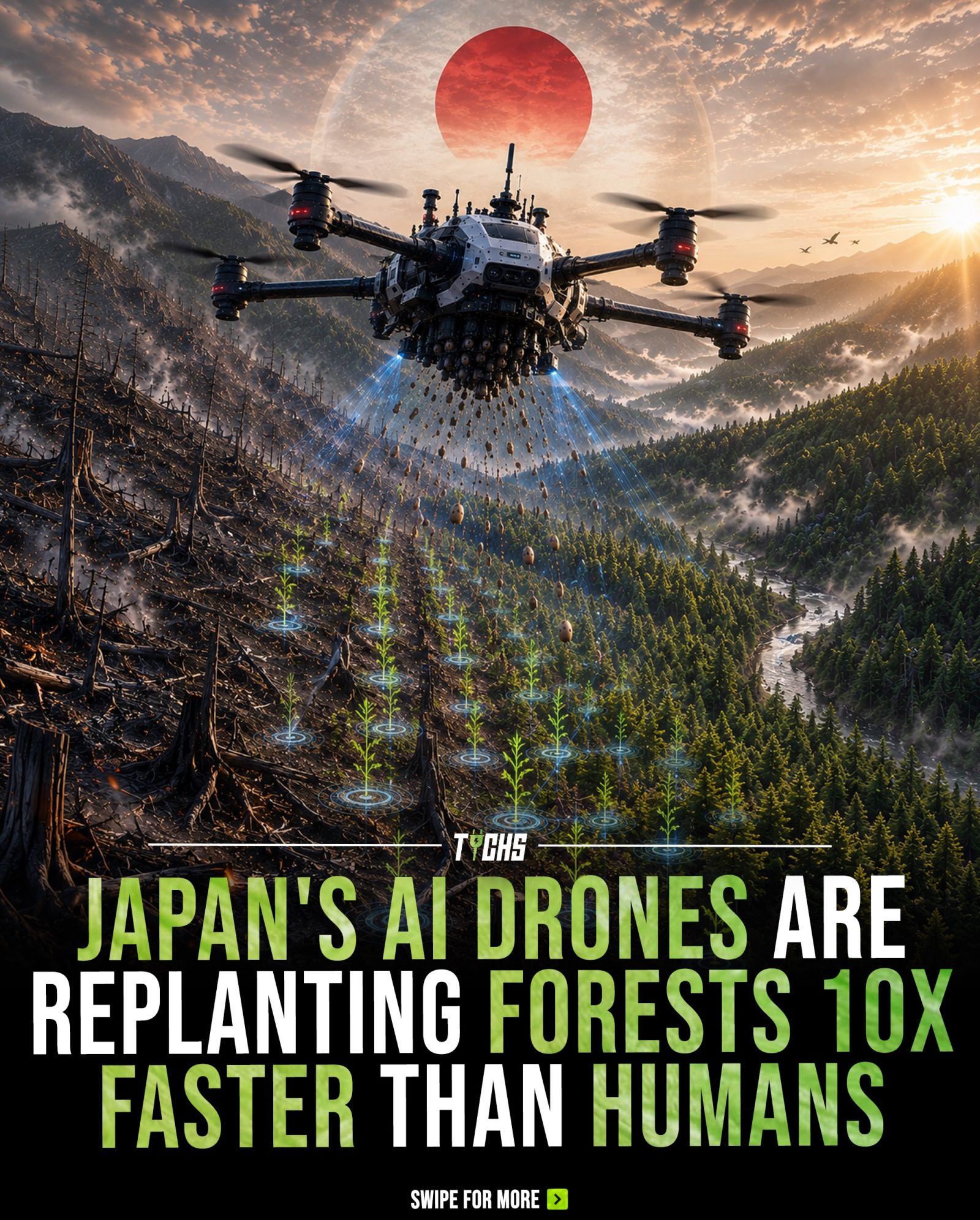
AI Drones Replanting Forests
Japan is using AI-powered drones to address one of its biggest environmental challenges: reforesting vast areas quickly and efficiently. With forests covering much of the country, wildfires, severe storms, and a shrinking forestry workforce have made large-scale reforestation increasingly difficult.
Context: Why This Matters
Forests play a critical role in maintaining healthy ecosystems, and their depletion can have severe consequences, including soil erosion, loss of biodiversity, and disruption of local climates. The use of AI drones in reforestation represents a significant technological advancement that can help restore these vital ecosystems more efficiently than traditional methods.
Main Discussion
The Role of AI and LiDAR in Reforestation
AI and LiDAR (Light Detection and Ranging) mapping technology are at the heart of this innovative approach. These drones can scan rugged terrain and identify optimal planting locations with remarkable precision. The drones are equipped with specialized cameras and sensors that create detailed 3D maps of the area, enabling them to pinpoint the best spots for planting.
How the Drones Plant Trees
The drones use biodegradable seed pods, which are designed to break down naturally over time, releasing seeds and nutrients into the soil. These pods are fired directly into the ground, ensuring a high success rate for germination and growth. The process is efficient, allowing a single drone to plant thousands of seed pods in a single day.
The Speed and Efficiency of AI Drones
One of the most impressive aspects of these drones is their speed. They can plant seeds at a rate of up to 10 times faster than traditional methods. This speed is particularly beneficial in remote and hard-to-reach areas, where manual planting crews would face significant challenges. The drones can navigate through difficult terrain and plant seeds in locations that would be inaccessible to humans, thereby accelerating the reforestation process.
Practical Tips
Choosing the Right Technology
When considering AI-powered drones for reforestation, it's essential to choose technology that aligns with your specific environmental needs. Look for drones with advanced LiDAR mapping capabilities and the ability to plant biodegradable seed pods. Ensure that the drones are durable and can withstand the challenges of various terrains.
Integrating AI Drones with Existing Efforts
AI drones should be used as a complement to existing reforestation efforts rather than a replacement. Traditional methods, such as manual planting and sapling cultivation, can still be valuable in certain areas. The key is to find the right balance and use AI drones to supplement and enhance these efforts.
Ensuring Environmental Sustainability
It's crucial to ensure that the technology used in reforestation is environmentally sustainable. Biodegradable seed pods are a great example of how to achieve this. These pods not only aid in the planting process but also contribute to the overall health of the soil and the ecosystem.
Important Takeaways
AI-powered drones equipped with LiDAR mapping technology are revolutionizing the way forests are replanted. By scanning rugged terrain, identifying optimal planting locations, and firing biodegradable seed pods directly into the soil, these drones can plant thousands of seeds daily, making reforestation faster and more efficient. This technology is particularly beneficial in remote and hard-to-reach areas, where manual planting crews would face significant challenges.
Conclusion
AI drones are a game-changer in the field of reforestation. They offer a faster, more efficient, and sustainable way to restore forests, addressing the challenges posed by wildfires, severe storms, and a shrinking forestry workforce. As climate challenges continue to grow, technologies like AI-powered drones will play a crucial role in restoring ecosystems and maintaining environmental health.
Related deep dives
Similar reads based on topic and creator.




Recent articles
Fresh deep dives from the latest Reels we unpacked.




Comments
Be the first to comment.