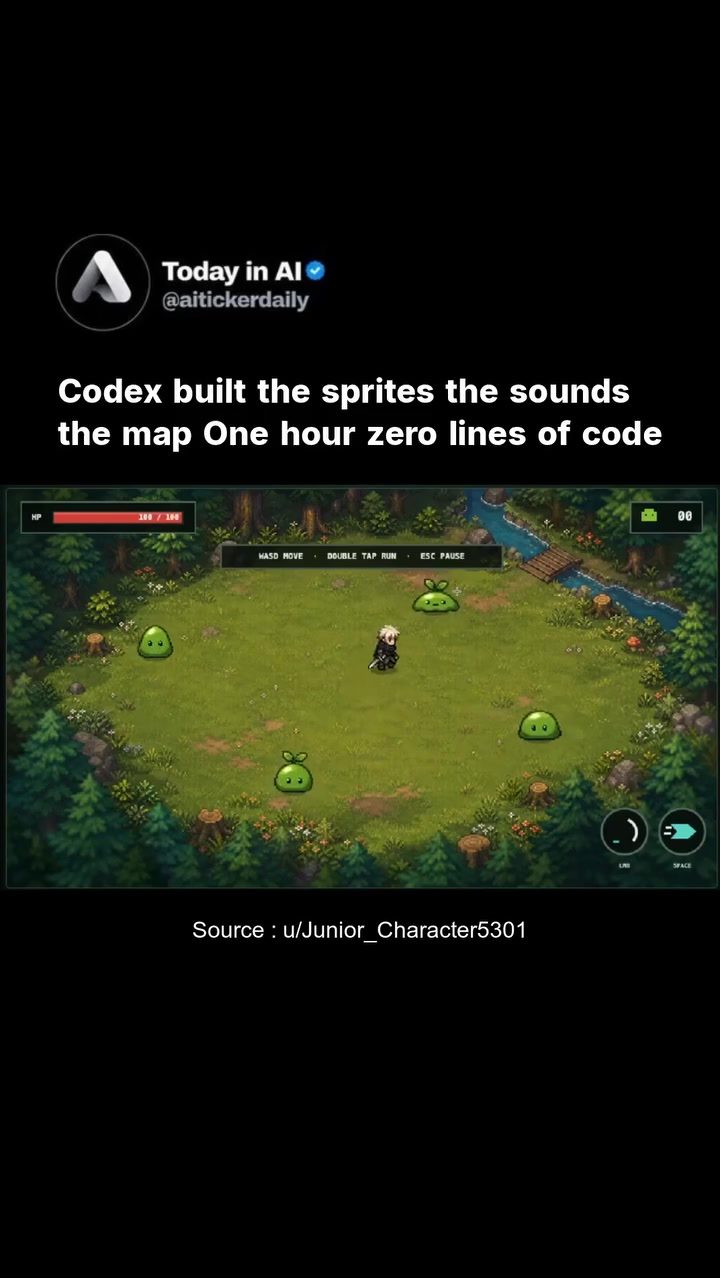
AI Game Development: Creating a Video Game in One Hour
AI has revolutionized many industries, and game development is no exception. The integration of AI in game development has opened new avenues for creators, allowing them to generate assets, design maps, and even compose sound effects with minimal effort. This transformation is evident in the rapid creation of a small HD-2D-style game demo, which was developed in just one hour using a tool.
Context / Why This Matters
The traditional game development process often involves extensive coding, graphic design, and sound engineering. This can be time-consuming and resource-intensive, requiring a team of specialists. AI tools like Codex are changing this landscape by automating these processes, making game development more accessible and efficient.
Main Discussion
The Power of Codex
Codex is an AI-driven tool that simplifies the game development process. By using Codex, a developer was able to create a video game without writing a single line of code. This tool is capable of generating every asset needed for a game, including sprites, sound effects, and maps. The developer mentioned that the entire design process was done by prompting the AI step by step, showcasing the potential of AI in game development.
Game Design and Development
The game created in this demonstration features a pixel art style and a top-down perspective, reminiscent of classic 2D RPGs. This style is not only aesthetically pleasing but also relatively simple to implement, making it an excellent choice for a quick demo. Pixel art's nostalgic appeal can attract both veteran gamers and new players, making it a versatile choice for game developers.
The game demonstrates a remarkable turnaround time, with the entire development process taking only one hour. This rapid development is a testament to the efficiency of AI tools in game creation. The game's simplicity and quick creation time make it an ideal experiment for showcasing the capabilities of AI in game development.
The Role of AI in Game Development
AI has been increasingly integrated into various aspects of game development. From creating detailed 3D models to generating complex algorithms for gameplay mechanics, AI tools are becoming indispensable for modern game developers. The use of AI in game development not only speeds up the process but also allows for more creativity and experimentation.
One of the most significant advantages of using AI in game development is the reduction in the need for extensive coding knowledge. Traditional game development often requires a strong understanding of programming languages and complex algorithms. By automating these processes, AI tools make game development more accessible to a broader range of creators, including those who may not have a background in programming.
Practical Tips for AI Game Development
For developers looking to leverage AI in their game development projects, here are some practical tips:
Understand the Tool
Before diving into AI-driven game development, it's essential to understand the capabilities and limitations of the tool you're using. Codex, for instance, offers a wide range of features that can automate various aspects of game development, from asset creation to sound design. Familiarize yourself with the tool's documentation and experiment with its features to see what it can do.
Start Small
Start with small projects to get a feel for the workflow and capabilities of the AI tool. This approach allows you to experiment and learn without the pressure of delivering a polished, full-fledged game. The developer's small HD-2D-style game demo is a prime example of how starting small can yield impressive results.
Iterate and Improve
AI tools are not perfect, and the results may not always be flawless on the first try. Be prepared to iterate and refine your work. Use the AI-generated assets as a starting point and make adjustments to suit your vision. This iterative process can help you create a game that truly stands out.
Optimize Resource Usage
AI tools can sometimes be resource-intensive. Monitor your usage and optimize the process to avoid exceeding your limits. The developer noted that creating the game burned about 30% of their weekly usage plan, so it's essential to plan and manage resources effectively.
Important Takeaways
AI tools like Codex are transforming the game development landscape by automating various aspects of the process. This not only speeds up development but also makes it more accessible to a broader range of creators. The rapid creation of a small HD-2D-style game demo in just one hour is a testament to the power of AI in game development.
Conclusion
The integration of AI in game development is a game-changer, offering new possibilities for creators. Tools like Codex simplify the development process, making it more efficient and accessible. Whether you are a seasoned developer or a newcomer, leveraging AI in your game development projects can unlock new creative possibilities and streamline your workflow. Embrace the power of AI and take your game development journey to the next level.
Questions readers ask
What is AI game development and how does it speed up the game creation process?
AI game development involves using artificial intelligence to automate various aspects of game creation, such as designing maps, generating assets, and composing sound effects. This speeds up the process by reducing the need for manual input and extensive coding, allowing games to be created in a much shorter timeframe, sometimes as little as one hour with tools like Codex.
What are some key features of AI game design tools like Codex?
AI game design tools like Codex offer a range of features that simplify game development. These include generating game assets, designing maps, and composing sound effects. This makes it possible for users to create games without needing to write any code, opening up game development to a wider audience, including beginners.
How does AI assist in game map design and why is it beneficial?
AI tools can automatically generate and design game maps, considering factors such as level difficulty, player progression, and aesthetics. This not only saves time but also ensures that the maps are well-structured and engaging, providing a seamless experience for both developers and players.
Can AI-generated assets be customized to fit specific game themes or styles?
Yes, many AI game design tools offer customization options for generated assets. Users can often input specific parameters or styles to guide the AI, ensuring that the generated assets align with the desired game theme. This allows for a high degree of personalization while still benefiting from the speed and efficiency of AI tools.
What kind of games can be created using AI tools like Codex, and are they limited in scope?
AI tools like Codex can be used to create a variety of games, from simple 2D games to more complex projects. While there may be limitations for extremely detailed or highly specialized games, the tools are powerful enough to handle a wide range of game development needs, making them suitable for both beginners and more experienced creators.
How does AI game design impact the traditional game development process?
Traditional game development often requires a team of specialists in coding, graphic design, and sound engineering. AI game design simplifies this process by automating many of these tasks and reducing the need for extensive coding knowledge. This makes game development more accessible and efficient, allowing for faster prototyping and iterative design.
Can AI tools help in creating sound effects and music for games?
Yes, AI tools can generate sound effects and even compose basic music for games. This feature is particularly useful for rapid game development, as it eliminates the need for specialized sound engineering skills. By using AI to generate sound effects, developers can focus more on other aspects of game creation, further streamlining the development process.
Related deep dives
Similar reads based on topic and creator.




Recent articles
Fresh deep dives from the latest Reels we unpacked.




Comments
Be the first to comment.