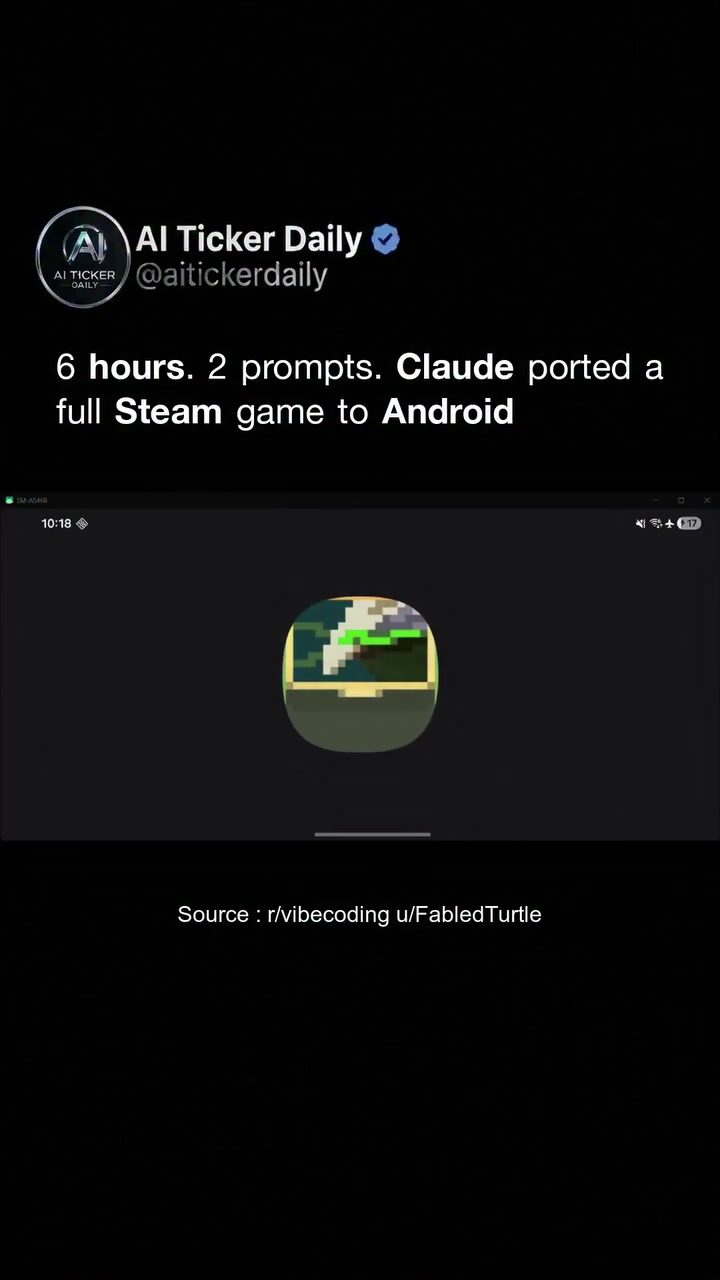
AI Claude Porting Steam Games to Android
Claude Opus 4.8, an advanced AI, successfully ported Slay the Spire 2, a well-known Steam game, to Android in just 6 hours. This remarkable feat showcases the potential of AI to handle complex tasks such as game porting, historically a time-consuming and resource-intensive process. Here's a detailed look into this groundbreaking achievement.
Why This Matters
The ability to port games from one platform to another is crucial for expanding their reach and accessibility. Traditionally, this process involves extensive manual coding, debugging, and testing. By automating this pipeline, AI can significantly reduce the time and resources required, making it easier for developers to reach new audiences and maximizing the game's potential.
Main Discussion
The Game and the Challenge
Slay the Spire 2 is a popular deck-building roguelike game, originally developed for Steam. Its complex mechanics, intricate graphics, and demanding gameplay make it a challenging candidate for porting to mobile devices. Successfully running this game on Android highlights the AI's capability to handle a wide range of game genres and complexities.
The Porting Process
Claude handled the entire porting process with minimal human intervention. Here's a breakdown of the key steps:
- Decompilation: The AI decompiled the game's Godot 4.5 .NET project, which was initially in an unencrypted .pck format. This step was crucial for accessing and modifying the game's source code.
- Cross-Compile Code: After decompilation, Claude wrote the necessary cross-compile code to make the game compatible with Android devices. This involved translating the original code to be executable on a different platform.
- Build Loop and Debugging: The AI ran the build loop, which compiles the code, ensuring everything is in order for the game to run smoothly. It also debugged the game directly on the device, identifying and fixing any issues that arose during the process.
- Touch Controls: One of the standout features of this port is the full touch controls with touch-to-mouse emulation. This makes the game feel exactly like the original mobile app, ensuring a seamless user experience.
User Benefits
The result is a fully playable game on Android, with zero crashes. This port is better than any Wine/Proton setup with on-screen controller buttons, as it provides a more intuitive and comfortable experience for mobile gamers.
Save File Sync Tool
Claude even built a save file sync tool, allowing players to sync their progress between desktop and mobile. This feature adds significant value, ensuring players can enjoy the game seamlessly across different devices.
Practical Tips for Porting Games Using AI
While the process showcased by Claude is highly advanced and automated, here are some practical tips for those interested in porting games using AI:
- Understand the Game's Architecture: Before starting, have a clear understanding of the game's architecture, including its codebase and dependencies. This will help in identifying potential challenges and solutions.
- Choose the Right AI Tools: Select AI tools that are capable of handling the specific requirements of your game. Claude demonstrated the ability to decompile, cross-compile, and debug, which are essential steps in porting games.
- Leverage Existing Resources: Utilize existing forums, communities, and documentation related to game porting. For instance, the original post on r/vibecoding by u/FabledTurtle provided valuable insights and resources.
- Test Thoroughly: Even with AI assistance, thorough testing is essential to ensure the game runs smoothly on the target platform. Pay special attention to touch controls and performance optimization for mobile devices.
Important Takeaways
- AI Efficiency: AI can handle complex porting tasks in a fraction of the time it would take a human developer, potentially reducing the process from weeks to hours.
- Automation: The entire pipeline, from decompilation to debugging, can be automated with the right AI tools, minimizing manual intervention.
- User Experience: The result is a fully playable game with intuitive touch controls, ensuring a seamless user experience.
- Broader Accessibility: Porting games to different platforms like Android expands their reach, making them accessible to a wider audience.
Conclusion
The successful porting of Slay the Spire 2 to Android by Claude Opus 4.8 demonstrates the immense potential of AI in game development. This achievement showcases not only the efficiency and automation capabilities of AI but also the high-quality results it can deliver. As AI technology continues to evolve, it will likely play an even more significant role in the gaming industry, making game porting faster, more accessible, and more efficient.
Questions readers ask
What exactly is game porting and why is it important for developers?
Game porting is the process of adapting a video game designed for one platform to run on another. This is important for developers because it allows them to reach a wider audience, as different users may prefer different platforms. It also ensures that the game remains accessible to users who may switch to new platforms.
What are the traditional challenges in porting a game from Steam to Android?
Traditionally, porting a game from Steam to Android involves extensive manual coding, debugging, and testing. This can be time-consuming and resource-intensive. Additionally, adapting a game from a PC to a mobile platform like Android requires optimizing for touchscreen controls, which can be a complex task.
How does AI, like Claude Opus 4.8, streamline the game porting process?
AI can automate many of the tasks involved in porting a game, such as code translation, debugging, and optimizing for touchscreen controls. By doing so, AI can significantly reduce the time and resources required for the porting process, making it easier and more efficient for developers to reach new audiences.
What specific tasks did AI Claude Opus 4.8 perform to port *Slay the Spire 2* to Android?
AI Claude Opus 4.8 handled a range of tasks, including code translation, adaptation of controls from keyboard/mouse to touchscreen, and optimization for Android's operating system. These tasks are typically complex and time-consuming, but the AI completed them in just 6 hours.
Can AI port any game from Steam to Android, or are there limitations?
While AI has shown remarkable capabilities in game porting, there may still be limitations. Complex games with highly specialized controls or unique PC features may pose challenges. However, AI tools are continually improving, and their potential for handling intricate tasks is expanding.
What benefits do developers gain from using AI in the game porting process?
Developers can save significant time and resources by using AI in the game porting process. This allows them to focus more on game development and less on the technical challenges of porting. Additionally, AI can help ensure that the ported game runs smoothly on the new platform, providing a better user experience.
What are some tips for developers looking to port their Steam games to Android using AI tools?
Developers should start by thoroughly testing the AI tools they plan to use and ensure compatibility with their game's specific requirements. It is also important to have a solid understanding of touchscreen controls and how they differ from PC controls. Finally, developers should be prepared to make adjustments and optimizations based on the AI's recommendations.
Related deep dives
Similar reads based on topic and creator.




Recent articles
Fresh deep dives from the latest Reels we unpacked.




Comments
Be the first to comment.