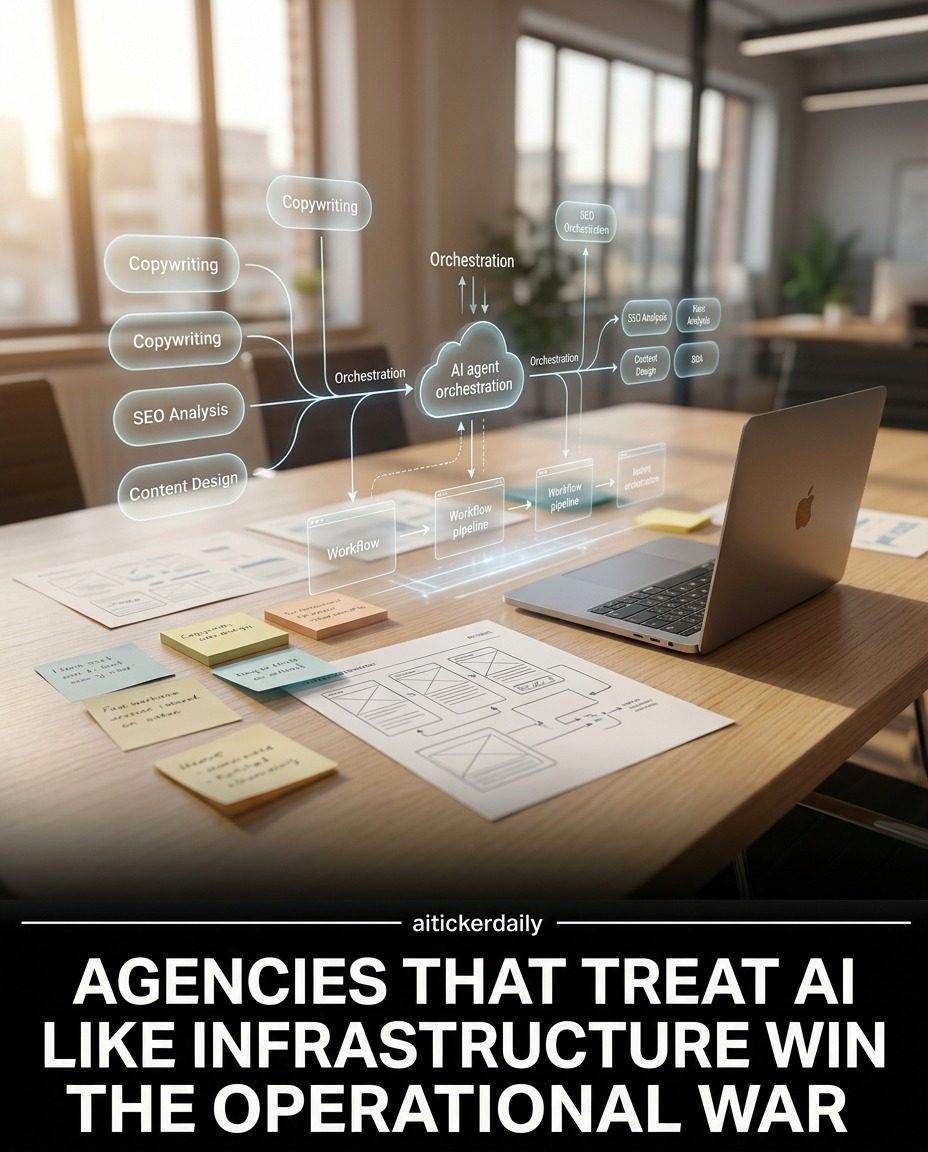
AI Operationalization for Agencies
In the rapidly evolving landscape of AI, agencies that effectively operationalize AI can gain a significant edge over those that treat AI as a novel feature. Treating AI as infrastructure is key to delivering client work at scale, leveraging skills, agents, and orchestration as core components of an operating system. This shifts the focus from one-off demos to repeatable workflows, ensuring consistent and efficient outcomes.
Why This Matters
AI has become integral to the operational strategies of modern agencies. By integrating AI into their core systems, agencies can streamline workflows, enhance efficiency, and deliver high-quality work at scale. This approach is crucial for agencies aiming to stay competitive in a tech-driven market, where workflow optimization, client satisfaction, and operational efficiency are paramount.
The Role of AI Infrastructure
Treating AI as Infrastructure
Agencies that view AI as infrastructure rather than a standalone feature are better positioned to leverage its full potential. This mindset involves embedding AI into the operational backbone of the agency, ensuring that it supports and enhances every aspect of the workflow. This holistic integration allows for seamless automation, data-driven decision-making, and consistent performance across various projects and client engagements.
Agents and Workflow
Agents play a pivotal role in this infrastructure. These strong, autonomous agents reduce the need for constant human supervision, ensuring that tasks are executed efficiently and accurately. By defining when a human must touch the output, agencies can establish clear approval rules, ensuring that client work meets the highest standards. This approach allows agencies to loosen the supervision gradually, granting autonomy to the agents while maintaining quality control.
Orchestration and Workflow
Orchestration involves managing and coordinating various AI agents to work together seamlessly. This orchestration ensures that complex workflows are executed flawlessly, with each agent playing a specific role in the process. By defining clear approval rules and establishing repeatable workflows, agencies can deliver consistently high-quality work to their clients. This orchestration not only enhances efficiency but also ensures that the agency can scale operations without compromising on quality.
Key Components of AI Operationalization
Skills and Training
Skills are a critical component of operationalizing AI. Agencies need to invest in training their teams to understand and utilize AI effectively. This involves not only technical skills but also strategic thinking, data analysis, and problem-solving abilities. By fostering a culture of continuous learning, agencies can ensure that their teams are well-equipped to leverage AI for operational excellence.
Pricing and Packaging
Pricing and packaging AI services in a way that adds value to the client is essential. Agencies must develop pricing models that reflect the efficiency and quality improvements that AI brings to the table. This involves understanding the benefits that AI brings to the workflow and communicating these benefits effectively to the client. By offering clear and competitive pricing, agencies can attract and retain clients, ensuring sustainable growth.
What to Build First
When operationalizing AI, it is crucial to start with the most impactful areas. This involves identifying the key workflows that can benefit the most from AI integration and focusing on building these components first. By prioritizing high-impact areas, agencies can ensure that their AI investments yield immediate and measurable results, providing a solid foundation for future expansion.
Practical Tips
Start Small, Scale Gradually
Begin by integrating AI into a single, high-impact workflow. This approach allows you to test the waters, identify potential challenges, and refine your processes before scaling up. Gradual integration ensures that the transition to AI-driven operations is smooth and effective.
Invest in Training
Continuous training is essential for ensuring that your team is well-equipped to handle AI-driven workflows. Invest in regular training programs, workshops, and certifications to keep your team up-to-date with the latest AI trends and technologies.
Define Clear Approval Rules
Establish clear approval rules and workflows to ensure that AI-generated outputs meet the required standards. This involves defining when human intervention is necessary and when AI agents can operate autonomously. Clear approval rules help maintain quality control while allowing for efficient automation.
Foster a Culture of Innovation
Encourage a culture of innovation and continuous improvement. This involves fostering an environment where new ideas and solutions are welcomed and tested. By promoting innovation, agencies can stay ahead of the curve and leverage the latest AI advancements to their advantage.
Important Takeaways
AI operationalization is not just about technology; it's about integrating AI into the core of an agency's operations. Treating AI as infrastructure, investing in skills and training, and establishing clear approval rules can significantly enhance operational efficiency and client satisfaction.
Conclusion
Agencies that treat AI like infrastructure are well-positioned to win the operational war. By leveraging AI as a core component of their operating system, they can deliver client work at scale, ensuring consistency, efficiency, and high-quality outcomes. Embracing AI as infrastructure, investing in skills, and orchestrating workflows effectively can pave the way for sustained growth and success in a competitive market.
Questions readers ask
What does it mean for an agency to treat AI as operational infrastructure?
Treating AI as operational infrastructure means integrating AI into the core systems and workflows of an agency, rather than using it as a standalone tool. This involves leveraging skills, agents, and orchestration to create a system that operates efficiently at scale. By doing so, agencies can achieve consistent and repeatable outcomes, enhancing their overall efficiency and client satisfaction.
How does AI integration improve agency workflows?
AI integration can streamline workflows by automating repetitive tasks, enabling data-driven decision-making, and ensuring consistent quality. This allows agencies to focus on high-value work, reduce errors, and deliver projects more efficiently, ultimately leading to improved client satisfaction and a competitive edge in the market.
What are the benefits of AI-driven decision-making for agencies?
AI-driven decision-making empowers agencies to leverage data insights to inform their strategies. This leads to more accurate, data-driven decisions, improved efficiency, and a better understanding of client needs. By operationalizing AI, agencies can predict trends, identify opportunities, and make informed decisions that drive growth and success.
Why is it important for agencies to shift from one-off AI demos to repeatable workflows?
Shifting from one-off AI demos to repeatable workflows ensures consistency and reliability in service delivery. This approach allows agencies to standardize processes, reduce variability, and maintain high-quality outputs. Repeatable workflows also enable better resource allocation and scalability, making it easier to manage projects and meet client demands effectively.
How can AI operational infrastructure enhance client satisfaction?
AI operational infrastructure can enhance client satisfaction by improving the efficiency and quality of deliverables. Through seamless automation and data-driven insights, agencies can provide faster turnaround times, higher accuracy, and personalized solutions. This translates into a more reliable and responsive service, meeting and exceeding client expectations.
What role does AI play in modern agency operational strategies?
In modern agency operational strategies, AI plays a pivotal role in streamlining workflows, enhancing efficiency, and delivering high-quality work at scale. By integrating AI into core systems, agencies can automate routine tasks, make informed decisions, and adapt quickly to market changes, ultimately staying competitive in a tech-driven landscape.
Related deep dives
Similar reads based on topic and creator.




Recent articles
Fresh deep dives from the latest Reels we unpacked.




Comments
Be the first to comment.