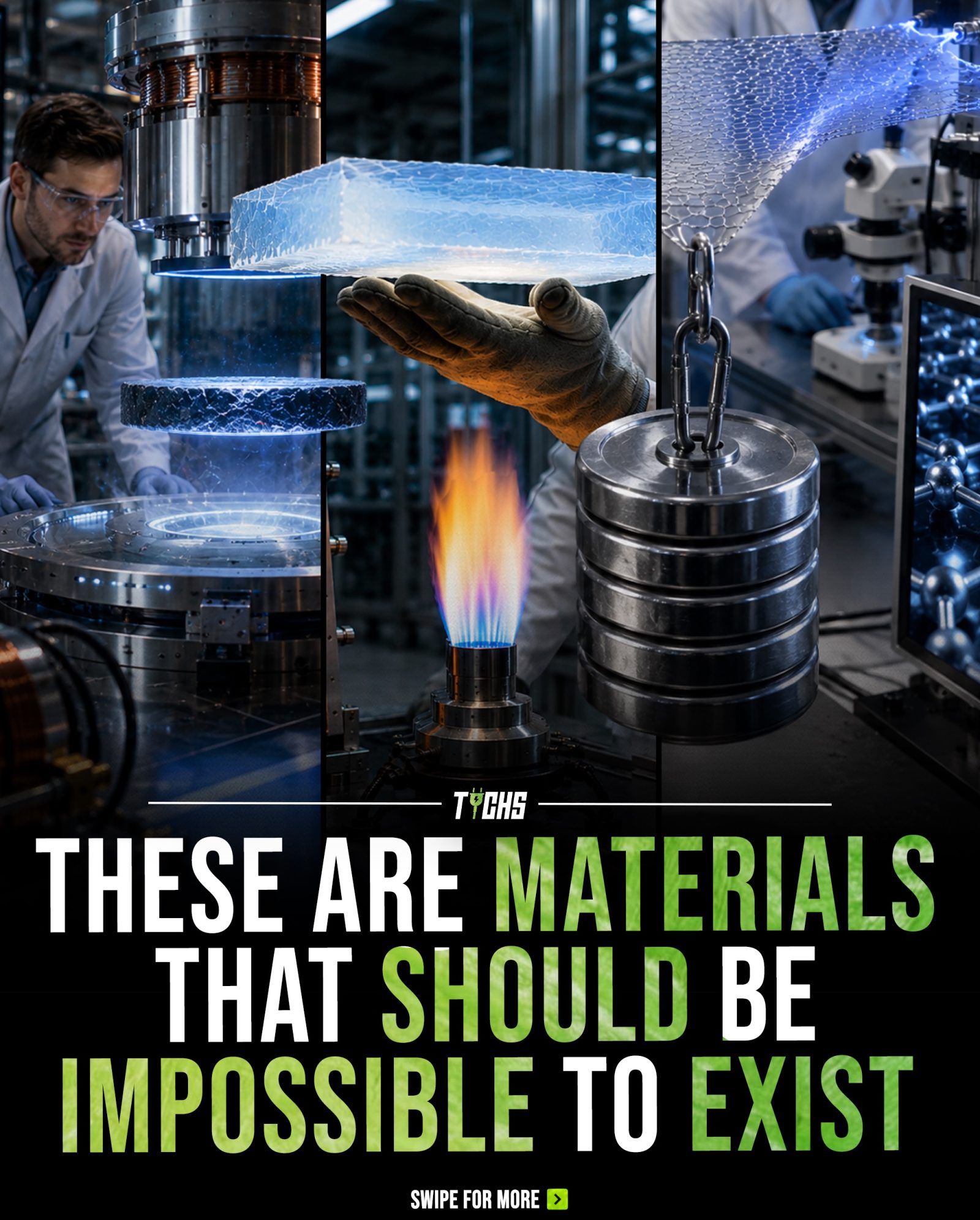
Impossible Materials: Aerogel and Liquid Metals
Scientists are constantly exploring materials that defy conventional expectations. Among the most intriguing are aerogel and liquid metals.
Both of these substances challenge our understanding of what materials can do, paving the way for revolutionary advancements in various fields.
Context: The World of Advanced Materials
The properties of materials have always been a cornerstone of technological progress. From the Bronze Age to the Silicon Age, the materials we use define our capabilities and limitations. Today, researchers are delving into new realms of material science, exploring substances that seem to defy the laws of physics. These materials are not just incremental improvements; they represent paradigm shifts in what we can achieve with matter.
Main Discussion
Aerogel: The Lightest Solid on Earth
Aerogel, often dubbed "frozen smoke," is one of the most extraordinary materials in existence. Invented in the 1930s, aerogel has gained renewed interest due to its unique properties. It is composed of 99% air, making it incredibly lightweight. Yet, despite its fragile appearance, aerogel is an exceptional thermal insulator, far superior to traditional materials like fiberglass or Styrofoam. This makes it ideal for applications where insulation and lightweight properties are crucial, such as in aerospace and advanced manufacturing.
Aerogel's insulating properties are so effective that it can withstand temperatures ranging from -270°C to 300°C. It's used in NASA's Mars rovers to protect equipment from the extreme cold of the Martian surface, and in construction to create energy-efficient buildings.
Aerogel's applications extend beyond insulation. Its porous structure makes it highly absorbent, which can be useful in environmental cleanup, such as absorbing oil spills. Additionally, its transparency and low refractive index make it valuable for optical applications, including in the production of high-performance lenses.
Liquid Metals: Conductivity and Shapeshifting
Liquid metals, particularly gallium alloys, are another groundbreaking material. Unlike traditional metals, liquid metals can remain in a liquid state near room temperature while still conducting electricity. This unique property makes them highly versatile for applications in electronics and flexible circuits. They can flow and reconnect after being cut, making them ideal for self-repairing systems.
Liquid metals are also being explored for use in advanced manufacturing. For instance, they can be used to create intricate 3D structures that are impossible to achieve with traditional metals. Furthermore, their ability to conduct electricity while in a liquid state makes them valuable for developing flexible and wearable electronics, such as smart fabrics and electronic skin.
The most common liquid metals in research are alloys of gallium, which has a melting point of just 30°C. Such alloys can be used to create flexible, stretchable circuits that can conform to various shapes and surfaces, making them ideal for applications in robotics and biomedical devices.
Other Revolutionary Materials
While aerogel and liquid metals are remarkable, they are not the only materials pushing the boundaries of what's possible. Researchers are also exploring:
-
Metamaterials: These are engineered materials with properties not found in nature. They can manipulate electromagnetic waves in ways that allow for invisibility cloaks, super-lenses, and enhanced wireless communication.
-
Graphene: Often described as a "wonder material," graphene is a single layer of carbon atoms arranged in a hexagonal lattice. It is stronger than steel, more conductive than copper, and flexible like plastic. Graphene has the potential to revolutionize electronics, energy storage, and composite materials.
-
Time Crystals: These are a phase of matter that repeats in time, much like the spatial repeating patterns of a regular crystal. Time crystals have the potential to lead to breakthroughs in quantum computing and ultra-precise timekeeping.
-
Self-Healing Materials: These materials can repair themselves after being damaged, a property inspired by biological systems. Self-healing materials have applications in everything from automotive repair to astronaut clothing.
Practical Tips
Liquid metals and aerogels are exciting, but how can you get involved with these materials? Here are a few practical tips for staying informed and connected:
-
Follow Research Papers: Journals like Nature Materials and Science often publish cutting-edge research on materials science. Keeping up with the latest papers can provide insight into new discoveries and applications.
-
Attend Conferences: Events like the Materials Research Society (MRS) Meeting and the European Materials Research Society (E-MRS) Spring Meeting are great places to learn about the latest developments and network with experts.
-
Experiment at Home: While working with advanced materials like aerogel and liquid metals typically requires specialized equipment, there are simpler experiments you can try. For instance, you can create your own basic aerogel using household materials. There are numerous DIY kits and online tutorials available that allow you to explore these materials in a hands-on way.
-
Join Online Communities: Websites like Reddit and Stack Exchange have active communities dedicated to materials science. Engaging with these groups can provide both inspiration and practical advice.
Important Takeaways
The exploration of aerogel, liquid metals, and other unconventional materials highlights the vast potential of advanced materials. These substances are not just scientific curiosities; they are the foundation for future technologies that could revolutionize fields from aerospace to medicine.
Understanding and leveraging these materials requires a multidisciplinary approach, combining physics, chemistry, and engineering. By pushing the boundaries of what we know about matter, scientists are unlocking new possibilities that could reshape our world.
Conclusion
The world of advanced materials is full of wonder and potential. From aerogel's incredible insulating properties to liquid metals' ability to conduct electricity in a liquid state, these substances are at the forefront of technological innovation. By exploring and understanding these materials, we open the door to a future where the impossible becomes possible. The journey of discovery in this field is far from over, and the next breakthrough could be just around the corner.
Questions readers ask
What makes aerogel the world's lightest solid?
Aerogel is composed of up to 99.8% air, making it incredibly light. Its structure is like a porous sponge, with a complex web of interconnecting nanoscale particles. This unique configuration gives it an extremely low density, making it the lightest solid material known.
How does aerogel provide exceptional insulation?
Aerogel is an exceptional insulator due to its nanostructure, which traps air and prevents heat transfer. It can insulate against temperatures as extreme as -280°C to 1,000°C. This makes it useful in applications from aerospace to construction.
What are the key properties of liquid metals that make them unique?
Liquid metals have unique fluidity and high thermal and electrical conductivity. They can flow like water but maintain metallic properties, making them useful in flexible electronics and advanced cooling systems. Their low viscosity allows them to be easily manipulated, opening up a range of innovative applications.
What are some of the most promising applications of aerogel in technology?
Aerogel's lightweight and insulating properties make it ideal for aerospace applications, such as insulating spacecraft and satellites. Additionally, its ability to absorb and contain hazardous materials makes it useful for environmental cleanup, particularly in oil spills and waste management.
In what ways are liquid metals revolutionizing environmental cleanup?
Liquid metals can be used to create efficient and flexible systems for capturing and removing pollutants from water and air. Their high conductivity and fluidity allow for the development of advanced filtration and purification technologies, which can help reduce environmental contamination.
What makes the combination of aerogel and liquid metals significant in advancing technology?
The combination of aerogel and liquid metals represents a breakthrough in material science. Aerogel offers unparalleled insulation and lightweight properties, while liquid metals provide unique fluidity and conductivity. Together, they can be used to create highly efficient and adaptable technologies, pushing the boundaries of what is possible in various fields.
What are some of the most exciting breakthroughs in aerogel technology?
Recent breakthroughs in aerogel technology include the development of aerogel-based materials for improving battery performance and creating more efficient solar panels. These advancements highlight the potential of aerogel to revolutionize industries by enhancing energy storage and conversion processes.
Recent articles
Fresh deep dives from the latest Reels we unpacked.




Comments
Be the first to comment.