Early Aircraft Detection: The Role of Acoustic Location Devices
Before the advent of radar, military forces relied heavily on acoustic location devices to detect incoming aircraft. These devices, often referred to as "acoustic mirrors" or sound locators, played a crucial role in early aircraft detection, particularly during World War I and the interwar period. Understanding these primitive methods provides insight into the evolution of surveillance technology and the challenges faced by military forces in detecting aircraft.
Context: Why This Matters
Before radar technology became prevalent, military forces needed effective ways to detect and track approaching aircraft. Acoustic location devices, though rudimentary, were essential tools in this endeavor. Their use highlights the innovative spirit of the time and the meticulous efforts to enhance surveillance capabilities despite technological limitations. The development of radar later rendered these devices obsolete, but their historical significance remains notable.
The Evolution of Acoustic Detection Technology
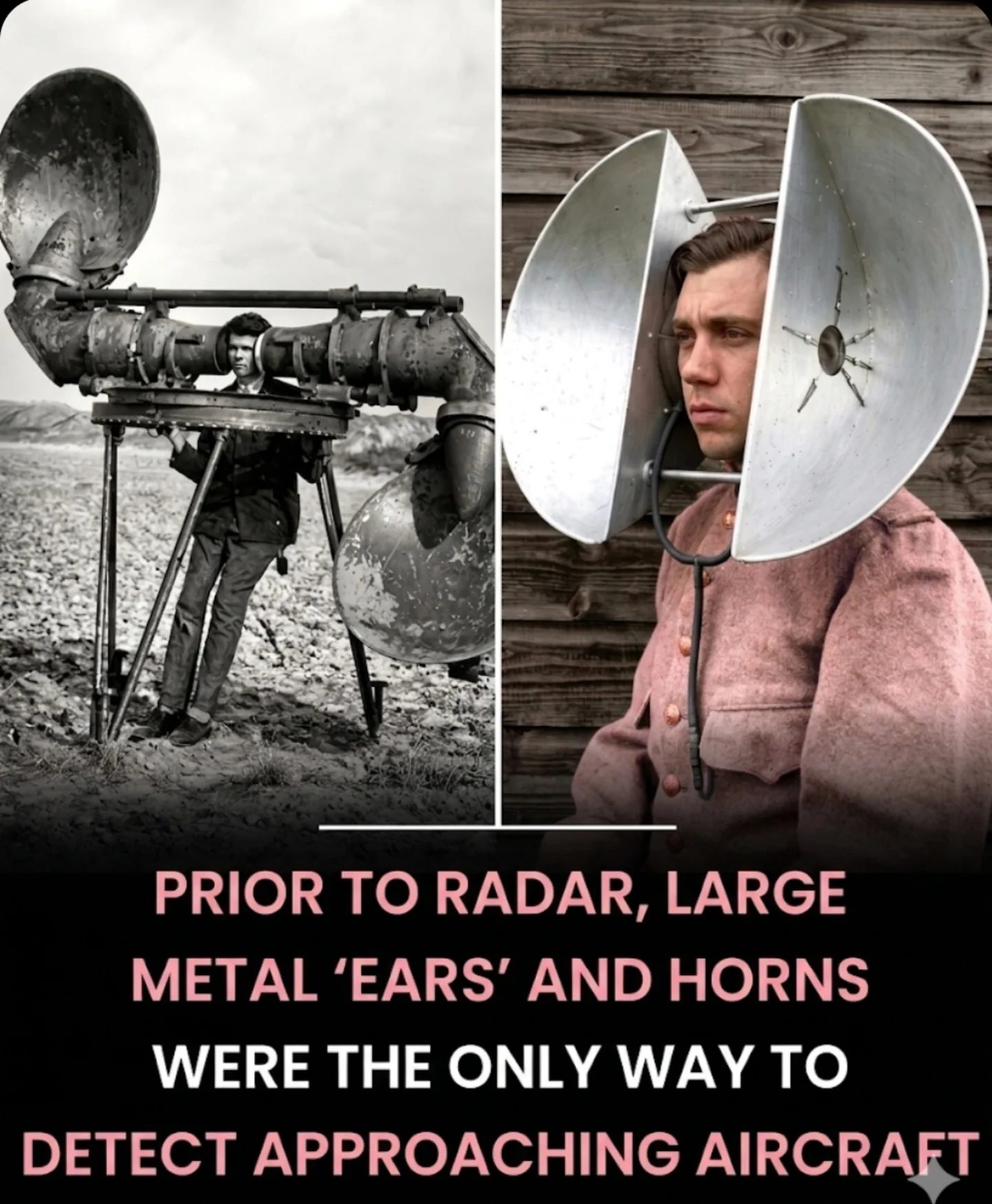
Acoustic location devices were the primary means of detecting aircraft before radar was invented. These devices came in various forms, each designed to amplify and locate distant sounds. The two main types highlighted here are the large, rotatable horn system and the wearable parabolic metal reflectors.
Large, Rotatable Horn Systems
The first type of acoustic detection device featured a large, rotatable horn system. This system was designed to amplify distant sounds and funnel them directly to an operator's headphones. Operators could then determine the direction and elevation of an approaching aircraft based on the sound waves. This method was particularly useful for detecting aircraft at lower altitudes, where the sound of their engines was more pronounced. However, it required significant infrastructure and was less portable, limiting its use to fixed locations.
Wearable Parabolic Metal Reflectors
The second type of acoustic detection device was more portable and personal. These devices consisted of wearable parabolic metal reflectors that concentrated sound waves directly into the wearer's ears via stethoscope-style tubes. This design allowed for greater mobility and flexibility, as operators could move around and still detect aircraft. The portable nature of these devices made them ideal for use in various environments, including mobile units and field operations. Despite their advantages, both types of devices were highly dependent on favorable weather conditions, which often limited their effectiveness.
Practical Tips for Understanding Acoustic Detection
For those interested in understanding and possibly reconstructing these early detection methods, several practical tips can be helpful:
- Material Selection: Acoustic detection devices were typically made from metal, which provided durability and effectiveness in amplifying and concentrating sound waves. Choose materials that can withstand outdoor conditions and effectively reflect sound.
- Design Considerations: The design of the devices, whether large and fixed or small and portable, affected their usability. Large, rotatable horn systems required fixed locations and infrastructure, while wearable reflectors offered more flexibility.
- Operational Conditions: Both types of devices were highly dependent on favorable weather conditions. Clear, calm weather was essential for effective sound detection. Understanding the limitations of these devices can help in appreciating the advancements made with radar technology.
Important Takeaways
Acoustic location devices were a revolutionary development for their time, marking a significant step in aviation surveillance. Their ability to detect incoming aircraft using sound waves showcased the ingenuity of early engineers. However, their reliance on weather conditions and the eventual development of radar technology rendered them obsolete. Despite this, their historical significance remains, offering valuable insights into the evolution of surveillance methods and the challenges military forces faced in early aircraft detection.
Conclusion
Acoustic location devices played a pivotal role in detecting incoming aircraft before the invention of radar. These devices, ranging from large, fixed horn systems to portable, wearable reflectors, showcased the creativity and innovation of early military engineers. While radar technology has since superseded these methods, understanding their historical significance and the challenges they faced provides a deeper appreciation for the advancements in surveillance technology. The transition from acoustic detection to radar highlights the continuous evolution of military surveillance and the relentless pursuit of more effective and reliable detection methods.
Questions readers ask
What were acoustic mirrors and how did they work?
Acoustic mirrors were large, concave structures designed to amplify and locate distant sounds. They worked by reflecting sound waves to a central point where a microphone could detect and analyze the sound, helping to pinpoint the direction and sometimes the distance of incoming aircraft.
Why were acoustic mirrors important during World War I?
During World War I, acoustic mirrors served as a critical early warning system. They provided military forces with a means to detect enemy aircraft before they were visible, allowing for better preparedness and response to potential aerial threats.
How did the invention of acoustic mirrors contribute to military surveillance?
The invention of acoustic mirrors marked a significant step forward in military surveillance. They were one of the first technologies used to detect distant aircraft, helping to bridge the gap before the invention of radar. This allowed armed forces to enhance their situational awareness and improve their defensive strategies.
What were the limitations of acoustic mirrors as aircraft detection technology?
Acoustic mirrors had several limitations. They were only effective in calm weather conditions, as wind or other noise could interfere with sound detection. Additionally, they could not provide precise information about the altitude of aircraft or distinguish between different types of aircraft, unlike modern radar systems.
How were acoustic mirrors used to track incoming aircraft?
Acoustic mirrors used sound amplification technology to track incoming aircraft. Operators would listen for the sound of aircraft engines, and by adjusting the mirror's position, they could determine the direction from which the sound was coming, thus tracking the aircraft's path.
What happened to acoustic mirrors after the invention of radar?
With the advent of radar, which provided more accurate and reliable aircraft detection, acoustic mirrors became obsolete. Radar systems could detect aircraft at much greater distances and with greater precision, rendering the large acoustic devices unnecessary for military purposes.
Were there any other uses for acoustic mirrors besides military purposes?
While primarily used for military aircraft detection, acoustic mirrors also had some civilian applications. They were used for monitoring the movements of ships and other large objects, and in some cases, they were employed for scientific purposes, such as studying sound propagation and animal vocalizations.
Related deep dives
Similar reads based on topic and creator.




Recent articles
Fresh deep dives from the latest Reels we unpacked.




Comments
Be the first to comment.