Camera Lens Modification for Unique Visual Effects
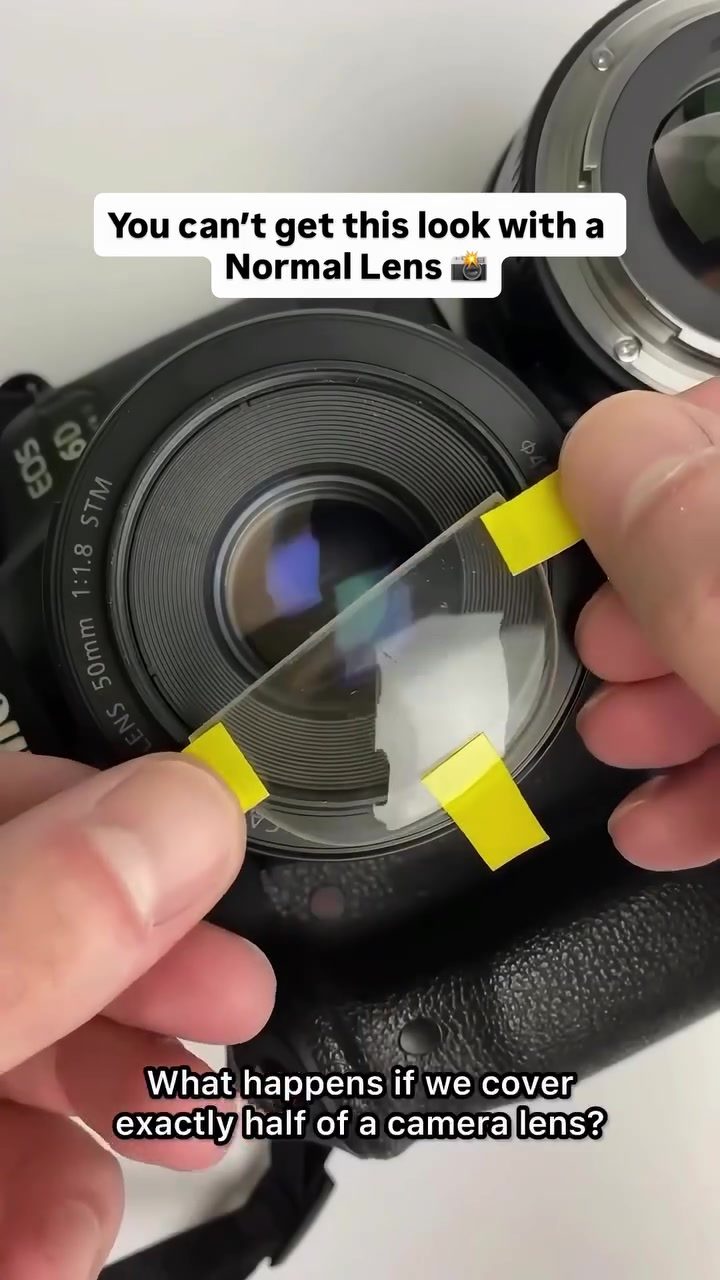
Covering half of a camera lens with a piece of yellow tape may seem unconventional, but this old Hollywood trick can create a unique visual effect. This technique was made popular by director Brian De Palma and can fool the optics of a camera. By carefully modifying the lens, photographers can achieve a split diopter effect, allowing for both close and distant objects to be in focus simultaneously.
Why Lens Modifications Matter
Lens modifications can significantly enhance the creative possibilities of photography. They allow photographers to experiment with different visual effects and techniques, making their work stand out. Understanding how to manipulate the lens can open up new artistic avenues and provide a unique perspective that sets your work apart.
The Science Behind Lens Modifications
The optical center of a lens is crucial in understanding how to effectively modify it. This center is often offset in eyeglass lenses, and identifying it is the key to achieving the desired effect. By drawing a straight line behind the lens, the spot where the line appears undistorted indicates the optical center. This point serves as a reference for cutting the lens in half.
Tools for Lens Modification
For this modification, a regular pair of reading glasses with a positive prescription is used. The lens is cut in half with a glass cutter and sanded carefully to remove any sharp edges. This step ensures that the lens remains safe to handle and use.
Achieving the Split Diopter Effect
Once the lens is modified, the focus of the camera is adjusted to the background, causing everything close to the camera to blur. When half of the lens is covered with the glass element, the magic happens. The result is a true split diopter effect, where both close and distant objects are in focus, creating a unique and compelling visual effect.
Practical Tips for Lens Modification
Choosing the Right Lens
The type of lens you choose can significantly impact the final effect. A positive prescription lens works well for this technique, as it provides the necessary optical properties to achieve the desired result.
Finding the Optical Center
To find the optical center of the lens, draw a straight line behind the lens. The spot where the line appears undistorted is the optical center. This is the point where you will cut the lens in half.
Cutting the Lens
Use a glass cutter to carefully cut the lens in half. After cutting, sand the sharp edges to ensure safety and prevent any damage to the lens or the camera.
Applying the Lens to the Camera
Secure the modified lens to the camera and focus on the background. Cover half of the lens with the glass element and observe the effect. Adjust the focus as needed to achieve the desired visual impact.
Important Takeaways
Lens modifications can add a unique twist to your photography, allowing you to create stunning visual effects that are impossible with a standard lens. By understanding the optical center and carefully modifying the lens, you can achieve a split diopter effect that was once used by renowned directors like Brian De Palma. This technique not only enhances the artistic value of your work but also opens up new possibilities for creative expression.
Conclusion
The split diopter effect achieved through lens modification is a powerful tool for photographers looking to add a unique and captivating dimension to their work. By understanding the optical properties of lenses and following the steps to modify them correctly, you can create visually stunning images that stand out. Experiment with different lenses and techniques to explore the full range of creative possibilities that lens modifications offer.
Questions readers ask
What is the split diopter effect in photography?
The split diopter effect is a technique where the lens is modified to focus on different depths, allowing both near and far objects to be in focus simultaneously. This creates a unique visual effect that can make photographs and videos more engaging. The effect is achieved by covering half of the lens or using a half-lens. The split diopter effect is useful for creating striking images with a unique optical illusion.
How can I achieve a split diopter effect with a camera lens?
To achieve a split diopter effect, you can modify your camera lens by covering half of it with a piece of tape or by using a diopter lens. This technique involves carefully placing the tape or diopter lens to ensure that half of the lens focuses on a near object while the other half focuses on a distant object. This creates a split focus effect, allowing both objects to be in focus simultaneously.
What materials do I need to create a split diopter effect?
To create a split diopter effect, you will need a piece of tape (such as yellow tape) and a camera with a lens that can be modified. Additionally, you may need a diopter lens. Simply cover half and tape the lens to achieve the desired effect.
Can the split diopter effect be used in videography?
Yes, the split diopter effect can be used in videography to create unique and dynamic visuals. By using the split diopter lens or technique, you can achieve a split focus effect that allows both near and far objects to be in focus. This can add depth and interest to your videos, making them more visually appealing.
What are the benefits of using a split diopter lens modification?
Using a split diopter lens modification allows photographers to experiment with different visual effects and techniques. This can make their work stand out and provide a unique perspective. The split diopter lens modification can also open up new artistic avenues, allowing photographers to create stunning visual effects that would otherwise be impossible.
Is the split diopter effect difficult to achieve?
The split diopter effect can be achieved with minimal equipment and is relatively straightforward. By carefully covering half of the lens with tape or using a diopter lens, photographers can create a unique visual effect. However, achieving the perfect split diopter effect may require some practice and experimentation to get the desired results.
What are some popular uses of the split diopter effect?
The split diopter effect is often used in film and photography to create a distinctive visual style. It can be used to highlight both a close-up subject and a distant background, making the image more dynamic and visually intriguing. This technique has been used in various genres, from romantic scenes to dramatic sequences, to convey a sense of depth and complexity.
Related deep dives
Similar reads based on topic and creator.


Recent articles
Fresh deep dives from the latest Reels we unpacked.



Comments
Be the first to comment.