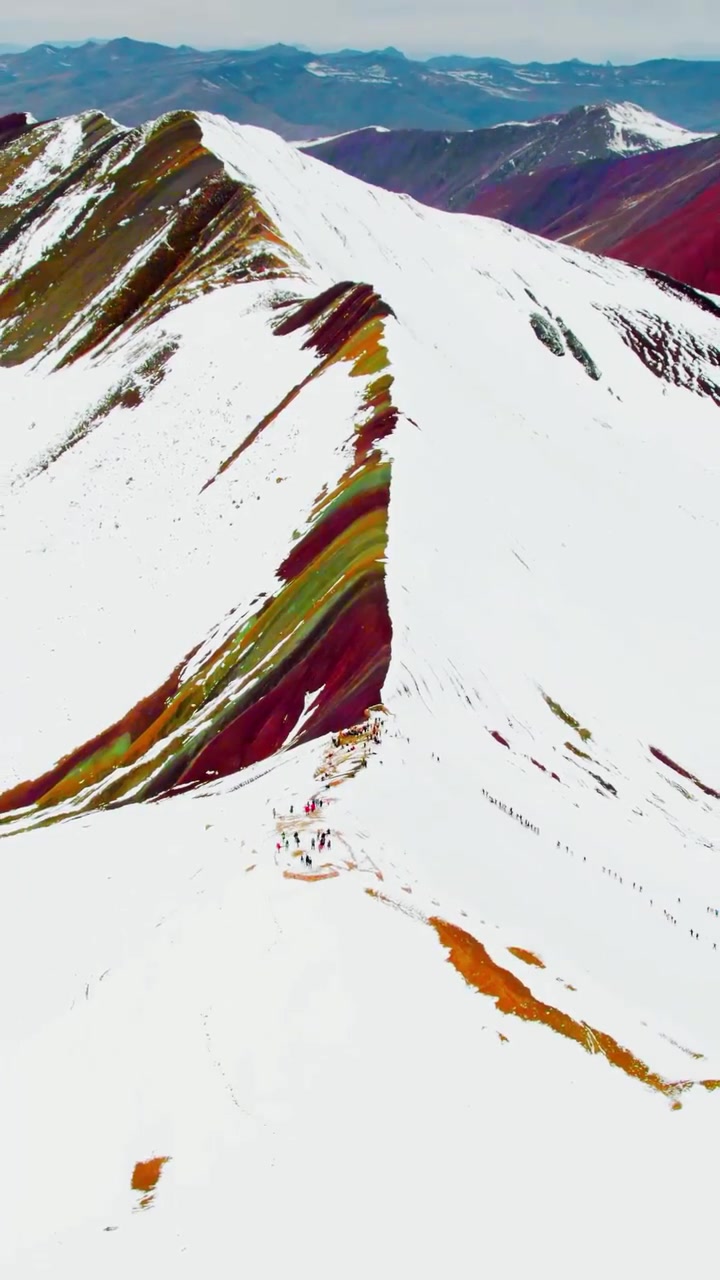
Rising above the Andean peaks of Peru lies a geological marvel, Rainbow Mountain (Vinicunca). The 5,200 meters (17,060 feet) summit is a geological wonder with dramatic, striated bands of red and deep maroon that contrast with the pristine white snow. The mountain’s vibrant hues are the result of ancient mineral deposits revealed by erosion.
An Ancient Landmark, Painted by Nature
The mountain’s striated bands of color, originally named Vinicunca by local Quechua people, were formed millennia ago. Iron oxide, red clays, and other minerals were deposited during a period of volcanic activity around 63 million years ago, and later the movement of tectonic plates exposed them to eroding glaciers. It wasn’t until 2010 that tourists discovered Rainbow Mountain — this side of the mountains exposed after melting of the glacier revealed the stunning colors. Quechua people have long known about the mountain. They called it Winikunka. For thousands of years,the mountain geography and inhabited by numerous animals was a source of local culture. They gave the mountain its unique name and reverence for its beauty and mystery. A local guide recounts that “The colors change depending on the sunlight and at certain times of the year, the snow melts to create a rainbow on the mountain.” Quechua communities are still important players in guiding visitors to Rainbow Mountain. They navigate the landscape and share stories of the region. Rainbow Mountain is distinctive for its dramatic, striated bands of color. The bands are a result of mineral deposits and erosion. The mountain's vibrant hues range from deep reds and maroons to pinks, purples, and greens. The colors create a gradient effect, with the hues changing depending on the light and time of year. Rainbow Mountain’s colorful bands stand starkly against the white of the snow. The mountain is part of the Ausangate mountain range — an Andean peak. The harsh temperatures and low oxygen levels at high altitude present challenges to visitors. Surrounding Rainbow Mountain are Andes mountains that form a rugged and dramatic landscape.
A Geological Marvel in an Ever-Changing Tourist Frontier
Rainbow Mountain is a growing tourist destination that stands in contrast to Peru’s more well-known landmarks. The mountain’s vibrant colors offer a stark contrast to traditional Inca ruins. Accessible only by foot, Rainbow Mountain trek is an adventure within itself, offering trekking and exploration opportunities. At the same time, the mountain's popularity raises questions about sustainability and preservation. Despite the treacherous nature of the hike, tourists now flock to Rainbow Mountain. The mountain has become a symbol of Peru’s natural beauty and a must-visit destination for tourists. One visitor wrote that the trek was everything and more: “Seeing that wonderful view made everything worth it even though I was struggling. It was exhausting but so worth it. I was getting to see a place that a lot of people haven't." The increasing tourist traffic presents environmental concerns. The growing numbers of tourists has led to littering and damage to the trail. There is a lot of plastic on the mountain as well. The hike is becoming a challenge — there are new challenges like litter and social media ‘posers’ ruining the experience while taking photos. The local communities have reached a point that they are working to find ways to preserve the mountain's beauty while still benefiting from tourist income. There is a struggle to preserve Rainbow Mountain’s natural beauty while accommodating the growing number of tourists.
Rainbow Mountain: An Ancient Geological Journey
The mountain’s scenic hiking trail reaches Rainbow Mountain’s summit. The trail is approachable for those with a moderate level of fitness. The entire journey takes around 3–5 hours and varies in length and difficulty. The hike begins with a drive from Cusco. The elevation of the trail makes sure that only the most hardy visitors reach the summit. The beautiful landscape is worth the journey. The trail’s diversity features a rugged landscape known for its rocks, valleys and other natural wonders. The trail is generally smooth but the steep and rocky terrain makes it a tough climb. At the top of the trail, 20-30 minutes of steep climbing is required to reach the summit. The trail also offers views of the surrounding mountains and valleys. Altitude sickness is a risk for visitors. The lack of oxygen can cause symptoms such as headaches, nausea, and shortness of breath. Acclimatize for a few days before hiking and stay hydrated are ways to help reduce these. A guide recommends staying hydrated, eating light, and taking plenty of rest. “Bring water. You'll need it. Plus, there's not water available along the trail so that's important to never forget. Also, dress in layers for the weather as it usually changes frequently You need to be flexible to the conditions and bring everything you need.” The weather is rainy and windy at the higher altitudes.
Guided Treks and Responsible Hiking
Rainbow Mountain offers guided treks for visitors. Guided treks provide a safe and enjoyable experience for visitors. The guides are knowledgeable about the trail, local culture, and history. Guides help with navigation, safety, and provide insights into the mountain's geological history. A guided trek typically lasts around 3-5 hours. The treks offer a wide range of experiences, depending on the guide and the group. Guides provide information about the local culture and customs. Guided treks offer a sustainable way to experience Rainbow Mountain. Guides are hired by locals and benefit economically. The guides are also knowledgeable about the mountain’s history and cultural significance. Responsible hiking is important to preserve Rainbow Mountain. Visitors should follow the trail and leave no trace. It is important to respect the local community and culture. The mountain's trail also has a lot of litter. The trash threaten the mountain’s beauty and wildlife. Guides are responsible and make sure to leave the trail clean.
Seeing Rainbow Mountain through a Local's Eye
The local people of Rainbow Mountain offer a unique perspective on the mountain’s beauty and cultural significance. Local guides share stories and knowledge about the mountain, offering a deeper understanding of its history and cultural significance. The guides are knowledgeable about the local culture and customs. Local guides provide insights into the mountain’s geological history and cultural significance. Guides provide information about the mountain’s formation, mineral deposits, and erosion patterns. Local cultural experts are important for preserving Rainbow Mountain. The guides share stories and knowledge about the mountain’s history. They also help to preserve the mountain’s natural beauty and cultural significance. The local guides are enthusiastic. One guide says that they have “grown up with the mountain.”
Proper Preparation For People Journeying to The Mountain
Visitors must prepare for the trek. Proper preparation helps ensure a safe and enjoyable experience. Bringing water, wearing appropriate clothing, and being in good physical condition are all important. Bring water, wear appropriate clothing, and be in good physical condition. A visitor suggests to “take the opportunity to visit. I loved it and felt grateful to see it. Our guides were friendly and knowledgeable, took great photos. Enjoy.” The trek can be challenging, but visitors can opt for a shorter hike. The shorter trek offers visitors a chance to experience the mountain’s beauty without the added strain of the full hike. Rainbow Mountain offers a unique and unforgettable experience. The mountain’s vibrant colors, rugged landscape, and cultural significance make it a must-visit destination. Guided treks offer a safe and enjoyable experience, while responsible hiking helps to preserve the mountain’s natural beauty. With proper preparation and a sense of adventure, visitors can experience the wonders of Rainbow Mountain.
Questions readers ask
How did Rainbow Mountain get its vibrant colors?
Rainbow Mountain's vibrant colors are the result of ancient mineral deposits. Around 63 million years ago, iron oxide, red clays, and other minerals were deposited during volcanic activity. Over time, tectonic plate movements and erosion from glaciers exposed these minerals, creating the stunning striated bands of color we see today.
What does the name 'Vinicunca' mean and who named it?
Vinicunca is the original name given to Rainbow Mountain by the local Quechua people. The name translates to 'rainbow mountain' and it is a reflection of the mountain's unique and vibrant colors.
Is it possible to see Rainbow Mountain from the air?
The article doesn’t specify if there are aerial tours available, but given its remote location and the need to trek to reach it, it’s unlikely that commercial aerial tours are available. The mountain is typically accessed by foot, making the hike an adventure in itself.
What challenges do visitors face when trying to reach Rainbow Mountain?
Visitors face several challenges when trying to reach Rainbow Mountain, including harsh temperatures and low oxygen levels due to its high altitude of 5,200 meters (17,060 feet). The trek itself is rigorous, but the stunning views make it a worthwhile adventure for many.
What are the environmental concerns surrounding Rainbow Mountain's growing popularity?
The increasing number of tourists visiting Rainbow Mountain has led to environmental concerns such as littering and damage to the trail. There is a significant amount of plastic waste on the mountain, which raises questions about sustainability and preservation.
What is the significance of the Quechua people in the context of Rainbow Mountain?
The Quechua people have a deep cultural connection to Rainbow Mountain, knowing about it for thousands of years. They have long guided visitors to the mountain and shared stories about the region. Their knowledge and guidance are invaluable for those seeking to explore this natural wonder.
Related deep dives
Similar reads based on topic and creator.


Recent articles
Fresh deep dives from the latest Reels we unpacked.


Comments
Be the first to comment.