6G Technology and ISAC: A New Era of Sensing and Surveillance
Introduction
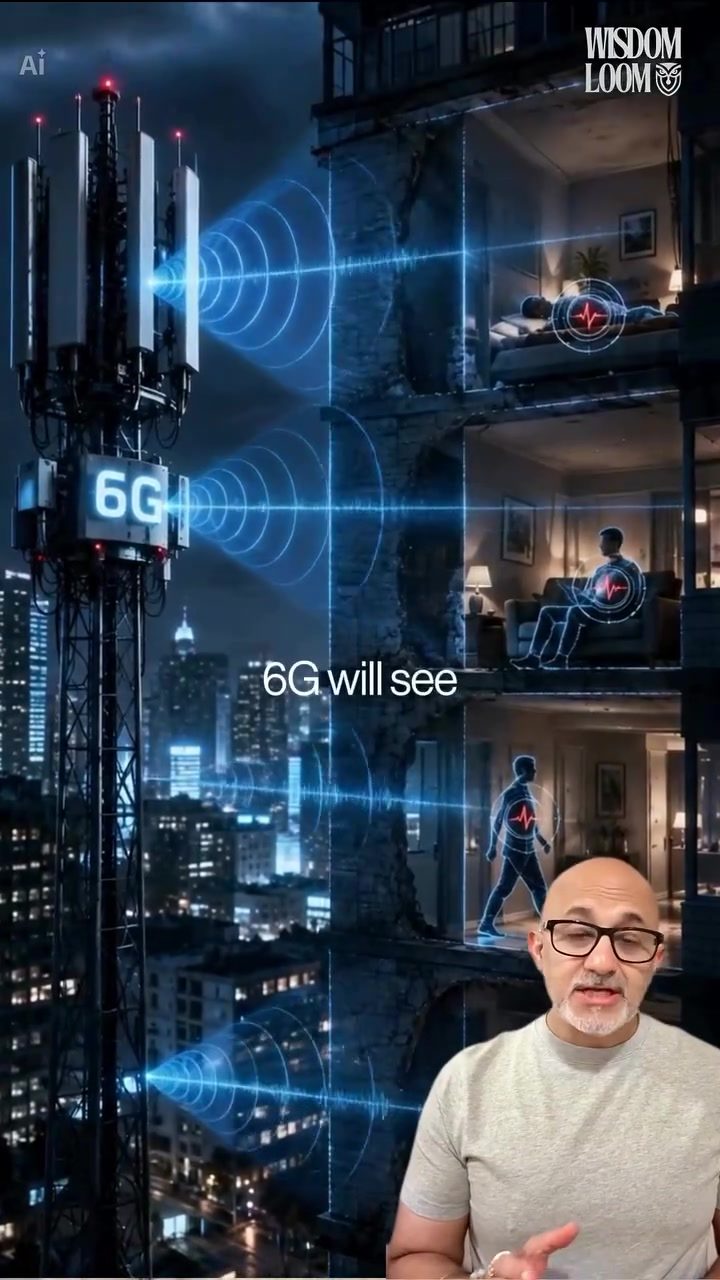
The evolution of wireless technology continues with 6G, the next generation set to revolutionize connectivity. Central to this advancement is Integrated Sensing and Communication (ISAC), a technology that transforms 6G networks into sophisticated sensing systems. ISAC enables 6G to detect people through walls, monitor vital signs, and even identify individuals by their gait, all without the need for cameras or wearable devices.
Why this matters
While 6G technology promises enhanced connectivity and numerous beneficial applications, it also raises significant privacy concerns. The capability to continuously monitor and track individuals without their knowledge or consent has prompted privacy advocates to call for careful regulation.
Main discussion
Understanding ISAC
Integrated Sensing and Communication (ISAC) is a fundamental component of 6G technology. Unlike previous generations, which focused primarily on speed and bandwidth, 6G incorporates sensing capabilities into its infrastructure. This means that every 6G antenna and base station can function as a radar system, detecting and monitoring various aspects of the environment.
ISAC technology leverages advanced signal processing and machine learning algorithms to achieve its sensing capabilities. It can measure breathing and heart rate, and identify individuals by analyzing the way they walk. The implications of these capabilities are vast, ranging from healthcare monitoring to search and rescue operations.
Privacy implications
The deployment of 6G and ISAC technology raises significant privacy concerns. Traditional privacy threats involve opting out or using devices that do not support tracking. With ISAC, however, anyone within range of a 6G network gets scanned, whether they are aware of it or not. This passive surveillance capability has led Germany's data protection conference to issue a formal warning, comparing it to invisible video surveillance.
The difference between 6G and previous technologies lies in its intrinsic surveillance capabilities. While 5G focused on speed and connectivity, 6G is designed to sense everything around it. This creates a scenario where anyone can be tracked and monitored without their consent, raising questions about individual privacy and freedom.
Practical applications
Despite the privacy concerns, 6G and ISAC technology offer numerous practical applications. In disaster rescue scenarios, the ability to detect people through walls can save lives. For healthcare monitoring, continuous tracking of vital signs can provide critical data to medical professionals. In elderly care, ISAC can help monitor the well-being of seniors, ensuring their safety and providing timely assistance when needed.
Smart infrastructure is another area where 6G and ISAC can make a significant impact. By continuously monitoring the environment, 6G networks can optimize resource allocation, enhance traffic management, and improve overall urban efficiency.
Practical tips
For those concerned about the privacy implications of 6G and ISAC, it is essential to stay informed about the ongoing debates and regulatory developments. Engaging with policymakers and advocating for strong privacy protections can help ensure that the benefits of 6G technology are harnessed responsibly.
Individuals can also take proactive steps to protect their privacy. While it may not be possible to opt out of 6G networks, being mindful of one's surroundings and understanding the capabilities of ISAC can help mitigate risks. For example, avoiding areas with a high concentration of 6G infrastructure or using privacy-enhancing technologies can provide an additional layer of protection.
Important takeaways
ISAC technology represents a significant advancement in wireless communication, offering enhanced sensing capabilities that can revolutionize various industries. However, the privacy implications of 6G networks must be carefully considered and regulated to ensure that individual rights are protected. The ongoing debate highlights the need for a balanced approach, one that leverages the benefits of 6G while addressing its potential risks.
Conclusion
The development of 6G and ISAC technology opens new possibilities for sensing and communication, with far-reaching applications in healthcare, disaster rescue, and smart infrastructure. However, it also introduces unique privacy challenges that must be addressed through careful regulation and public awareness. As 6G networks become more prevalent, it is crucial to engage in informed discussions and advocate for privacy protections that balance technological progress with individual rights.
Questions readers ask
What is 6G ISAC technology and how does it work?
6G ISAC (Integrated Sensing and Communication) technology combines communication and sensing capabilities within the same network. It uses advanced radar sensing to detect and monitor individuals through walls and capture vital signs, all without requiring direct line of sight or wearable devices.
How does 6G technology enable surveillance through walls?
6G technology, with the help of ISAC, uses advanced radar and sensing capabilities to penetrate walls and other obstacles. This allows it to detect the presence, movement, and even vital signs of individuals within a given range, making it a powerful tool for surveillance.
What are the primary privacy concerns surrounding 6G ISAC technology?
The primary privacy concerns include the constant, passive surveillance capabilities of 6G ISAC. It can monitor individuals without their knowledge or consent, tracking their movements, and even capturing sensitive information like vital signs.
How can 6G ISAC technology monitor vital signs?
6G ISAC technology uses advanced sensing capabilities to detect and monitor vital signs, such as heart rate and breathing patterns. This is achieved through radar sensing, which can capture these biological signals without requiring any wearable devices or direct contact.
Can 6G technology identify individuals by their gait?
Yes, 6G ISAC technology has the capability to identify individuals by their gait. By analyzing the unique patterns of movement, 6G networks can recognize and track individuals, adding another layer to its surveillance capabilities.
What measures are being taken to address 6G privacy concerns?
While the article does not specify measures, privacy advocates and policymakers are likely engaged in discussions to develop regulations and guidelines to mitigate these concerns. This could include transparency requirements, consent mechanisms, and data protection policies.
How does 6G ISAC technology differ from previous generations?
Unlike previous generations, 6G ISAC integrates sensing and communication into a single system, enabling it to perform advanced monitoring and tracking without cameras or wearable technology. This dual capability sets 6G apart and raises new privacy issues.
Related deep dives
Similar reads based on topic and creator.




Recent articles
Fresh deep dives from the latest Reels we unpacked.




Comments
Be the first to comment.