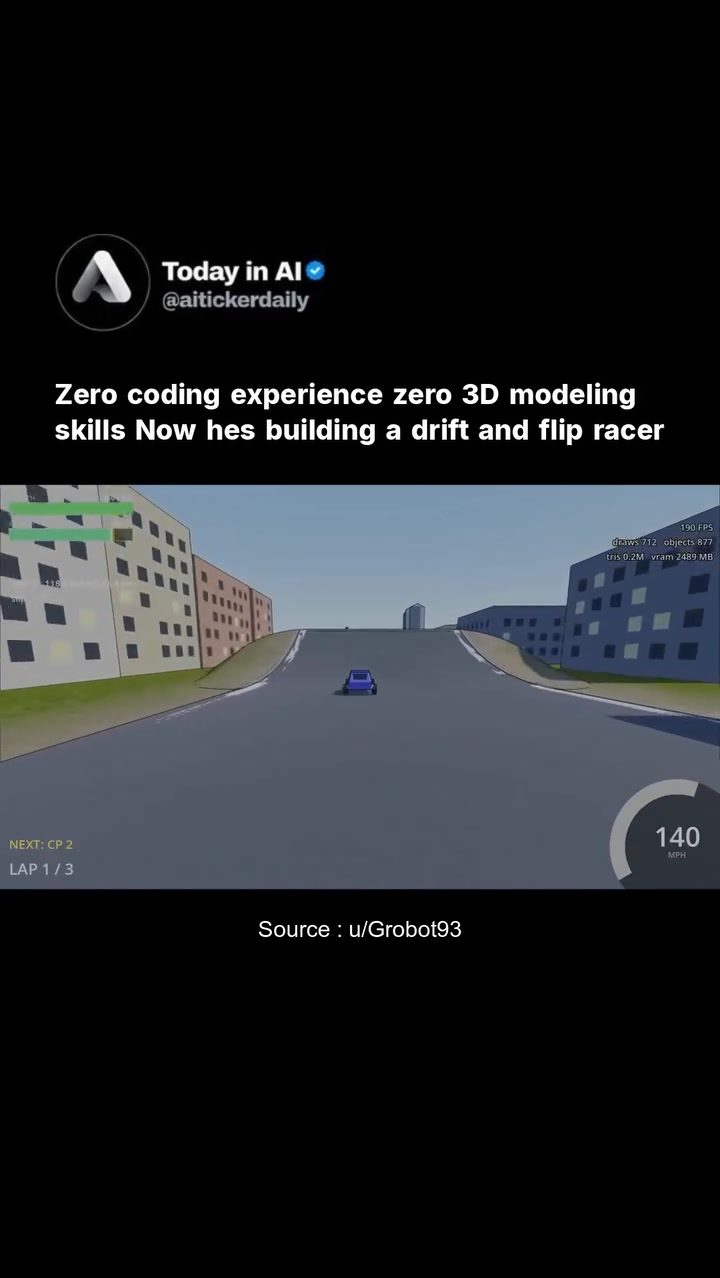
3D Racing Game Development
Creating a 3D racing game from scratch can be a daunting task, especially for those without a background in coding or 3D modeling. However, recent advancements in game development tools have made it possible for self-taught builders to create impressive projects. One such example is the development of a battle racer game called OVERSTEER, showcasing the capabilities of modern development platforms. The game is being built using Claude Opus and Fable, running in VS Code, alongside Godot 4.6 and Blender.
Context / Why This Matters
The landscape of game development has evolved significantly, allowing enthusiasts with little to no experience to dive into the world of 3D racing games. Tools like Godot 4.6 and Blender have made game creation more accessible, while platforms like Claude Opus and Fable offer no-code solutions for building intricate game elements. This democratization of game development has opened doors for creators to experiment and innovate, leading to the rise of unique and engaging racing games.
Main Discussion
The development of OVERSTEER, as seen in the video, highlights several key features that make it a standout project. From a working driving feel to a garage for tuning individual cars, the game incorporates various elements that enhance the overall racing experience. Let's delve deeper into the components that make up this exciting project.
Tracking and Driving Mechanics
One of the most critical aspects of a racing game is the driving feel and track design. The game features a Forge-style track builder with snapping road pieces, allowing for seamless track creation. This tool allows builders to quickly construct and modify tracks, adding complexity and variety to the racing experience. The snapping feature ensures that tracks are smooth and connected, enhancing the realism and immersion for players.
Drifting and Aerial Tricks
The driving mechanics in OVERSTEER go beyond simple acceleration and steering. The game incorporates advanced drift and aerial trick mechanics, giving players the ability to perform impressive stunts and maneuvers. These elements add a layer of excitement and skill-based gameplay, making the racing experience more dynamic and engaging. The integration of these mechanics showcases the creative possibilities offered by modern game development tools.
Garage and Car Tuning
Another essential feature of OVERSTEER is the garage, where players can tune individual cars to suit their preferences and racing style. The ability to customize and optimize vehicles allows for a more personalized and strategic gaming experience. From adjusting suspension settings to tweaking engine performance, the garage provides a comprehensive tuning system that caters to both casual and competitive players.
No-Code Platforms
The use of no-code platforms like Claude Opus and Fable in the development of OVERSTEER is a testament to the power of modern game development tools. These platforms allow creators to build complex game elements without needing to write a single line of code. By leveraging these tools, the developer can focus on the creative aspects of game design, such as track building and vehicle customization, rather than getting bogged down in technical details.
User Interface and Gameplay Elements
The user interface in OVERSTEER is designed to be intuitive and user-friendly. The main menu includes several key options, such as "RACE," "TRACK BUILDER," "GARAGE," "SETTINGS," and "QUIT." This organized layout ensures that players can easily navigate the game and access its various features. The inclusion of track building tools and game settings in the menu highlights the flexibility and versatility of the game, allowing players to customize their experience.
Practical Tips
For aspiring game developers looking to create their own 3D racing games, there are several practical tips to keep in mind. These tips can help streamline the development process and ensure a smoother and more enjoyable experience.
Start with a Clear Vision
Before diving into the development process, it's essential to have a clear vision of what you want to achieve. Outline the key features and mechanics you want to include in your game, such as drifting, aerial tricks, and customizable vehicles. Having a well-defined vision will serve as a roadmap for your development journey and help you stay focused on your goals.
Utilize No-Code Platforms
Leveraging no-code platforms like Claude Opus and Fable can significantly simplify the development process. These tools allow you to build and prototype game elements without needing extensive coding knowledge. By using these platforms, you can quickly create and iterate on your game, allowing for faster and more efficient development.
Focus on User Interface Design
A well-designed user interface can greatly enhance the overall gaming experience. Ensure that your game's menus and navigation are intuitive and user-friendly. Include essential options in the main menu, such as "RACE," "TRACK BUILDER," "GARAGE," and "SETTINGS," to provide players with easy access to the game's features. A streamlined interface will help players navigate your game with ease, ensuring a more enjoyable experience.
Test and Iterate
Regular testing and iteration are crucial for creating a polished and engaging racing game. Playtest your game frequently to identify any issues or areas for improvement. Gather feedback from players and use it to refine and enhance your game. By continuously iterating on your design, you can create a more compelling and enjoyable experience for players.
Important Takeaways
The development of OVERSTEER showcases the potential of modern game development tools and no-code platforms. From the intuitive track builder to the advanced driving mechanics and customizable garage, the game demonstrates how even self-taught builders can create impressive projects.
The Power of Modern Tools
The use of tools like Godot 4.6, Blender, Claude Opus, and Fable highlights the power of modern game development software. These tools make it possible for creators to build complex and engaging games without extensive coding or 3D modeling experience. By leveraging these platforms, developers can focus on the creative aspects of game design, leading to more innovative and engaging projects.
The Importance of Community and Sharing
The development of OVERSTEER also underscores the importance of community and sharing in the game development process. By sharing their work and engaging with other creators, developers can gain valuable insights and feedback. This collaborative approach fosters a supportive and innovative environment, allowing for continuous improvement and growth in the game development community.
Conclusion
The development of OVERSTEER serves as an inspiring example of what can be achieved with modern game development tools and a passion for creation. From the intuitive track builder to the advanced driving mechanics and customizable garage, the game showcases the potential of no-code platforms and innovative design. Aspiring game developers can learn from this project and apply the practical tips and takeaways to create their own engaging and unique 3D racing games. By leveraging the power of modern tools and the support of the community, anyone can bring their gaming visions to life.
Questions readers ask
What are the key tools used in the development of the OVERSTEER 3D racing game?
The OVERSTEER 3D racing game utilizes a combination of tools including Claude Opus, Fable, VS Code, Godot 4.6, and Blender. These tools facilitate various aspects of game development, from scripting and coding to 3D modeling and animation, without requiring advanced coding or 3D modeling skills.
How does Godot 4.6 simplify 3D racing game development?
Godot 4.6 provides a user-friendly interface and a robust set of pre-built features that cater to 3D racing game development. It allows developers to focus on the creative aspects of the game, such as designing tracks and vehicles, rather than getting bogged down by complex coding tasks.
Can I create a 3D racing game if I have no experience in coding or 3D modeling?
Yes, with the right tools and platforms, such as Godot 4.6 and Blender, it is possible to create a 3D racing game even if you have no experience in coding or 3D modeling. These platforms offer intuitive interfaces and extensive tutorials to guide beginners through the development process.
What is the significance of the OVERSTEER game in the context of modern game development?
The OVERSTEER game demonstrates the potential of modern game development tools by showcasing a high-quality 3D racing game created by self taught builders who lacked advanced coding or 3D modeling skills. This highlights the democratization of game development and encourages more people to explore game creation.
What role does Blender play in the creation of 3D racing games?
Blender is a powerful 3D modeling and animation tool that allows creators to design and animate game assets. It is particularly useful for developing 3D models of vehicles, tracks, and other elements in a 3D racing game, providing a comprehensive suite of tools for 3D modeling and texturing.
Are there other games similar to OVERSTEER that have been developed without extensive coding knowledge?
Yes, there are several games similar to OVERSTEER that have been developed using modern game development platforms. These platforms enable creators to build complex and engaging games without needing extensive coding knowledge, making game development more accessible to a broader audience.
Related deep dives
Similar reads based on topic and creator.




Recent articles
Fresh deep dives from the latest Reels we unpacked.




Comments
Be the first to comment.