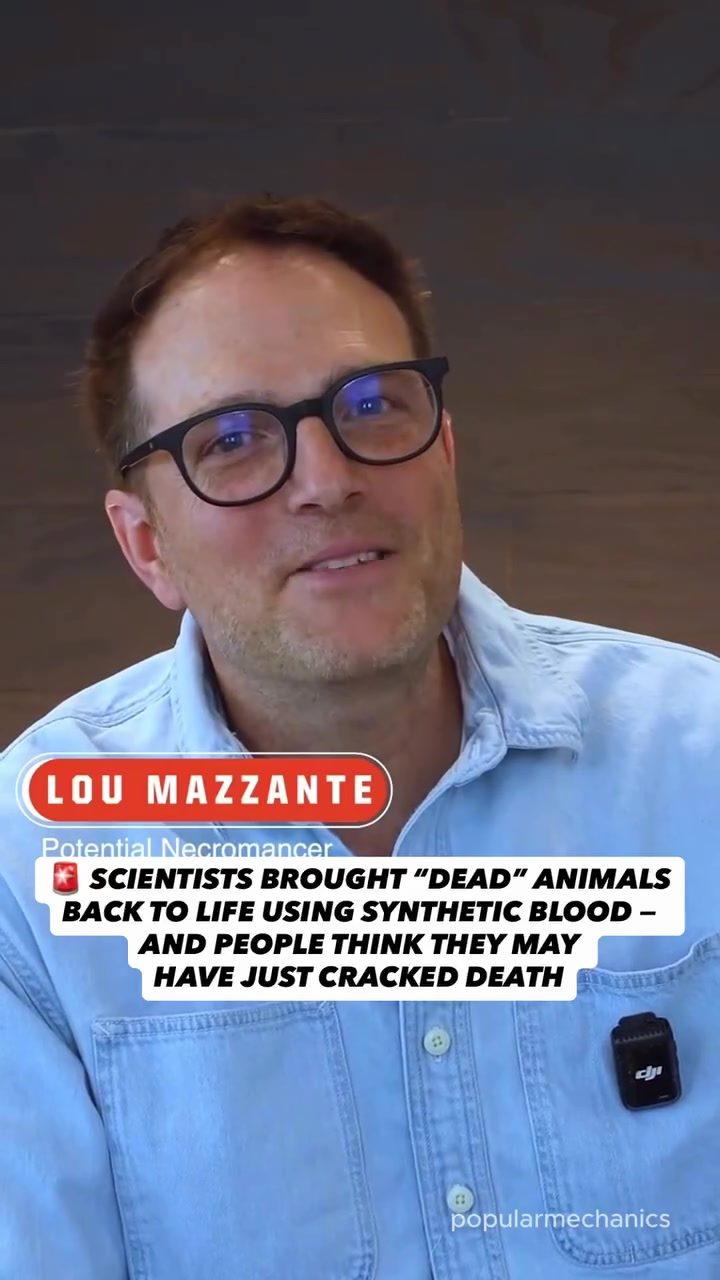
Scientists Reanimate 'Dead' Animals with Synthetic Blood
The notion of death as a final, irreversible state is being challenged by a groundbreaking Yale experiment. Researchers have successfully restored vital activity in pigs that had been clinically dead for over an hour. This extraordinary achievement involves the use of a synthetic blood-like fluid, reigniting debates about the nature of death and the boundaries of modern science.
Context / Why this matters
The implications of this experiment extend far beyond the laboratory. If scientists can reverse the effects of death in animals, it raises profound questions about the nature of life, consciousness, and the ethical boundaries of medical research. This breakthrough could pave the way for new treatments in emergency medicine, organ transplantation, and even potential therapies for conditions previously thought to be untreatable. The experiment also highlights the potential for synthetic blood substitutes to revolutionize medical practices, offering new avenues for research and development in the field of life support systems.
Main discussion
The OrganEx System
At the heart of this scientific milestone is the OrganEx system, a sophisticated machine designed to circulate a synthetic blood substitute through the body. Developed by a team of researchers led by a Yale neurobiologist, the OrganEx system uses a combination of pumps, heaters, and filters to mimic the functions of a living circulatory system. This advanced life support system was specifically designed to test the limits of what modern science can achieve in reviving dead tissues and cells.
The Experiment
In one of the most intriguing experiments, researchers induced cardiac arrest in several pigs to simulate a state of clinical death. They then waited a full hour to ensure that the pigs were, by all medical definitions, deceased. At this point, the OrganEx system was connected to the pigs' bodies, and the synthetic blood substitute was circulated throughout their systems.
Remarkable Results
The outcomes were nothing short of astonishing. Within just half an hour, heart monitors connected to four out of the five pigs began to light up, indicating that the heart's electrical activity had resumed. Remarkably, this happened without any chest compressions or CPR. The pigs' skin even regained its natural color, suggesting that the synthetic blood was effectively oxygenating the tissues.
But the most striking observation came when researchers inserted a catheter into the carotid artery of one of the pigs. The animal responded with movement, described by scientists as complex motion, rather than a simple twitch or spasm. This raised the question: was the pig alive in some capacity, or had it truly returned from the dead?
Practical tips
For those interested in the practical applications of this research, it's essential to note a few key points:
-
Understanding the Limitations: While the results are promising, it's crucial to understand that the experiment does not definitively prove that the pigs were conscious or fully revived. The researchers are cautious about drawing hard conclusions from these initial findings.
-
Ethical Considerations: The ethical implications of such research are vast and complex. It's important to engage in thoughtful discussions about the boundaries of medical intervention and the ethical treatment of animals in scientific experiments.
-
Future Research: This breakthrough opens up new avenues for research into life support systems, organ transplantation, and the potential for synthetic blood substitutes. Ongoing studies will be critical in fully understanding the potential and limitations of this technology.
Important takeaways
The experiment conducted by Yale researchers using the OrganEx system offers a glimpse into a future where the boundaries of life and death may be redefined. Key takeaways include:
-
Reversing Clinical Death: The experiment demonstrates that it is possible to reverse some of the effects of clinical death in animals, raising intriguing questions about the permanence of death.
-
Synthetic Blood Substitutes: The use of synthetic blood substitutes shows promise as a life-saving tool in medical emergencies, offering new possibilities for organ preservation and transplantation.
-
Ethical and Philosophical Implications: The findings of this experiment spark debates about the nature of life, consciousness, and the ethical boundaries of medical research. These discussions are crucial as science continues to push the limits of what is possible.
Conclusion
The Yale experiment involving the OrganEx system and synthetic blood has brought us one step closer to understanding the complexities of death and life. While many questions remain unanswered, this breakthrough offers a compelling glimpse into a future where modern science may hold the key to reversing what was once thought to be irreversible. As researchers continue to explore these possibilities, it is essential to approach the topic with a balanced perspective, considering both the potential benefits and the ethical challenges.
Questions readers ask
What is the significance of the Yale experiment on pigs?
The Yale experiment is significant because it challenges the traditional understanding of death as irreversible. By restoring vital activity in pigs that had been clinically dead for over an hour, the study opens up new possibilities in emergency medicine and organ transplantation.
How do researchers achieve the revival of clinically dead pigs?
Researchers use a synthetic blood-like fluid to achieve this. The fluid is designed to mimic the properties of natural blood, allowing it to circulate through the body and restore essential functions.
What are the potential advancements in emergency medicine from this study?
This breakthrough could lead to new treatments and protocols in emergency medicine. By understanding how to reverse the effects of clinical death, medical professionals may be able to develop methods to save lives in situations where patients would otherwise be considered beyond help.
Could this process be applied to humans in the future?
While the current research focuses on pigs, the long-term goal is to explore the potential for human applications. Further studies and ethical considerations will need to be addressed before any human trials can be considered.
What are the ethical implications of this research?
The ability to revive clinically dead animals raises profound ethical questions. These include considerations about the definition of death, the potential for conscious experience during the revival process, and the boundaries of medical intervention.
Related deep dives
Similar reads based on topic and creator.


Recent articles
Fresh deep dives from the latest Reels we unpacked.




Comments
Be the first to comment.