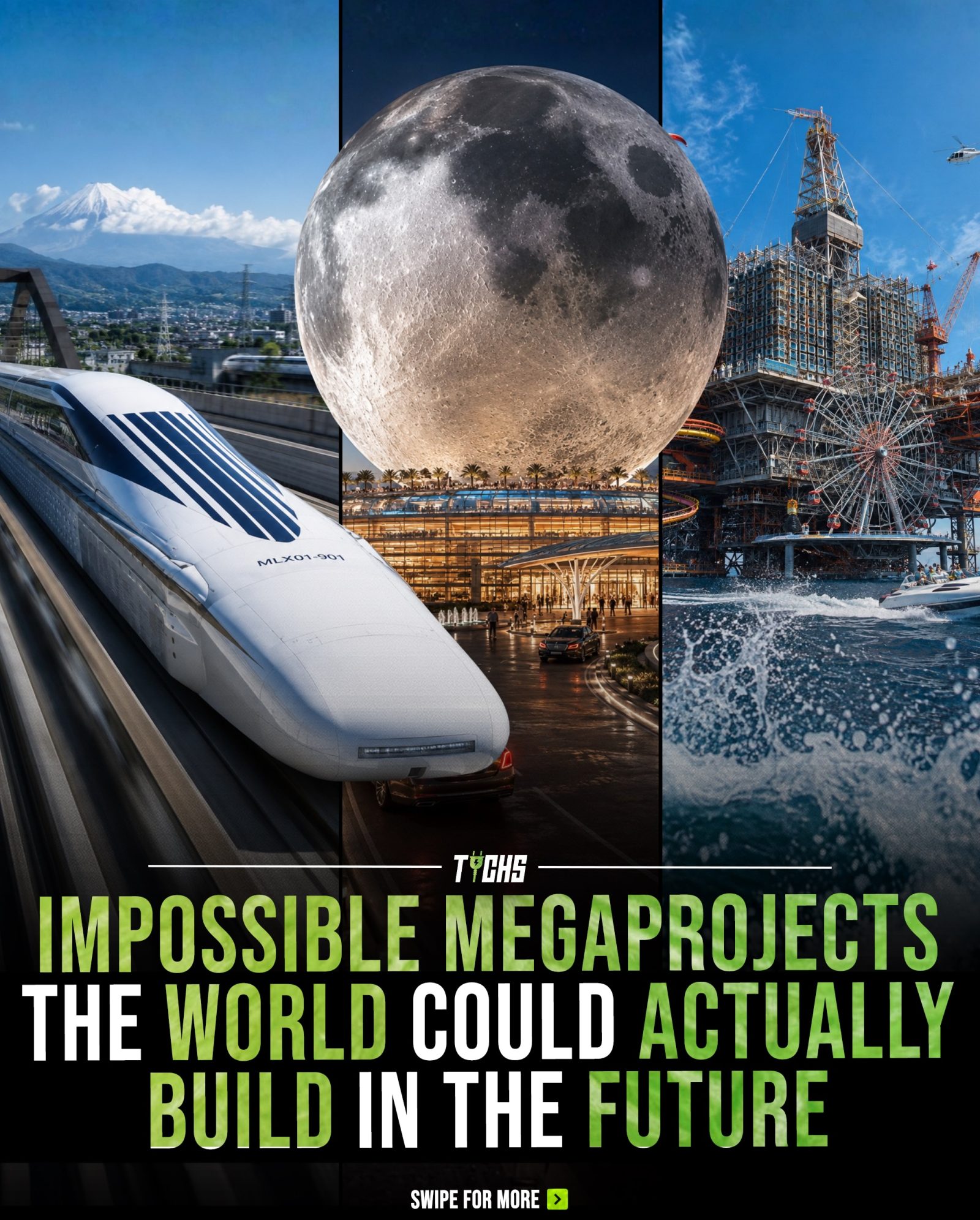
Impossible Megaprojects: The Future of Architecture, Transportation, and Urban Design
Megaprojects are ambitious undertakings that push the boundaries of what is possible in architecture, transportation, energy, tourism, and urban design. These colossal initiatives often represent the pinnacle of human achievement, showcasing our ability to envision and build structures that redefine our world.
Why These Projects Matter
Megaprojects are not just about building taller or bigger structures; they are about transforming how we live, work, and travel. These projects can drastically improve infrastructure, create new economic opportunities, and set new standards for sustainable living. By exploring these ambitious initiatives, we gain insight into the future of urban development and the innovative solutions that will shape our cities and landscapes.
Main Discussion
Saudi Arabia's Architectural Marvels
Saudi Arabia is at the forefront of futuristic architecture with projects like the Jeddah Tower and Mukaab. The Jeddah Tower, initially slated to be the world’s tallest building, is set to redefine skyscraper design with its innovative structural systems and sustainability features. Meanwhile, Mukaab, a cube-shaped city within a city, aims to integrate cutting-edge technology and urban planning to create a self-sustaining environment.
High-Speed Transportation
High-speed transportation is another area where megaprojects are making significant strides. Japan's high-speed maglev (magnetic levitation) train is a prime example. This futuristic mode of transport uses magnetic forces to move at speeds exceeding 600 kilometers per hour, significantly reducing travel times between major cities. The technology behind the maglev train represents a major leap forward in transportation efficiency and sustainability.
Innovative Tunnel Projects
Norway’s floating-tunnel concepts and the Denmark-Germany immersed tunnel are game-changers in infrastructure. Norway's floating tunnels, which use pontoons and submerged tubes, offer a novel solution to connecting remote coastal areas. Meanwhile, the immersed tunnel project between Denmark and Germany, costing around $8 billion, is set to become the world’s longest immersed tunnel. This project is part of the Fehmarnbelt link, a key infrastructure initiative that aims to enhance connectivity between Scandinavia and continental Europe.
Energy and Sustainability
The massive tokamak project in France, part of the International Thermonuclear Experimental Reactor (ITER), is pivotal in the quest for sustainable energy. Tokamak reactors aim to harness the power of nuclear fusion, providing a virtually limitless source of clean energy. This megaproject represents a significant step toward a future where energy production is both sustainable and environmentally friendly.
Travel and Tourism
The Trojena desert mountain ski destination in Saudi Arabia is a groundbreaking concept that combines skiing with a desert environment. This unique project features a futuristic, spiraling structure integrated into the mountainside, offering a blend of adventure and luxury. Such initiatives highlight how tourism can be reinvented to create new and exciting experiences for travelers.
Descriptive Names
- Denmark-Germany Tunnel
- Trojena Desert Ski Resort
- Jeddah Tower
- Mukaab
Practical Tips
These megaprojects highlight several practical tips for future urban planning and infrastructure development:
- Embracing Innovation: Invest in futuristic technologies and sustainable practices. Projects like the maglev train and tokamak reactor show the potential of innovative solutions.
- Leveraging Technology: Utilize advanced construction materials and techniques to build more resilient and efficient structures. Saudi Arabia’s Jeddah Tower and Mukaab are prime examples of this.
- Sustainability: Focus on sustainability from the outset. Projects like the ITER tokamak emphasize the importance of clean and sustainable energy solutions.
- Connectivity: Enhance connectivity through infrastructure. The Denmark-Germany immersed tunnel and Norway’s floating tunnels illustrate the value of improving transportation networks.
Important Takeaways
The world of megaprojects is dynamic and ever-evolving. Some of the most ambitious initiatives are already under construction, while others remain in the conceptual phase. The costs and timelines for these projects can change significantly, but their potential impact on urban design, transportation, energy, and tourism is undeniable. By staying informed about these developments, we can better prepare for a future where these megaprojects become a reality.
Conclusion
Impossible megaprojects represent the cutting edge of human achievement in multiple fields. From Saudi Arabia’s architectural marvels to Japan’s high-speed maglev and innovative tunnel projects, these initiatives are set to reshape our world. By embracing innovation, technology, and sustainability, we can look forward to a future where these ambitious dreams become a reality, transforming how we live, work, and travel.
Questions readers ask
What are some of the most notable future construction megaprojects currently in the works?
Some of the most notable future construction megaprojects include Saudi Arabia's futuristic cities, such as NEOM and The Line, which aim to set new standards for urban design and sustainability. Japan's high-speed maglev trains, which promise to revolutionize transportation with speeds exceeding 600 km/h, and Norway's pioneering tunnels, which push the boundaries of engineering and infrastructure, are also among the most ambitious.
How do megaprojects like these impact local economies and communities?
Megaprojects can significantly boost local economies by creating jobs and attracting investment. They also stimulate tourism and foster new industries. However, they can also present challenges, such as displacement of local communities and temporary disruptions in daily life, which need to be carefully managed.
What innovative technologies and materials are being used in these ambitious construction projects?
These projects often employ cutting-edge technologies, such as 3D printing for construction, advanced materials for durability and sustainability, and smart city technologies for efficient urban management. For instance, NEOM in Saudi Arabia plans to use AI and robotics for urban operations, while Japan's maglev trains rely on superconducting magnets for unprecedented speeds.
How do these megaprojects address sustainability and environmental concerns?
Many of these megaprojects integrate sustainable practices, such as renewable energy sources, energy-efficient designs, and extensive green spaces. For example, Norway's tunnels are designed to minimize environmental impact, and NEOM aims to be a carbon-neutral city, powered entirely by renewable energy.
What are the key challenges faced in the construction of megaprojects in desert regions, such as in Saudi Arabia?
Constructing megaprojects in desert regions presents unique challenges, including extreme temperatures, limited water resources, and the need to manage vast areas of land. Additionally, ensuring the availability of specialized labor and materials in remote locations can be a significant hurdle, requiring robust logistics and supply chain management.
How do high-speed maglev trains in Japan compare to traditional high-speed rail systems?
Japan's high-speed maglev trains outperform traditional high-speed rail systems by operating at significantly higher speeds, exceeding 600 km/h. This is achieved through the use of magnetic levitation, which reduces friction and allows for smoother, faster travel. The maglev system also offers improved energy efficiency and reduced maintenance requirements compared to traditional rail systems.
Related deep dives
Similar reads based on topic and creator.


Recent articles
Fresh deep dives from the latest Reels we unpacked.




Comments
Be the first to comment.