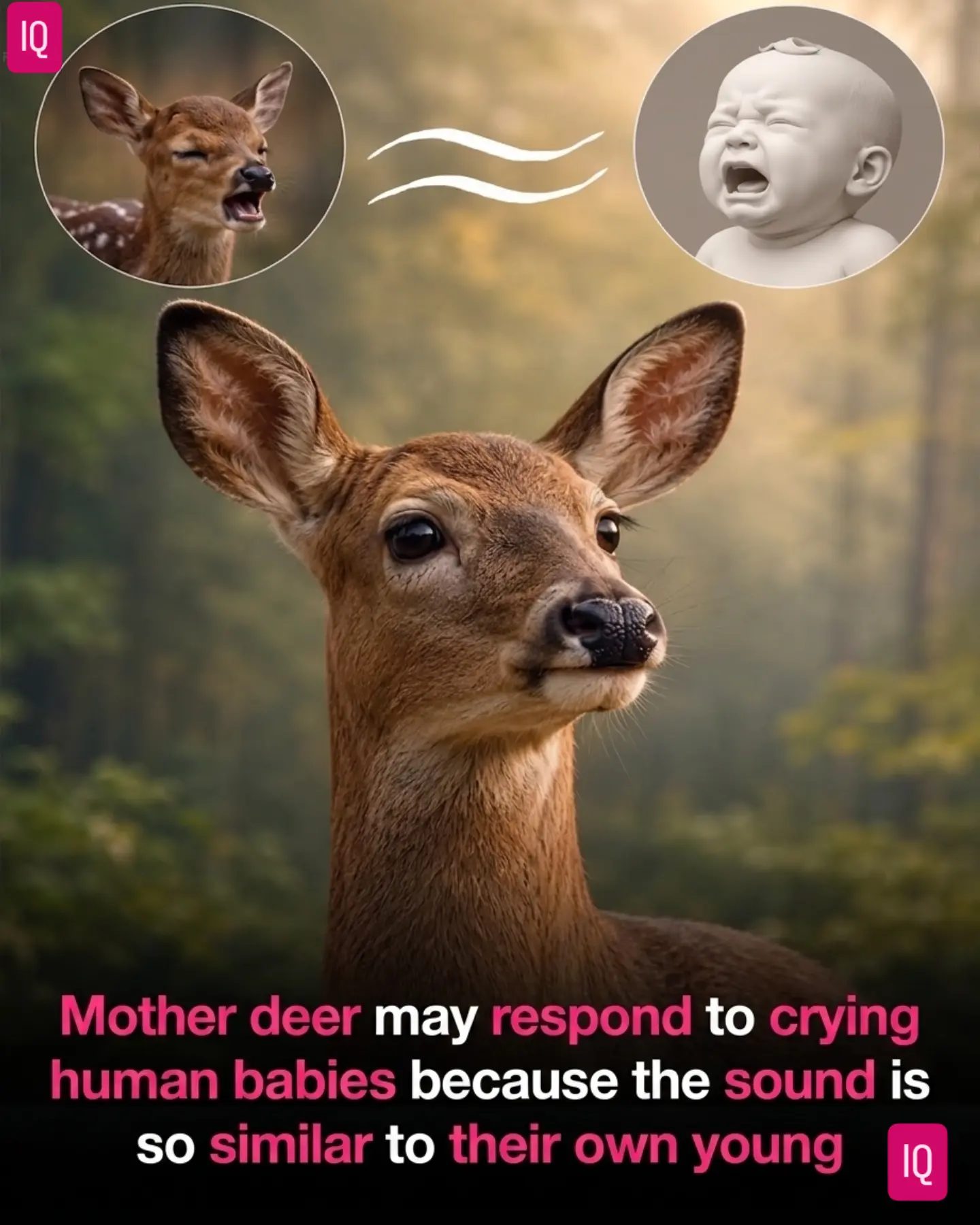
Animal Behavior: The Intriguing Connection Between Deer and Human Babies
Mother deer exhibit a fascinating behavior: they may respond to the cries of human babies. This phenomenon is rooted in the acoustic similarities between the cries of human infants and those of deer fawns.
Context / Why This Matters
Understanding this behavior is important for several reasons. It sheds light on the complex instincts that drive animal behavior, particularly in response to distress signals. Moreover, it highlights the evolutionary conserved mechanisms that many mammals share, which can have practical implications for wildlife management and conservation efforts.
Main Discussion
The Acoustic Similarity
Research has shown that the fundamental frequency and acoustic structure of a human baby's cry are strikingly similar to the vocalizations of a distressed deer fawn. This similarity is not coincidental but rather a result of evolutionary conservation. Both species have developed distress signals that are designed to elicit an immediate response from their mothers.
The Maternal Instinct
The maternal instinct in deer is deeply ingrained. When a mother deer hears a cry that resembles that of her own fawn, her instincts kick in, prompting her to investigate or move toward the source of the sound. This behavior is a survival mechanism, ensuring that the fawn, or in this case, any young mammal, is protected and cared for.
Cross-Species Response
This cross-species response is not unique to deer. Many mammalian species exhibit similar behaviors. The emotional distress signals are so universally recognized that a mother deer may be triggered by the cries of other species, including human infants. This underscores the fundamental nature of these signals and their role in survival across different species.
Practical Tips
If you encounter a deer and hear its fawn crying, it is important to understand that the deer may be highly protective and potentially dangerous. Keep a safe distance and avoid interfering with the deer and its fawn. This behavior is natural and part of their survival strategy.
If you are a wildlife enthusiast or conservationist, understanding this behavior can help in managing wildlife habitats and ensuring the safety of both animals and humans.
Important Takeaways
- Mother deer may respond to the cries of human babies due to the acoustic similarities between human infant cries and deer fawn cries.
- This behavior is driven by the deeply ingrained maternal instinct in deer, which is a survival mechanism.
- The emotional distress signals in mammals are evolutionary conserved, meaning they are shared across many species.
- Understanding this behavior can have practical implications for wildlife management and conservation efforts.
Conclusion
The fascinating connection between deer and human babies highlights the complex and conserved mechanisms that drive animal behavior. By understanding these instincts, we can better appreciate the natural world and work towards conserving it. Whether you're a wildlife enthusiast, a conservationist, or simply curious about animal behavior, knowing about this phenomenon can provide valuable insights into the intricate web of life.
Questions readers ask
Why do mother deer react to the cries of human babies?
Mother deer react to the cries of human babies due to the acoustic similarities between human infant cries and the distress signals of deer fawns. This response is driven by the deer's innate maternal instincts, which are triggered by the sound of a crying baby, regardless of the species.
What makes the cries of human babies and deer fawns similar?
The cries of human babies and deer fawns share similar fundamental frequencies and acoustic structures. These similarities make the distress signals recognizable to mother deer, prompting their instinctual maternal response.
Is this behavior unique to deer, or do other animals exhibit similar responses?
While the specific response to human baby cries is most studied in deer, other animals may also exhibit cross-species responses to distress signals. This is due to the conserved mechanisms that many mammals share, which help them recognize and respond to the sounds of distress in their young.
Can the way deer respond to human baby cries help with wildlife conservation and management?
Understanding how deer respond to human baby cries can provide insights into their maternal behavior and distress signals. This knowledge can be applied to develop more effective strategies for wildlife management and conservation, such as using distress calls to monitor deer populations or to redirect their movements.
Related deep dives
Similar reads based on topic and creator.



Recent articles
Fresh deep dives from the latest Reels we unpacked.




Comments
Be the first to comment.