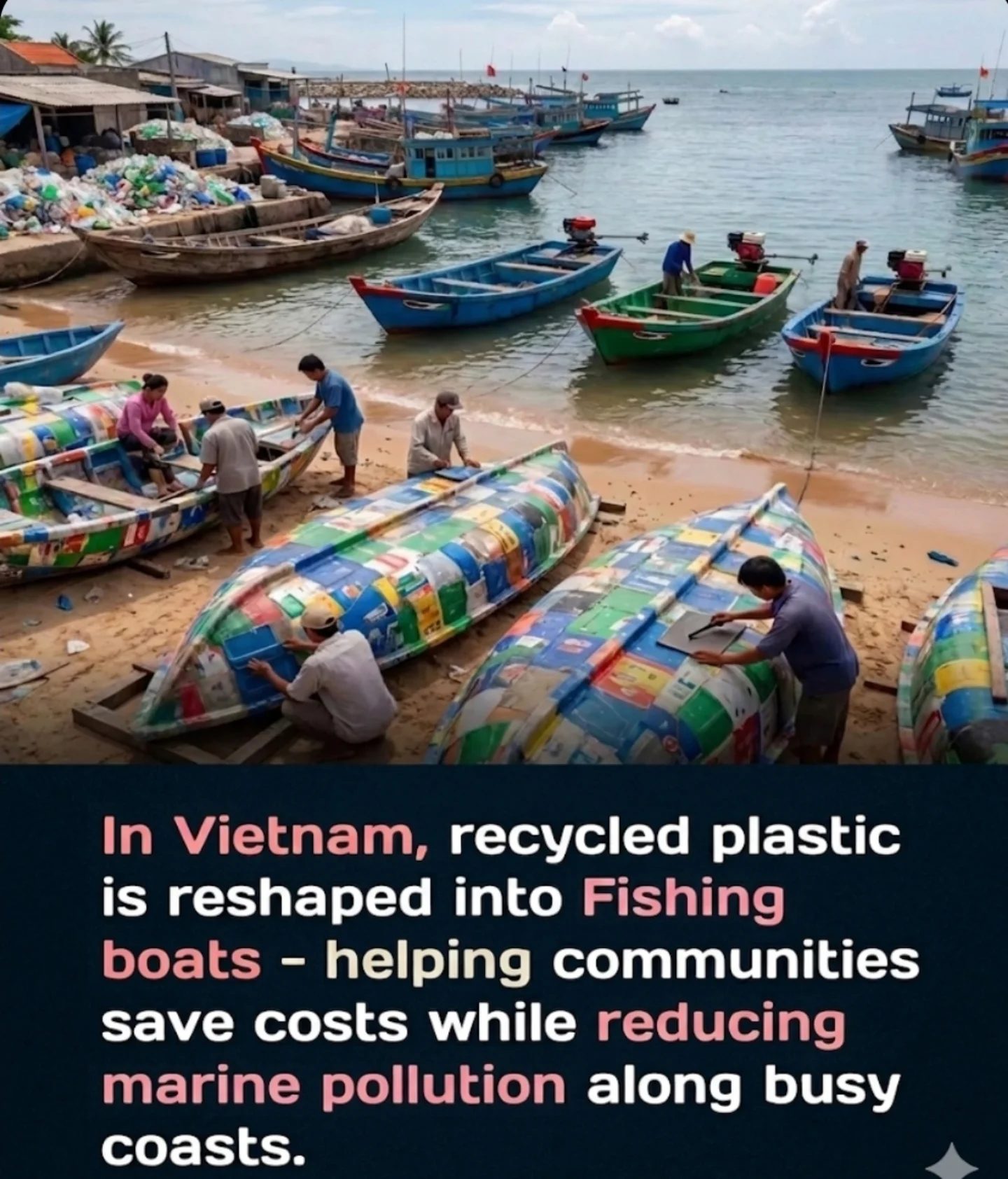
Recycled Plastic Fishing Boats in Vietnam
In the coastal villages of Vietnam, an innovative project is turning discarded plastic into durable fishing boats. This initiative is not only reducing marine pollution but also providing cost-effective solutions for local fishermen. The process involves reshaping High-Density Polyethylene (HDPE) scrap into sturdy hulls, offering a resilient alternative to traditional timber boats. These recycled boats resist rot and biological decay, making them a sustainable and economical choice for small-scale fishers.
Context: Why this matters
Marine pollution is a significant global issue, with plastic waste being a major contributor. The oceans are choked with discarded plastic, endangering marine life and ecosystems. In coastal regions, this problem is particularly acute, as plastic waste often accumulates along shorelines and in marine environments. Traditional fishing boats, commonly made from timber, are expensive and require regular maintenance to combat rot and decay. This poses a financial burden on small-scale fishers, who often rely on these boats for their livelihood.
The initiative: Recycling plastic into fishing boats
The process of recycling plastic into boats
Local innovators in Vietnam are pioneering a new approach to tackle both marine pollution and the high costs of traditional fishing boats. They are collecting discarded plastic, particularly HDPE, and transforming it into durable hulls for fishing vessels. HDPE is a type of plastic known for its high strength and resistance to chemicals and biological decay, making it an ideal material for boat construction.
The process involves several steps:
- Collection: Discarded plastic is collected from beaches, rivers, and coastal areas.
- Cleaning and Sorting: The collected plastic is cleaned and sorted to ensure only HDPE is used.
- Shredding: The sorted plastic is shredded into small pieces.
- Melting and Molding: The shredded plastic is melted and molded into the desired shapes for the boat hulls.
- Assembly: The molded parts are assembled to create the final fishing boat.
Benefits for local communities
The initiative offers multiple benefits for local communities:
- Cost Savings: Recycled plastic boats are significantly cheaper than traditional timber boats. This lowers the financial barrier for small-scale fishers, enabling more people to enter the fishing industry and improve their livelihoods.
- Durability: HDPE boats are resistant to rot and biological decay, making them more durable and long-lasting than traditional timber boats. This reduces the need for frequent repairs and replacements, further lowering costs for fishers.
- Environmental Impact: By repurposing discarded plastic, the initiative helps clean up marine environments and reduces the amount of plastic waste entering the oceans. This has a positive impact on marine life and ecosystems.
Building a circular economy
The process of transforming discarded plastic into fishing boats is an excellent example of a circular economy. In a circular economy, waste is minimized by reusing and recycling materials, creating a closed-loop system where resources are kept in use for as long as possible. By integrating HDPE scrap back into the maritime supply chain, Vietnam's coastal communities are effectively creating a circular economy that benefits both the environment and the local economy.
The initiative also highlights the potential for other coastal regions to adopt similar practices. By repurposing local waste and creating sustainable, cost-effective solutions, communities can address both environmental and economic challenges.
Practical tips for implementing similar initiatives
If you're considering starting a similar initiative in your community, here are some practical tips to help you get started:
Assess local needs and resources
- Community Needs: Identify the specific needs of your local community. For example, are there small-scale fishers who struggle with the high costs of traditional fishing boats?
- Available Resources: Assess the available resources in your community, such as discarded plastic and local expertise in boat construction.
- Local Support: Engage with local stakeholders, including fishers, environmental groups, and government agencies, to build support for your initiative.
Develop a collection and sorting system
- Collection Points: Establish collection points for discarded plastic in your community. These could be located on beaches, in coastal areas, or in community centers.
- Sorting Process: Implement a sorting process to ensure only suitable plastics, such as HDPE, are used for boat construction.
Collaborate with local experts
- Partnerships: Form partnerships with local experts in boat construction, recycling, and environmental conservation. These partnerships can provide valuable expertise and resources.
- Workshops and Training: Organize workshops and training sessions to teach community members about the recycling process and boat construction.
Engage with government and NGOs
- Government Support: Engage with local government agencies to secure permits, funding, and other forms of support.
- NGOs and Organizations: Collaborate with non-governmental organizations (NGOs) and other groups working on environmental and economic development issues.
Promote and scale up the initiative
- Awareness Campaigns: Launch awareness campaigns to educate community members about the benefits of recycling plastic and supporting the initiative.
- Scaling Up: Once the initiative is established, consider scaling it up by expanding to other communities or regions.
Important takeaways
- Sustainable Solutions: Recycling plastic into fishing boats is a sustainable solution that addresses both environmental and economic challenges.
- Circular Economy: This initiative demonstrates the potential for a circular economy, where waste is minimized, and resources are kept in use for as long as possible.
- Community Benefits: The project provides cost-effective and durable boats for small-scale fishers, improving their livelihoods and reducing marine pollution.
Conclusion
Recycling plastic into fishing boats in Vietnam is a remarkable example of innovative thinking and sustainable development. By repurposing discarded plastic, local communities are not only addressing marine pollution but also creating economic opportunities. This initiative serves as a global blueprint for how localized, eco-friendly industrial processes can solve modern pollution crises. Whether you're a small-scale fisher, an environmental activist, or simply someone interested in sustainable living, there are valuable lessons to be learned from this initiative. By adopting similar practices, communities around the world can work towards a cleaner, more sustainable future.
Questions readers ask
What type of plastic is primarily used to create these recycled fishing boats in Vietnam?
The primary material used to create the recycled fishing boats in Vietnam is High-Density Polyethylene (HDPE). This type of plastic is chosen for its durability and resistance to environmental factors, making it ideal for marine use.
How do these recycled fishing boats benefit local Vietnamese communities?
These recycled fishing boats benefit local Vietnamese communities in multiple ways. They provide a cost-effective alternative for fishermen, reducing the need to purchase new timber boats. Additionally, the initiative supports local livelihoods and helps in curbing marine pollution by repurposing ocean-bound plastic waste.
What are the environmental benefits of using recycled plastic for fishing boats?
Using recycled plastic for fishing boats significantly reduces marine pollution by repurposing plastic waste that would otherwise endanger marine life and ecosystems. These boats are also more resistant to rot and biological decay, reducing the need for frequent replacements and further minimizing waste.
Are there specific regions in Vietnam where this initiative is most prominent?
While the initiative is widespread across Vietnam's coastal villages, it is particularly prominent in regions with a high concentration of marine pollution and a strong fishing industry, such as areas along the South China Sea and the Gulf of Tonkin.
How do the recycled fishing boats compare to traditional timber boats in terms of maintenance?
Recycled fishing boats are low-maintenance compared to traditional timber boats. They resist rot and biological decay, which are common issues with timber boats. This durability makes them a more economical choice in the long run, as they require less frequent repairs and replacements.
What are the economic benefits of these recycled fishing boats for local fishermen?
Recycled fishing boats offer a cost-effective solution for local fishermen by reducing the upfront costs and long-term maintenance expenses associated with traditional timber boats. These boats provide a durable and sustainable alternative that can help fishermen maintain their livelihoods.
Recent articles
Fresh deep dives from the latest Reels we unpacked.




Comments
Be the first to comment.