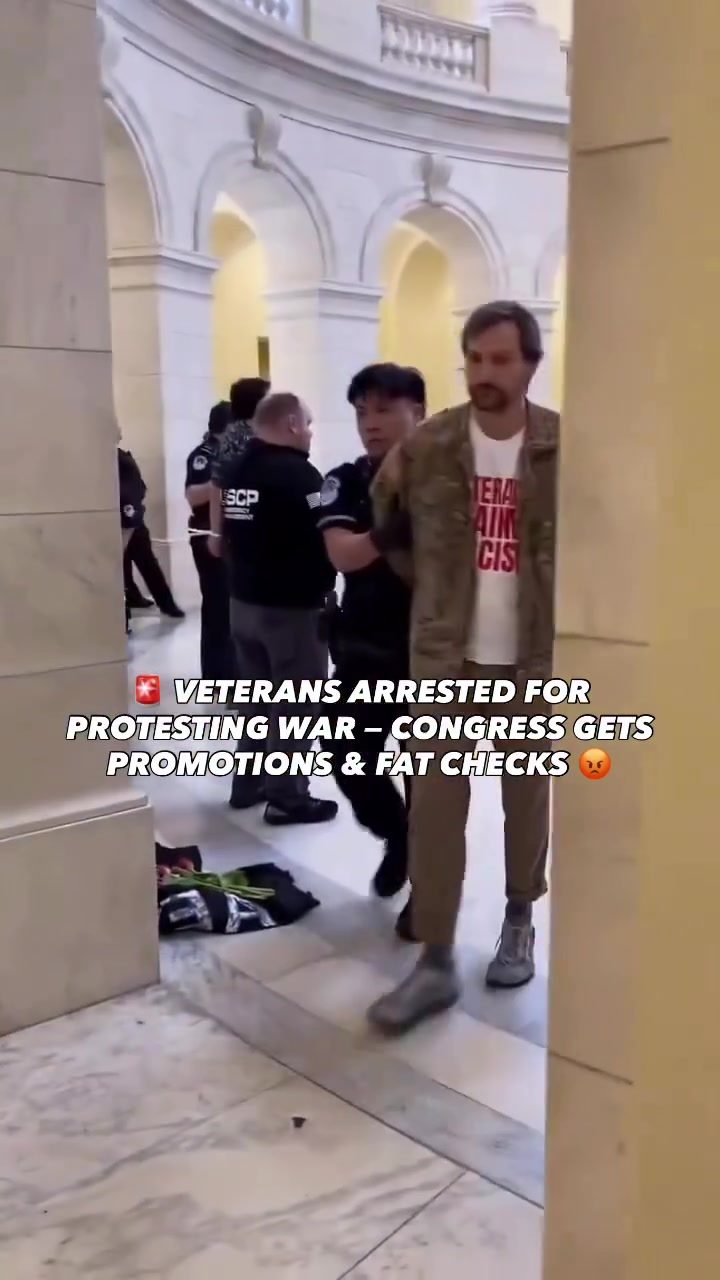
Veterans Arrested for Protesting War in the Capitol
Veterans have been a visible and vocal force in recent protests against war and genocide, but the actions they take can come with severe consequences. The Capitol Police have been criticized for a recent incident where military veterans were arrested for protesting in a government building. While the veterans were being apprehended for their anti-war stance, it was noted that those in Congress and the White House seemed to reaffirm their support and reward those who contribute to and benefit from the ongoing conflict.
Context: Veterans and Political Activism
Veterans have a long history of political activism, often driven by the experiences they have witnessed firsthand. This particular protest involves opposition to the current or potential escalation of conflict with Iran. The veterans' message is clear: they want an end to war and related atrocities. Their protests emphasize the emotional and ethical arguments against war, highlighting the devastating impacts on both civilians and soldiers.
The Arrests and the Message
The veterans in this instance were taken into custody for protesting in a government building, most likely the Capitol. The arrests were significant for several reasons. First, it underscored the intense tension that can develop between military veterans and state authorities. The veterans arrested are those who, for most of their lives, were the ones enforcing laws and protecting the nation, according to the instructions they were given. However, now they are the ones being arrested for expressing their convictions against war and genocide.
Second, the arrests highlighted a critical message being conveyed by the government to the general public: protesting war and genocide is illegal, but supporting it gets you power, and many find profit in it. This raises serious questions about the nature of the democracy and the values that are being upheld in the political institutions.
There is a clear dichotomy between the treatment of veterans and the reward system for those in power. While veterans who protest war are being dragged away in handcuffs, politicians who vote to fund and prolong these conflicts are being rewarded with lifetime jobs, fat paychecks, and book deals. This disparity only fuels the anger and frustration of veterans who feel betrayed by a system they once fought to protect.
The Role of Law Enforcement
The situation also brings into question the role of law enforcement in managing and responding to protests. The Capitol Police, known for their role in securing the U.S. Capitol, have a duty to maintain the safety of the building and the people inside. But what happens when those inside the building need to be protected from the law enforcement themselves?
Veterans' Perspective
Veterans often view their protests as a continuation of their service to the nation. They have seen the devastating effects of war firsthand and feel compelled to speak out against policies that perpetuate violence and suffering. For many, the decision to protest is a deeply personal and moral one, driven by a sense of duty to their fellow Americans and to the world at large.
The message from the veterans who were arrested is crystal clear: they feel betrayed by a system that incarcerates them for protesting war and genocide, while rewarding those who support it. This sentiment is echoed by many who see the disparity as a stark indication of the values and priorities of the current political climate.
Practical Tips for Those Considering Political Activism
For those considering political activism, especially in a context that might involve protesting against government policies, there are several practical steps to take:
-
Research and Understand the Legal Implications: Know the laws and regulations governing protests in the area where you plan to protest. Understand your rights and the potential consequences of your actions.
-
Prepare for the Worst: Have a plan in place in case of arrest or other legal issues. This includes knowing your legal rights, such as the right to remain silent and the right to an attorney.
-
Stay Informed: Keep up-to-date with current events and the political climate. This will help you stay informed about any changes in policies or legislation that might affect your activism.
-
Build a Support Network: Connect with like-minded individuals and organizations. Having a support network can provide emotional, physical, and legal support during times of activism.
-
Use Social Media Wisely: Social media can be a powerful tool for spreading awareness and mobilizing support. Be aware of the potential risks, such as surveillance and misinformation, and use it strategically.
Important Takeaways
The arrest of veterans for protesting war highlights several important issues:
- The Disparity in Treatment: There is a stark contrast between the treatment of veterans who protest against war and those in power who support it.
- The Importance of Political Activism: Veterans and other activists play a crucial role in advocating for change and holding governments accountable.
- The Role of Law Enforcement: The arrests also raise questions about the role of law enforcement in managing and responding to protests, particularly in a democratic society.
- The Need for Reform: There is a clear need for reform in how the government addresses the concerns of veterans and other activists. This includes ensuring that their voices are heard and their rights are protected.
Conclusion
The arrests of veterans for protesting war in the Capitol serve as a stark reminder of the complexities and challenges of political activism. It underscores the need for ongoing dialogue and reform to ensure that the voices of those who have served are heard and that their rights are protected. For those considering political activism, it is essential to be informed, prepared, and supported in their efforts to bring about change.
Questions readers ask
Why were veterans arrested during the recent Capitol protest?
Veterans were arrested for participating in an anti-war protest in the Capitol. Their actions were seen as a disruption, leading to their apprehension by Capitol Police. This incident highlights the tension between veterans' firsthand experiences of war and the government's stance on ongoing conflicts.
Who was recognized and rewarded during the anti-war protest?
While veterans were being arrested for their anti-war protest, those in Congress and the White House seemed to reaffirm their support and rewarded those who contribute to and benefit from the ongoing conflict.
What is the significance of veterans' involvement in anti-war protests?
Veterans bring a unique perspective to anti-war protests due to their firsthand experiences. Their involvement often carries significant weight, as they can provide personal insights into the realities of war. However, their activism can also lead to legal consequences, as seen in recent arrests.
What historical context does this protest have?
Veterans have a long history of political activism, often driven by the experiences they have witnessed firsthand. This particular protest involves opposition to the current government's stance on conflict, reflecting a broader pattern of veteran involvement in political dissent.
What was the public response to the veterans' arrest?
The arrest of veterans during the anti-war protest sparked criticism towards the Capitol Police. Many viewed the arrests as a stark contrast to the recognition and rewards given to those who support and benefit from ongoing conflicts, highlighting a divide in public perception.
Recent articles
Fresh deep dives from the latest Reels we unpacked.




Comments
Be the first to comment.