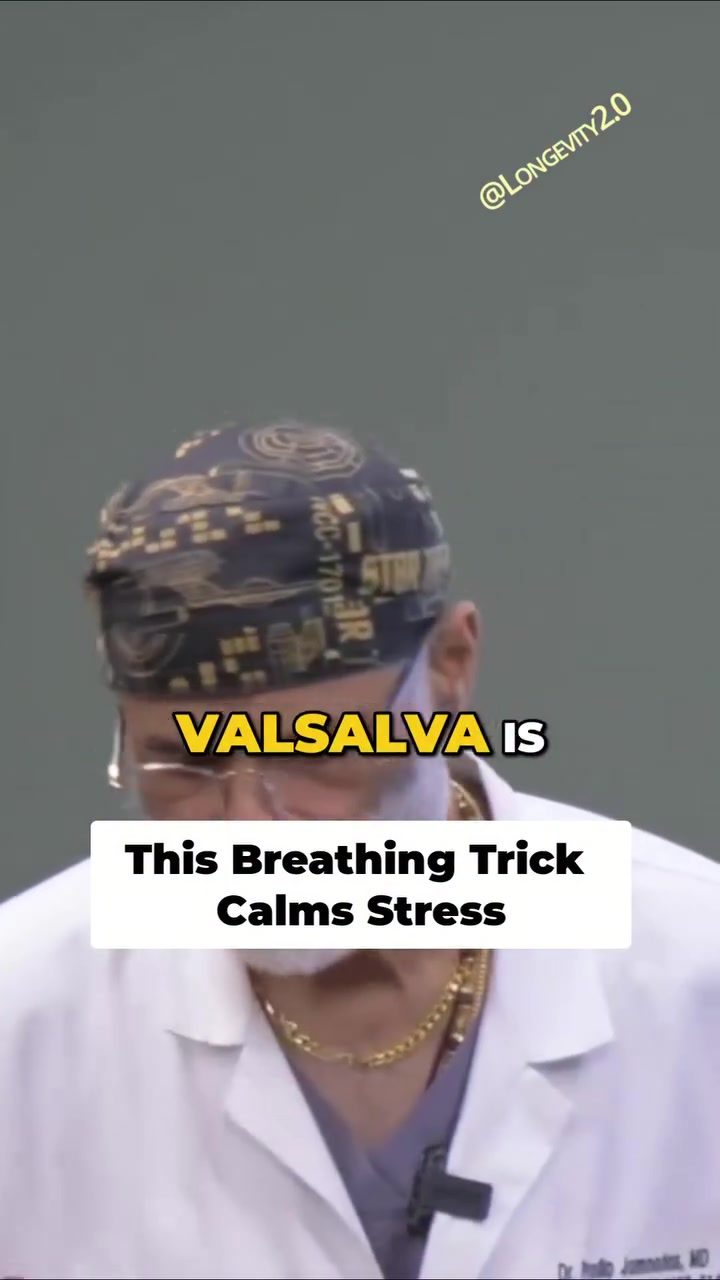
The Valsalva maneuver is a powerful breathing technique that can help manage rapid heart rhythms and promote relaxation. This technique involves taking a deep breath, closing the airway, and gently bearing down as if trying to exhale without letting any air out. The process increases abdominal pressure, which in turn activates the vagus nerve and helps the body switch from a "fight or flight" response to a "rest and digest" mode. This technique is commonly used in clinical settings to terminate episodes of supraventricular tachycardia (SVT) and can also be beneficial for reducing stress and anxiety in everyday life.
Context / Why this matters
Understanding and practicing the Valsalva maneuver can provide significant benefits for both immediate stress relief and long-term health management. By activating the parasympathetic nervous system, this technique helps regulate heart rate, reduce stress, and improve overall well-being. For individuals experiencing symptoms of SVT or those who simply want to manage stress more effectively, the Valsalva maneuver offers a simple, non-invasive method to achieve these goals.
Main discussion
The Mechanism Behind the Valsalva Maneuver
The Valsalva maneuver works by increasing abdominal pressure, which in turn stimulates the vagus nerve. The vagus nerve is a crucial component of the parasympathetic nervous system, responsible for regulating the body's relaxation response. By squeezing the vagus nerve, the maneuver helps shift the body from a state of heightened alertness to one of calmness. This process can be particularly beneficial for individuals experiencing SVT, as it helps slow down the heart rate and restore a normal rhythm.
Clinical Applications
In clinical settings, the Valsalva maneuver is often used to manage episodes of SVT. When a patient experiences a rapid heart rhythm, healthcare professionals may instruct them to perform the maneuver to help terminate the episode. This involves taking a deep breath, closing the airway, and gently bearing down as if trying to exhale without letting any air out. The increased abdominal pressure activates the vagus nerve, which helps slow the heart rate and restore a normal rhythm. This technique is a non-invasive and effective way to manage SVT without the need for medication or other interventions.
Beyond Medical Emergencies
While the Valsalva maneuver is commonly used in medical settings, it can also be beneficial for everyday stress management. By activating the vagus nerve, the maneuver helps promote relaxation and reduce stress. This can be particularly useful for individuals who experience chronic stress or anxiety, as it provides a simple and effective way to manage these symptoms. Additionally, the Valsalva maneuver can be combined with other stress-reduction techniques, such as deep breathing and meditation, to enhance its benefits.
The Role of the Vagus Nerve
The vagus nerve plays a critical role in the body's response to stress. It is a key component of the parasympathetic nervous system, which is responsible for regulating the body's relaxation response. By activating the vagus nerve, the Valsalva maneuver helps shift the body from a state of heightened alertness to one of calmness. This process can help reduce symptoms of stress and anxiety, improve mood, and enhance overall well-being.
Practical tips
How to Perform the Valsalva Maneuver
To perform the Valsalva maneuver, follow these steps:
- Take a Deep Breath: Inhale deeply through your nose, filling your lungs completely.
- Close Your Airway: Close your mouth and pinch your nose shut to close your airway.
- Gently Bear Down: Gently bear down as if trying to exhale, but do not release any air. This will increase abdominal pressure.
- Hold for a Few Seconds: Hold this position for a few seconds, then release and exhale slowly.
- Repeat as Needed: You can repeat this process a few times to achieve the desired effect.
Incorporating the Valsalva Maneuver into Daily Life
Incorporating the Valsalva maneuver into your daily routine can help manage stress and promote relaxation. Here are a few ways to do this:
- Morning Routine: Start your day by performing a few rounds of the Valsalva maneuver to set a calm and focused tone for the day.
- Stressful Moments: When you feel stressed or anxious, take a moment to perform the maneuver to help calm your mind and body.
- Before Sleep: Performing the Valsalva maneuver before bed can help promote relaxation and improve sleep quality.
- Combine with Other Techniques: For enhanced benefits, combine the Valsalva maneuver with other stress-reduction techniques, such as deep breathing, meditation, and regular exercise.
Important takeaways
The Valsalva maneuver is a versatile and effective technique for managing rapid heart rhythms and reducing stress. By activating the vagus nerve, this technique helps shift the body from a state of heightened alertness to one of calmness. Whether used in clinical settings or as part of a daily stress management routine, the Valsalva maneuver offers a simple and non-invasive method to improve overall well-being. Regular practice can help enhance the benefits of this technique, promoting relaxation, reducing stress, and improving mood.
Questions readers ask
What is the Valsalva maneuver and how does it work?
The Valsalva maneuver is a breathing technique that involves taking a deep breath, closing the airway, and gently bearing down as if trying to exhale without letting any air out. This action increases abdominal pressure, which activates the vagus nerve and helps slow the heart rate, promoting relaxation and stress relief.
Can the Valsalva maneuver help with rapid heart rhythms?
Yes, the Valsalva maneuver is clinically used to manage supraventricular tachycardia (SVT), a type of rapid heart rhythm. By increasing abdominal pressure and activating the vagus nerve, it helps to reset the heart's rhythm, shifting the body from a 'fight or flight' response to a 'rest and digest' mode.
How can the Valsalva maneuver reduce stress and anxiety?
The Valsalva maneuver helps reduce stress and anxiety by promoting relaxation. By activating the vagus nerve, it stimulates the parasympathetic nervous system, which counteracts the body's stress response and induces a state of calm. Regular practice can help manage daily stress and anxiety more effectively.
What are the steps to perform the Valsalva maneuver correctly?
To perform the Valsalva maneuver, take a deep breath, close your mouth and pinch your nose shut, or close your mouth and try to exhale gently without letting any air out. Maintain this pressure for about 10-15 seconds, then release and take a deep breath in.
Is the Valsalva maneuver safe for everyone to try?
While the Valsalva maneuver is generally safe, it may not be suitable for everyone, especially those with certain medical conditions such as glaucoma, heart conditions, or recent surgeries. If you have any health concerns, it's important to consult a healthcare provider before trying this technique.
Can the Valsalva maneuver be used in conjunction with other relaxation techniques?
Yes, the Valsalva maneuver can be combined with other relaxation techniques for enhanced benefits. Deep breathing, meditation, and progressive muscle relaxation are great complements that can help deepen the state of calm and promote overall well-being.
How often can the Valsalva maneuver be performed for stress relief?
The Valsalva maneuver can be performed as needed for stress relief, but it's important not to overuse it. If you feel lightheaded, dizzy, or experience any discomfort, stop immediately and consult a healthcare provider. For general stress relief, practicing a few times a day or as needed during stressful moments can be beneficial.
Recent articles
Fresh deep dives from the latest Reels we unpacked.




Comments
Be the first to comment.