Abstract Visuals and Dark Matter: Exploring the Cosmos
There is more to the universe than meets the eye. Dark matter, an invisible force, is believed to hold galaxies and the entire universe together. It cannot be seen or detected directly, but its powerful gravitational effects are evident in the way galaxies move and how light bends through space. Understanding dark matter could revolutionize our knowledge of the universe's formation, evolution, and continued existence.
Why This Matters
Dark matter constitutes most of the universe's matter, yet it remains one of the greatest mysteries in astrophysics. Unlike normal matter, which includes stars, planets, and all visible objects, dark matter does not interact with light. This invisibility makes it challenging to study directly, but its presence is inferred through its gravitational influence on visible matter.
Main Discussion
The Evidence for Dark Matter
Galaxies rotate in a way that suggests there is more mass present than what we can see. The outer regions of galaxies rotate at speeds that should cause them to fly apart if only visible matter were present. Dark matter provides the additional gravity needed to keep these regions in check.
Mapping Dark Matter
Scientists use a technique called gravitational lensing to map dark matter. This involves studying how the light from distant galaxies is bent as it passes through massive objects. By analyzing these distortions, researchers can infer the presence and distribution of dark matter.
The Role of Dark Matter in Cosmology
Dark matter plays a crucial role in the formation and structure of the universe. It acts as a scaffolding, providing the gravitational pull necessary for the formation of galaxies and galaxy clusters. Without dark matter, the universe would look very different—perhaps even devoid of the complex structures we observe today.
The Search for Dark Matter Particles
While dark matter is invisible, it must be composed of some type of particle. Scientists are actively searching for these particles using various methods, including large-scale detectors and particle accelerators. However, detecting dark matter particles is extremely challenging due to their weak interactions with normal matter.
The Cosmic Web
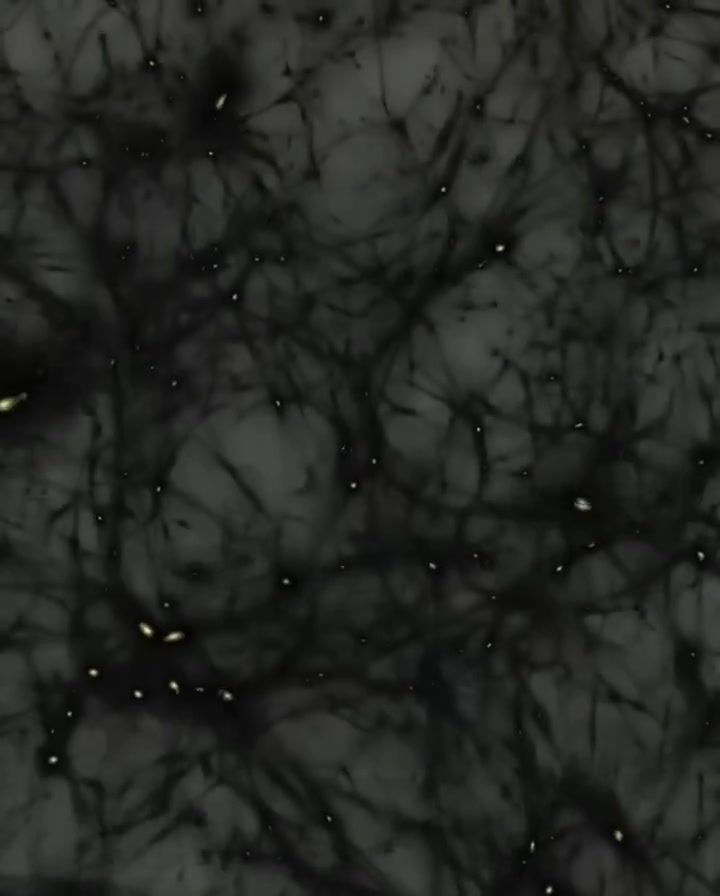
Dark matter forms a vast, interconnected web throughout the universe, often referred to as the "cosmic web." This web provides the framework for the large-scale structure of the universe, guiding the formation of galaxies and galaxy clusters along its filaments.
Dark Matter and Galaxy Formation
Galaxies form within dense regions of the cosmic web, where dark matter concentrations are high. The gravitational pull of these dark matter halos attracts normal matter, leading to the formation of stars and galaxies. This process is believed to have started shortly after the Big Bang and continues to this day.
Practical Tips for Understanding Dark Matter
While dark matter is a complex and abstract concept, there are practical ways to engage with and understand this mysterious substance. Here are a few tips:
- Learn About Gravitational Lensing: Understand how scientists use the bending of light to map dark matter. This can provide a tangible way to visualize the effects of dark matter.
- Study Galaxy Rotation Curves: Explore how the rotation of galaxies provides evidence for dark matter. This can help you grasp the gravitational influence of dark matter on visible matter.
- Follow Current Research: Keep up with the latest developments in dark matter research. New discoveries and experiments are continually shedding light on this elusive substance.
- Explore the Cosmic Web: Learn about the cosmic web and how it shapes the large-scale structure of the universe. This can provide a broader context for understanding dark matter's role in cosmology.
Important Takeaways
- Dark matter is an invisible force that holds galaxies and the universe together.
- Its presence is inferred through its gravitational effects on visible matter.
- Dark matter plays a crucial role in the formation and structure of the universe.
- Understanding dark matter could revolutionize our knowledge of the universe's formation, evolution, and continued existence.
Conclusion
Dark matter, while invisible, is a fundamental component of the universe. Its gravitational effects shape the cosmos, influencing the formation and structure of galaxies and galaxy clusters. By studying dark matter, we can gain insights into the universe's past, present, and future. The search for dark matter particles and the mapping of its distribution are ongoing endeavors that promise to deepen our understanding of the cosmos.
Questions readers ask
What is dark matter and why is it crucial for understanding the universe?
Dark matter is an invisible substance that makes up most of the universe's matter. It is crucial for understanding the universe because its gravitational effects influence the movement of galaxies and the bending of light through space, providing insights into the universe's formation and evolution.
How does dark matter affect the movement of galaxies?
Dark matter exerts a powerful gravitational pull that keeps galaxies from flying apart. Its presence explains why galaxies rotate at faster speeds than expected based on visible matter alone, a phenomenon known as galactic rotation.
If dark matter is invisible, how do scientists detect it?
Scientists detect dark matter indirectly through its gravitational effects. They observe how galaxies move and how light bends as it travels through space, providing clues about the presence and distribution of dark matter in the universe. NASA conducts extensive research involving dark matter to uncover its mysteries.
How much of the universe is composed of dark matter?
Dark matter constitutes about 85% of the matter in the universe. This vast amount highlights its significance in the overall composition of the cosmos, despite being invisible to direct observation.
What are some of the ongoing research studies on dark matter?
There are numerous ongoing studies, including NASA's research and others, that focus on detecting and understanding dark matter. These studies often involve advanced space-based telescopes and space orbits to observe the gravitational effects of dark matter on galaxies and other cosmic structures.
Recent articles
Fresh deep dives from the latest Reels we unpacked.




Comments
Be the first to comment.