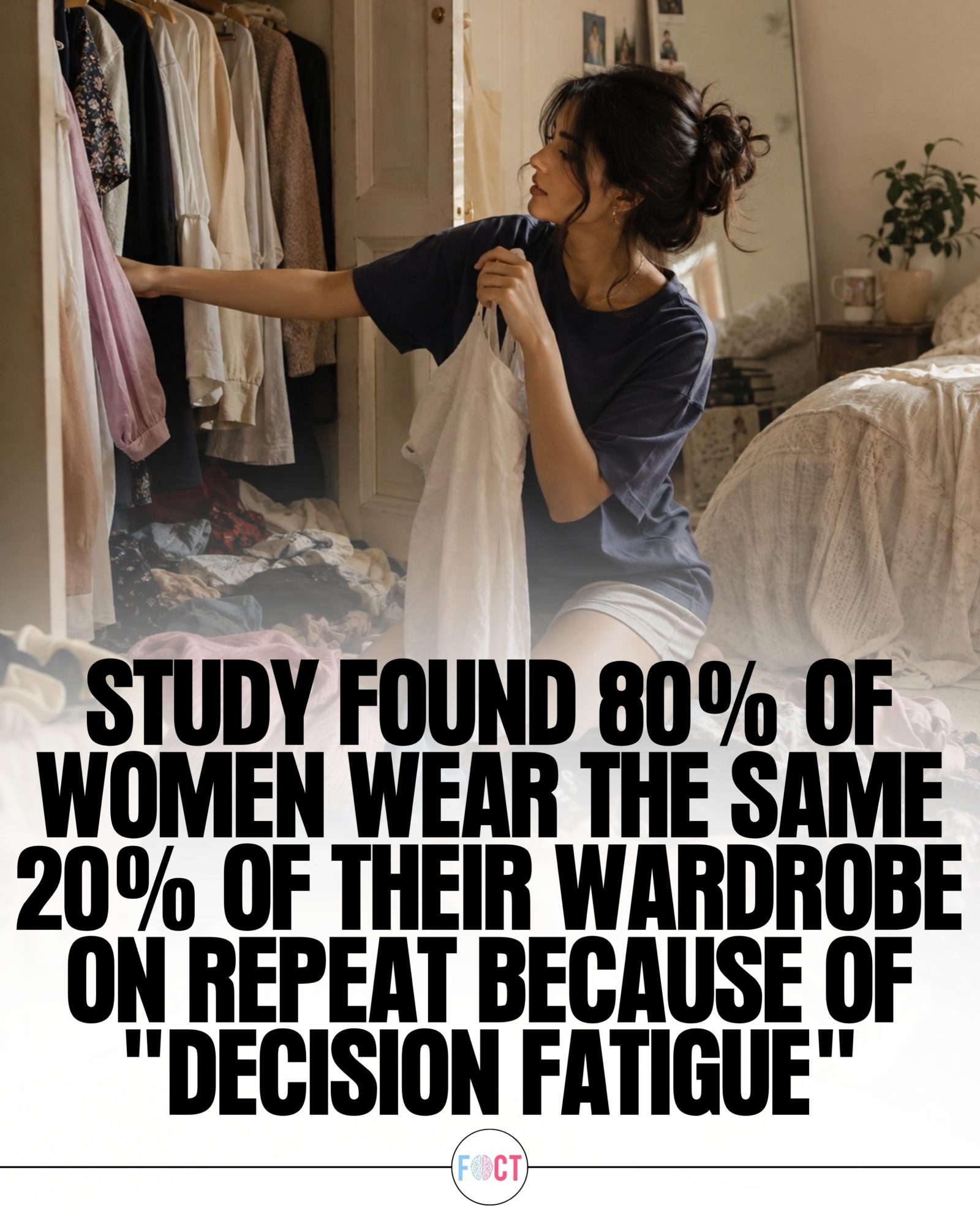
Wardrobe Habits: Why You Might Be Wearing the Same 20% of Your Clothes
Wardrobe management is a common challenge, and understanding how and why we wear certain clothes can help optimize your closet. The FOCt wardrobe survey reveals that 80% of women wear only 20% of their wardrobe repeatedly. This phenomenon is attributed to decision fatigue, a psychological phenomenon where the quality of our decisions deteriorates after a long session of decision-making.
Why This Matters
Decision fatigue is a real and often overlooked aspect of daily life. It influences countless choices, from what to eat for breakfast to how to structure your workday. When it comes to wardrobe management, the effects of decision fatigue can lead to suboptimal choices, such as wearing the same few outfits repeatedly while leaving the rest of your wardrobe untouched.
Understanding Decision Fatigue
Decision fatigue occurs when the mental energy required for making decisions depletes over time. This isn't just hypothetical; studies show that the quality of decisions diminishes as the day progresses. This is why choosing an outfit in the morning could feel like a significant burden, especially when you have to make dozens of other decisions throughout the day.
The 80/20 Wardrobe Rule
The 80/20 rule, or Pareto principle, states that 80% of the effects come from 20% of the causes. When applied to wardrobe habits, it suggests that a small portion of your clothes (20%) are worn repeatedly (80% of the time). This can lead to an unused, cluttered closet, where some items may never be worn.
Main Discussion
Analyzing Your Wardrobe
To determine if you're part of the 80% who wear only 20% of their wardrobe, take an inventory of your clothes. Separate your wardrobe into three categories:
- Frequently Worn: Items you wear regularly.
- Occasionally Worn: Items you wear periodically.
- Rarely/Never Worn: Items that are rarely or never worn.
The goal is to create a wardrobe that consists primarily of frequently and occasionally worn items, reducing the rarely/never worn category.
Common Reasons for Decision Fatigue in Wardrobe Choices
Several factors contribute to decision fatigue when it comes to choosing outfits:
- Too Many Options: A cluttered closet with too many choices can overwhelm the mind, making it harder to decide what to wear.
- Lack of Organization: An unorganized wardrobe increases the time and mental energy required to find and choose an outfit.
- Mismatched Items: A wardrobe filled with items that don't mix and match well can complicate outfit choices, leading to decision fatigue.
- Everyday Stressors: Daily stressors and other mental tasks can exacerbate decision fatigue, making even simple choices feel burdensome.
The Impact of Wardrobe on Mental Health
Your wardrobe can significantly impact your mental health, both positively and negatively. A well-organized wardrobe with items you love can boost your self-esteem and simplify your morning routine. Conversely, a chaotic, cluttered wardrobe can add to daily stress and decision fatigue, affecting your overall well-being.
Practical Tips for Optimizing Your Wardrobe
Declutter and Organize
Regularly declutter your wardrobe by removing items you haven't worn in the past year. Consider donating or selling these items to free up space in your closet. Organize your wardrobe by category (e.g., tops, bottoms, dresses) and color to make it easier to find and choose outfits.
Create a Capsule Wardrobe
A capsule wardrobe consists of a curated selection of versatile, interlocking pieces that can be mixed and matched to create multiple outfits. This approach reduces decision fatigue by simplifying the outfit selection process. Aim for 20-30 staple pieces that can be easily combined to create various looks.
Plan Outfits in Advance
Plan your outfits for the week ahead of time to avoid decision fatigue in the morning. This can be as simple as laying out your clothes the night before or using a wardrobe planning app to create and visualize your outfits.
Embrace Seasonal Rotation
Rotate your wardrobe seasonally to keep your closet organized and reduce decision fatigue. Store off-season items in a separate area to free up space for current-season clothes. This approach also helps you appreciate and wear items that might otherwise be forgotten.
Invest in Versatile Pieces
Invest in versatile, high-quality pieces that can be dressed up or down and paired with various items in your wardrobe. These pieces form the foundation of a functional, low-decision-fatigue wardrobe.
Simplify Your Morning Routine
Simplify your morning routine by streamlining your wardrobe choices. For example, designate specific days for certain items (e.g., "Casual Fridays" or "Dress-Up Mondays") or limit your outfit options to a few favorite pieces.
Important Takeaways
- Decision fatigue is a real psychological phenomenon that affects wardrobe choices.
- The 80/20 wardrobe rule suggests that most women wear only 20% of their clothes.
- Decluttering and organizing your wardrobe can help reduce decision fatigue.
- Creating a capsule wardrobe and planning outfits in advance can simplify the outfit selection process.
- Seasonal rotation and investing in versatile pieces can optimize your wardrobe and reduce decision fatigue.
Conclusion
Decision fatigue is a common issue that affects our daily choices, including what we wear. By understanding and addressing the factors contributing to decision fatigue in wardrobe choices, you can create a more functional, enjoyable, and stress-free wardrobe. Use the tips provided to optimize your wardrobe and enhance your overall well-being.
Questions readers ask
What is decision fatigue and how does it affect my wardrobe choices?
Decision fatigue is a psychological phenomenon where the quality of decisions deteriorates after prolonged decision-making. In the context of a wardrobe, it often leads to the same 20% of clothes being worn repeatedly, while the rest of the closet goes underutilized. This is because choosing outfits can be taxing, and after making many decisions, it's easier to default to familiar options.
Why do I find myself wearing the same clothes over and over again?
You might be experiencing decision fatigue, which makes choosing outfits more challenging as the day progresses. To conserve mental energy, it’s easier to wear what you know you like, even if you have a closet full of other options. This habit leads to a cycle of repetitive outfitting and an unused closet.
How can I optimize my closet for better wardrobe utilization?
First, identify the 20% of your wardrobe that you wear most often. Next, make a conscious effort to wear more of the remaining 80%. To make this easier, try organizing your closet by outfit, with complete looks together. This way, you can quickly choose an outfit without expending too much mental energy.
What are some practical ways to manage decision fatigue when it comes to my wardrobe?
To manage decision fatigue, you can try planning your outfits for the week in advance. This takes the daily decision-making out of the process. Another method is to organize your closet by type of clothing and occasions to make it easier to see what combinations are possible. You can also use accessories to change up outfits, giving new life to old pieces.
How can I declutter my closet and make better use of my wardrobe?
Start by assessing what you haven’t worn in the past year. If you haven’t worn it, chances are, you won’t. Donate or sell these items to free up space. Then, organize the remaining items in a way that makes it easy to see and choose outfits. Store seasonal items separately to avoid overwhelm during the off-season.
Can decision fatigue impact other areas of my life beyond my wardrobe?
Yes, decision fatigue impacts a broad range of choices, from what to eat for breakfast to how to structure your workday. Recognizing and managing decision fatigue can lead to better decisions in all areas of life, not just your wardrobe. For example, you can use the same principles of planning and organization in your daily schedule and meals.
What are some tips for making the most out of my wardrobe?
First, embrace versatility by choosing pieces that can be dressed up or down. Second, invest in quality basics that form the foundation of many outfits. Lastly, experiment with layering and combining items you wouldn’t normally pair together. These strategies can help you maximize your wardrobe and reduce the feeling of having nothing to wear.
Related deep dives
Similar reads based on topic and creator.




Recent articles
Fresh deep dives from the latest Reels we unpacked.




Comments
Be the first to comment.