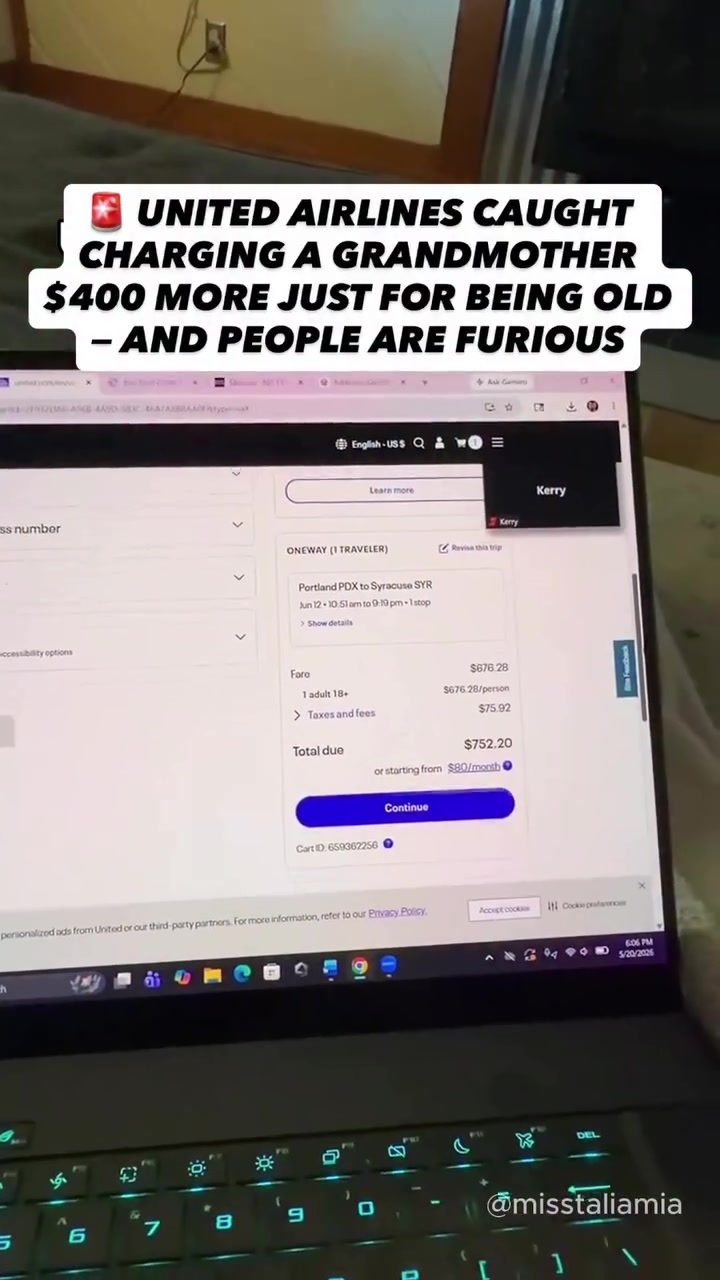
United Airlines Charges Extra for Senior Tickets: A Controversy Surrounding Age-Based Pricing
The recent viral video showing a significant price increase for a senior citizen's airline ticket has sparked outrage and raised questions about age-based pricing practices. A woman's experience with United Airlines highlights a concerning trend where seniors are charged more for flights, sparking public debate and accusations of discrimination.
The Incident
The controversy began when a woman attempted to book a flight for her grandmother. Initially, the flight cost $752. However, as soon as the woman entered her grandmother's birth year, 1949, the price immediately spiked to $1,156. This dramatic increase occurred due to United Airlines' pricing algorithm, which factored in the traveler's age. When the woman removed the senior information and entered her own younger birth year, the price dropped back down to $752.
Why This Matters
This incident has brought to light several critical issues surrounding airline pricing:
-
Age-Based Pricing: Many people are questioning why airlines would charge more for senior tickets. Traditionally, seniors have been offered discounts rather than surcharges. This practice raises questions about fairness and equality in pricing.
-
Algorithmic Discrimination: The use of algorithms in pricing has become a contentious issue. Critics argue that these systems can inadvertently discriminate against certain groups, such as seniors, based on factors like age. This raises concerns about transparency and accountability in algorithmic decision-making.
-
Public Outrage: The public reaction to this incident has been overwhelmingly negative. Social media comments range from accusations of illegal practices to calls for boycotting United Airlines. The outcry highlights the growing dissatisfaction with what many see as predatory pricing tactics.
The Science Behind Dynamic Pricing
Dynamic pricing is a common practice in the airline industry, where ticket prices fluctuate based on various factors, including demand, time of booking, and traveler information. However, the use of age as a factor in pricing has drawn particular criticism. Airlines often use complex algorithms to determine the optimal price for a ticket, taking into account a wide range of data points. While this can be beneficial for maximizing revenue, it also raises ethical questions about fairness and transparency.
Key Points of Controversy
-
Transparency: Critics argue that airlines should be more transparent about how they calculate prices. Many passengers feel they are being charged arbitrarily without clear explanations. Transparency would help build trust and understanding between airlines and customers.
-
Exploitation: There is a growing concern that airlines are exploiting vulnerable groups, such as seniors, by charging them higher prices. This practice is seen as exploitative and unfair, especially given that seniors often have fixed incomes and limited mobility.
-
Legal Implications: The incident has also raised legal questions. Some argue that charging higher prices based on age could be considered discrimination, which is illegal in many jurisdictions. This has led to calls for regulatory intervention and potential legal action against airlines that engage in such practices.
Practical Tips for Booking Flights
Given the controversy, it's essential to be informed and proactive when booking flights. Here are some practical tips to help you navigate the complex world of airline pricing:
-
Use Incognito Mode: When searching for flights, use incognito or private browsing mode to avoid being tracked by algorithms that may increase prices based on your search history.
-
Set Fare Alerts: Set up fare alerts on travel booking websites to be notified of price drops. This can help you snag the best deals before prices increase.
-
Book Early: Generally, booking your flight well in advance can help you secure lower prices. However, be aware that some airlines may offer last-minute deals, so it's worth keeping an eye on prices until closer to your departure date.
-
Be Cautious with Personal Information: When entering personal information, be mindful of how it might affect pricing. While age may not always be a factor, it's essential to be aware of how your data is being used.
Important Takeaways
The United Airlines incident highlights the need for greater transparency, fairness, and accountability in airline pricing practices. As consumers, it's crucial to stay informed and advocate for our rights. By understanding how pricing algorithms work and taking proactive steps, we can better navigate the complexities of airline booking and ensure we're getting a fair deal.
Conclusion
The controversy surrounding United Airlines' age-based pricing practices has brought to light several critical issues in the airline industry. From algorithmic discrimination to the exploitation of vulnerable groups, this incident serves as a wake-up call for both airlines and consumers. As we move forward, it's essential to demand greater transparency and fairness in pricing, ensuring that all passengers are treated equitably regardless of their age or personal circumstances.
Questions readers ask
Why does United Airlines charge seniors more for tickets?
United Airlines' pricing algorithm factors in a customer's age, among other variables, to determine ticket prices. This can result in seniors being charged more, as evidenced in the recent controversy. The airline uses this algorithm to maximize profit, but it has led to criticism and concerns about age-based pricing.
How does the pricing algorithm work?
United Airlines' pricing algorithm considers various factors, including the customer's age, to determine the cost of a ticket. The algorithm and the factors it considers are proprietary, so the exact mechanics are not publicly disclosed. However, the recent controversy has shown how age can significantly impact the price of a flight.
What was the specific incident that sparked the controversy?
A woman attempting to book a flight for her grandmother on United Airlines experienced a price increase from $752 to $1,156 when she entered her grandmother's birth year. This dramatic price hike caught the public's attention, sparking the debate about age-based pricing and the use of algorithms in determining ticket costs.
What are other airlines doing in response to United Airlines’ pricing controversy?
The controversy has sparked public debate and calls for accountability in airline pricing. However, other airlines have not yet come forward with specific responses or changes to their pricing strategies in direct response to United Airlines’ controversy. Some airlines may be monitoring the situation to see if regulatory changes occur. Meanwhile, United Airlines has had to defend their policies.
What has been United Airlines’ response to the criticism?
United Airlines has publicly stated that their pricing algorithm is complex and considers a multitude of factors, not just age. The airline has defended its practices, emphasizing that the goal is to optimize pricing based on market demand and other variables. However, the dispute has raised questions about transparency and fairness in airline pricing, and it continues to be a topic of debate.
How can seniors find affordable flights?
Seniors can find affordable flights by comparing prices on different airlines, booking flights in advance, and being flexible with travel dates. Additionally, seniors should consider setting fare alerts and using travel websites that offer discounts for seniors. It may also be helpful to contact airlines directly to inquire about any available senior discounts or promotions.
What actions can be taken to address age-based pricing?
There are several actions that can be taken to address age-based pricing in the airline industry. Consumers can voice their concerns to airlines and regulatory bodies, advocating for more transparency in pricing algorithms. Additionally, policy changes and legislation may be needed to prevent age-based discrimination. It is also important for consumers to share their experiences and raise awareness about the issue.
Related deep dives
Similar reads based on topic and creator.




Recent articles
Fresh deep dives from the latest Reels we unpacked.




Comments
Be the first to comment.