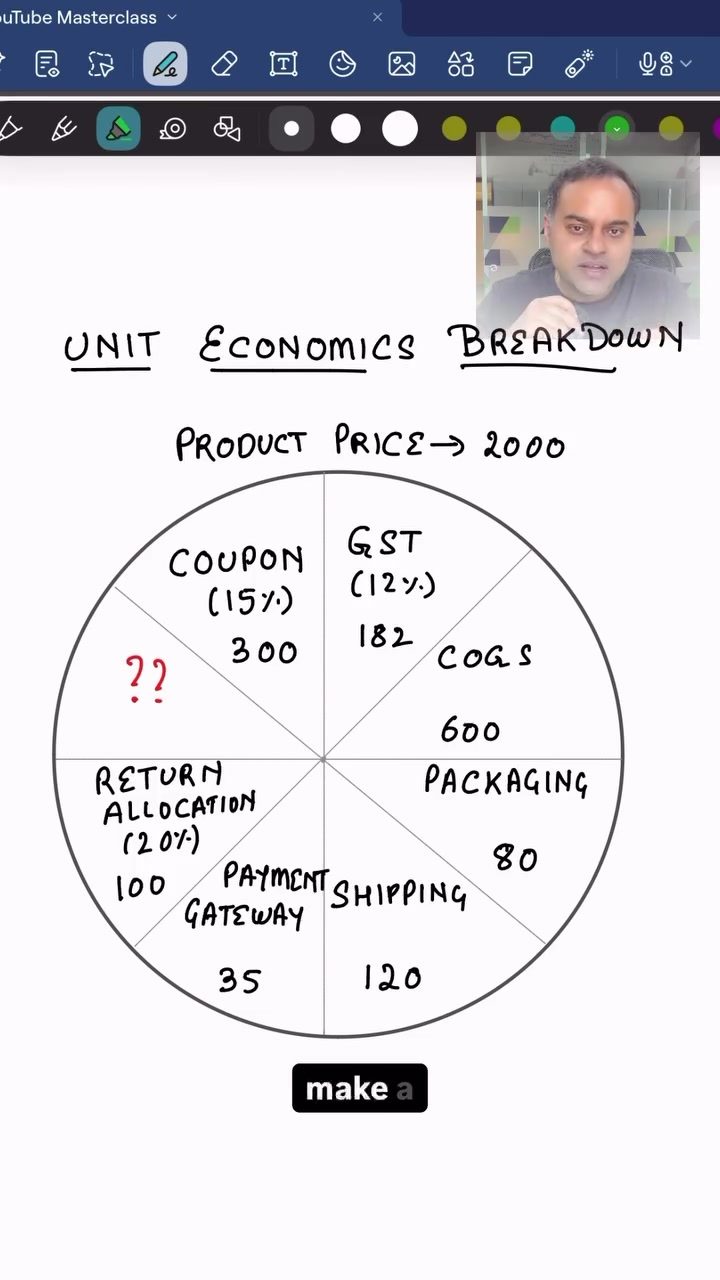
Unit Economics Breakdown
Understanding unit economics forms the backbone of running a successful business. This concept is crucial for marketers, especially in an era where automation is increasingly handling more aspects of marketing execution.
Unit economics involves evaluating the revenue and costs associated with a single unit of a product or service. This process provides a clear view of the financial health of a business and helps in making informed decisions about pricing, discounts, and promotions.
Context: Why This Matters
A solid understanding of unit economics is vital for several reasons:
-
Pricing Strategy: It helps in setting the right price for a product or service. Knowing how much each unit costs to produce and sell can help in determining a profitable price point.
-
Cost Management: By breaking down the costs, businesses can identify areas where they can cut expenses or optimize resources.
-
Marketing Decisions: It aids in making informed decisions about marketing strategies, such as whether to offer discounts or promotions and understanding their impact on overall profitability.
Main Discussion
To dive deeper, let's walk through an example of a product priced at 2000 rupees with a return on ad spend (ROAS) of 4X. This means that for every rupee spent on advertising, the business earns 4 rupees. However, the story doesn't end there.
Breaking Down the Costs
When selling a product, several costs need to be considered:
-
Discounts and Coupons: A 15% coupon on a 2000 rupee product amounts to a 300 rupee discount.
-
Taxes: Goods and Services Tax (GST) of 12% on the product means an additional 182 rupees.
These two costs alone reduce the net revenue to 1518 rupees.
Additional Expenses
There are several additional costs to factor in:
-
Cost of Goods Sold (COGS): This is the cost of producing the product, which in this case is 600 rupees.
-
Packaging: Packaging for the product costs 80 rupees.
-
Shipping: Shipping costs amount to 120 rupees.
-
Payment Gateway: Payment processing fees are 35 rupees.
-
Return Allocation: With a 20% return rate, the business must set aside 200 rupees (20% of 2000 rupees) for potential returns.
Customer Acquisition Cost (CAC)
The cost of acquiring a customer is another critical factor. In this example, the CAC is 500 rupees. This includes all the marketing and advertising expenses required to attract and convert a customer.
Calculating Gross Profit
After accounting for all these costs, the gross profit can be calculated:
- Net Revenue: 1518 rupees (after discounts and taxes)
- Total Costs: 935 rupees (COGS, packaging, shipping, payment gateway, and return allocation)
This leaves a gross profit of 583 rupees.
Impact on Marketing
When additional discounts or promotions are offered, the impact on unit economics needs careful consideration. For example, a 25% discount on the product reduces the net revenue to 1339 rupees. The gross profit then drops to 404 rupees, and the contribution margin decreases significantly.
The Financial Implications
In this scenario, offering a 25% discount means making 24 rupees per customer, which is 71% less than the 83 rupees profit made at full price. To maintain the same level of total profit, the business would need to generate 3.5 times more orders. This underscores the importance of understanding unit economics in marketing decisions.
Practical Tips
For Marketers
-
Optimize Campaigns: Use data-driven insights to optimize advertising campaigns and reduce the CAC.
-
Strategic Discounts: Be strategic about offering discounts. Consider the long-term impact on unit economics before implementing any promotion.
-
Cost Management: Regularly review and optimize costs associated with production, packaging, shipping, and payment processing. Each rupee saved contributes directly to the gross profit.
For Business Owners
-
Understand Financial Metrics: Familiarize yourself with key financial metrics like ROAS, CAC, and contribution margin. These are essential for making informed business decisions.
-
Financial Literacy: Encourage financial literacy within the marketing team. Understanding the financial implications of marketing decisions can lead to more effective strategies.
Important Takeaways
-
Unit Economics Impact: Every marketing decision, from setting prices to running promotions, impacts the unit economics of a business.
-
Marketing and Finance: Unit economics is not just a finance problem; it is a marketing problem. Every discount, coupon, or sale affects the bottom line.
-
Data-Driven Decisions: Use data to inform marketing strategies and measure their impact on unit economics.
Conclusion
Understanding and optimizing unit economics is crucial for running a successful business. It provides a clear view of financial health and helps in making data-driven decisions. By breaking down costs and understanding the impact of marketing strategies, businesses can ensure profitability and sustainability.
Questions readers ask
What is unit economics and why is it crucial for marketers?
Unit economics is the analysis of revenue and costs associated with a single unit of a product or service. It's crucial for marketers because it provides insights into the profitability of each unit, aiding in strategic decisions about pricing, promotions, and discounts. This understanding helps in maximizing marketing efforts and overall business success.
How does unit economics help in setting the right price for a product?
By analyzing the costs involved in producing and selling a single unit, unit economics allows marketers to determine a price point that covers all expenses and generates a profit. This ensures that the pricing strategy is both competitive and financially sustainable. It also helps in identifying the impact of discounts and promotions on overall profitability.
What are the key components of a unit economics breakdown?
A unit economics breakdown involves several key components, including the cost of goods sold, marketing expenses, operational costs, and revenue generated per unit. By evaluating these factors, marketers can gain a comprehensive understanding of the financial performance of each unit, which is essential for making informed decisions about pricing and promotions.
Why is understanding unit economics important for finance for marketers?
Understanding unit economics helps marketers translate financial data into actionable insights, allowing them to allocate resources more effectively and make data-driven decisions. It also provides a clear view of the financial health of a business, which is crucial for budgeting, forecasting, and optimizing marketing strategies to maximize profitability.
Can unit economics be applied to both physical products and services?
Yes, unit economics can be applied to both physical products and services. For physical products, it involves analyzing the cost of raw materials, manufacturing, and distribution. For services, it includes evaluating labor costs, overhead expenses, and any other resources required to deliver the service. The goal is to understand the financial impact of each unit, whether it's a product or a service.
How does unit economics help in an era where marketing automation is prevalent?
In an era where marketing automation is increasingly handling more aspects of marketing execution, unit economics provides a clear understanding of the costs and revenue associated with each unit. This helps in optimizing automated campaigns, determining the effectiveness of automated marketing strategies, and ensuring that the use of technology aligns with overall business profitability goals.
Recent articles
Fresh deep dives from the latest Reels we unpacked.




Comments
Be the first to comment.