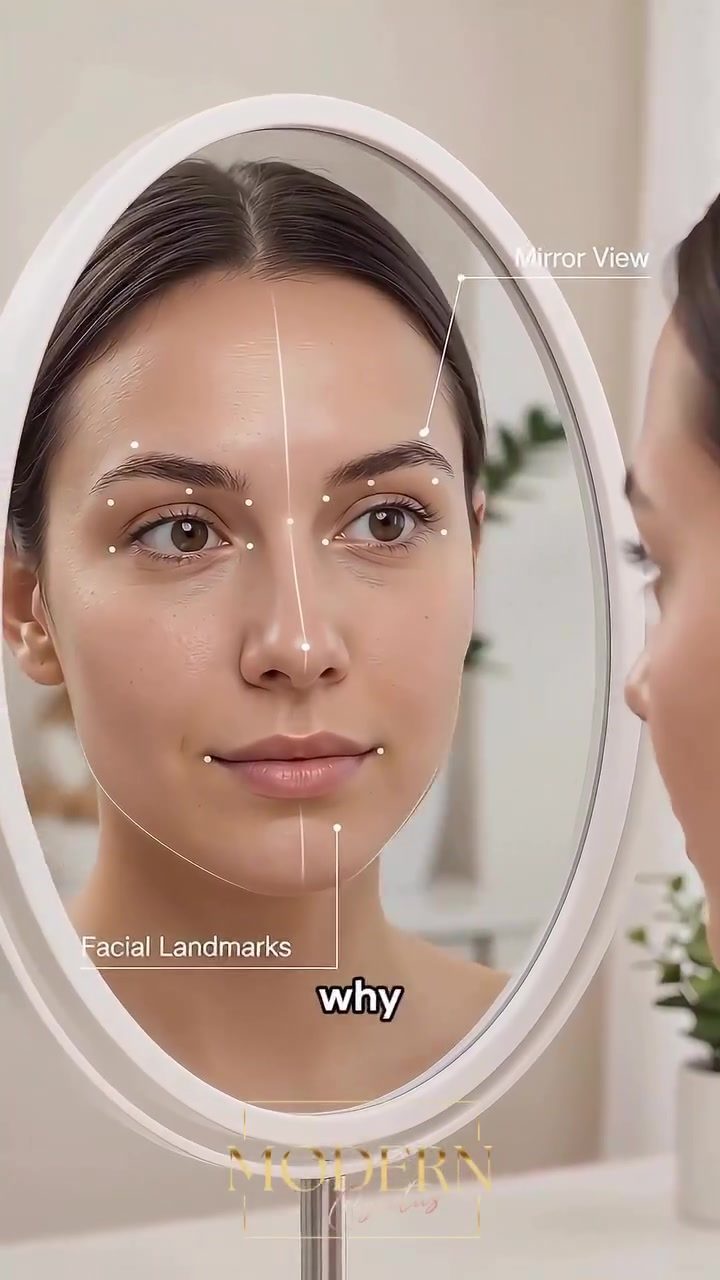
Facial Analysis with Mirror
Have you ever taken a selfie and thought, “That doesn’t look like me”? You’re not alone in this experience. The discrepancy between how we see ourselves in the mirror and in photographs is a common phenomenon. This difference is largely due to facial asymmetry and the way cameras capture images.
Context
The human face is not perfectly symmetrical. Even the smallest differences between the left and right sides of the face are completely normal, giving each person a unique appearance. Understanding these asymmetries and how we perceive our own faces can help explain why the mirror and camera sometimes don’t seem to agree.
Why this matters
Facial asymmetry is a natural part of human anatomy. Recognizing and understanding it can alleviate concerns about appearance and enhance self-acceptance. This awareness is particularly relevant in the age of social media, where selfies and front-facing cameras are ubiquitous. Knowing how these tools capture our images can help us better understand and appreciate our unique features.
Main discussion
Facial Asymmetry
Facial asymmetry refers to the natural differences between the left and right sides of the face. These differences are subtle and vary from person to person. Some common examples include variations in the shape of the eyes, the position of the eyebrows, and the contour of the cheeks. These asymmetries are so subtle that we often don’t notice them in our daily lives, but they can become more apparent in photographs.
The Mirror vs. the Camera
When you look in a mirror, you see a reversed image of yourself. This is the version of your face that you’ve become familiar with over many years. However, a selfie or any photograph taken with a front-facing camera flips that image, presenting a non-mirrored version. This flipped image can make natural asymmetries seem more noticeable, which is why you might feel that your selfie doesn’t look like you.
Factors Affecting Facial Proportions
Several factors can influence how your face appears in photographs. The type of camera lens, the distance from your face, and the lighting can all change the appearance of your facial proportions. Wide-angle lenses, for example, can distort facial features, making them appear larger or smaller than they actually are. Similarly, harsh lighting can cast shadows that accentuate asymmetries and other irregularities.
The Role of Ever Mirror
The ever mirror is a tool designed to help you analyze your facial features and understand your unique asymmetries. By providing a clear, unobstructed view of your face, the mirror allows you to see the natural differences that exist between the left and right sides. This can be a valuable tool for anyone looking to enhance their self-awareness and appreciate their unique features.
How to Use a Mirror for Facial Analysis
Using a mirror for facial analysis is straightforward. Stand in front of a well-lit mirror and observe your facial features. Take note of any asymmetries or differences between the left and right sides. You can also use a smartphone or camera to take pictures from different angles and compare them with your mirror image. This can help you understand how different perspectives can affect your appearance.
Practical Tips
Use Good Lighting
Always use good lighting when analyzing your facial features. Natural light is best, as it provides a clear, unobstructed view of your face. Avoid harsh lighting, as it can cast shadows and distort your features.
Take Multiple Photos
Take multiple photos from different angles to get a comprehensive view of your facial features. Compare these photos with your mirror image to understand how different perspectives can affect your appearance.
Be Patient
Analyzing your facial features can take time. Be patient and take your time to observe your face carefully. Remember, small differences are completely normal and part of what makes you unique.
Consult a Professional
If you have concerns about your facial features, consider consulting a professional. A beauty expert or dermatologist can provide valuable insights and help you understand your unique features.
Important takeaways
Facial asymmetry is a natural part of human anatomy and a common reason for the discrepancy between how we see ourselves in the mirror and in photographs. Understanding these asymmetries can enhance self-acceptance and appreciation for our unique features. The ever mirror is a valuable tool for analyzing your facial features and understanding your unique asymmetries. Using good lighting, taking multiple photos, and consulting a professional can all help you better understand and appreciate your facial features.
Conclusion
Embracing and understanding our unique features, including facial asymmetries, is crucial in today’s world. By recognizing and appreciating these natural differences, we can enhance our self-awareness and self-acceptance. The ever mirror, with its clear and unobstructed view, is an excellent tool for this journey. Whether you’re examining your features for personal reasons or professional considerations, understanding facial asymmetry can provide valuable insights and enhance your overall well-being.
Questions readers ask
Why do my selfies look different from my mirror reflection?
Selfies look different from your mirror reflection primarily due to facial asymmetry. Even subtle differences between the left and right sides of your face can cause this discrepancy. Additionally, the way cameras capture images contributes to this phenomenon.
Is it normal to have facial asymmetry?
Yes, it is completely normal to have facial asymmetry. Everyone's face has some degree of asymmetry, which gives each person a unique appearance. This natural asymmetry is what contributes to the differences between how you look in the mirror and in selfies.
How can I take a good selfie given that I understand the asymmetry of my face?
To take a good selfie, consider the lighting and the angle of the camera. If you are aware of your unique features, you can position the camera in a way that best highlights your natural appearance. Experimenting with different angles and lighting can help you find the most flattering selfie.
How does a selfie camera differ from a mirror?
Selfie cameras capture images as they truly are, showing the right side of your face on the right and the left side on the left. Mirrors, on the other hand, reverse the image, making you see the left side of your face on the right and vice versa. This reversal can make your selfie look different.
Are there any tips to make selfies look more like my mirror reflection?
While selfies will never perfectly match your mirror reflection due to natural facial asymmetry, you can minimize the differences by choosing a camera angle that complements your features. Additionally, using filters or editing tools can help you achieve a more symmetrical look.
Why do some people look better in the mirror than in photos?
This perception can be attributed to facial asymmetry and the way our brains process images. Mirrors show a reversed image, which our brains have become accustomed to, while photos present our true facial features. This can sometimes make us feel that we appear different in photos.
Can understanding facial asymmetry help me appreciate my appearance more?
Yes, recognizing that facial asymmetry is a natural part of human anatomy can help you appreciate your unique features. By understanding and embracing these differences, you can develop a more positive perception of your appearance in both selfies and mirror reflections.
Related deep dives
Similar reads based on topic and creator.




Recent articles
Fresh deep dives from the latest Reels we unpacked.




Comments
Be the first to comment.