The Dunning-Kruger Effect
The Dunning-Kruger effect describes a cognitive bias where individuals with low competence often overestimate their abilities, while those with more significant competence tend to underestimate themselves. This effect is a result of poor self-awareness, leading to a distorted perception of one's capabilities. Understanding this phenomenon can provide insights into how people perceive their own knowledge and skills.
Why this matters
Recognizing the Dunning-Kruger effect is crucial for various fields, including education, leadership, and personal development. This cognitive bias can affect decision-making, team dynamics, and individual growth. By understanding how competence and confidence interact, individuals and organizations can make more informed choices, fostering better outcomes in both professional and personal contexts.
Main discussion
Understanding the Stages
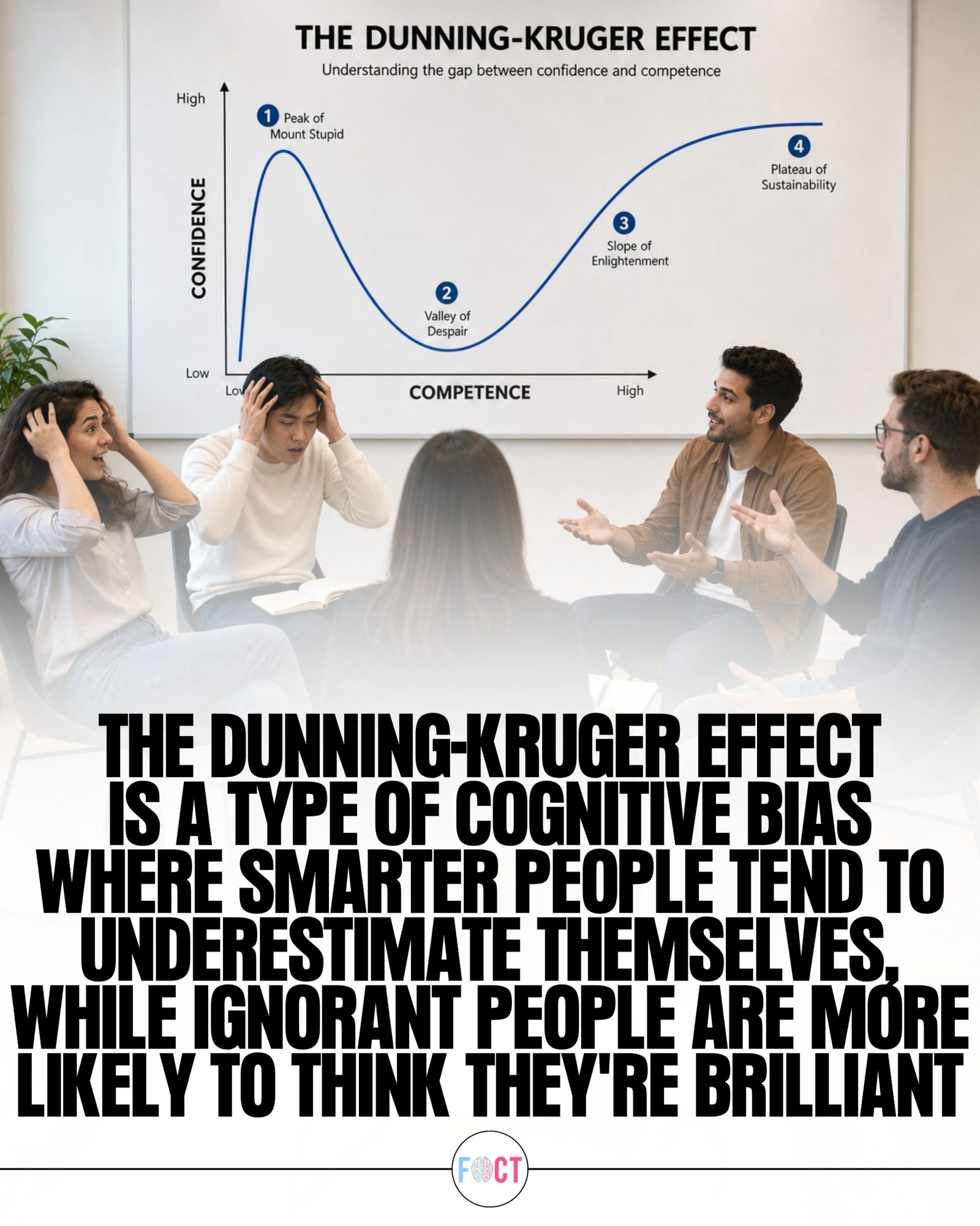
The Dunning-Kruger effect is often represented graphically using confidence and competence on two separate axes. This graph illustrates four distinct stages: 'Peak of Mount Stupid', 'Valley of Despair', 'Slope of Enlightenment', and 'Plateau of Sustainability'.
Peak of Mount Stupid
At this stage, individuals with low competence overestimate their abilities. This happens because they lack the skills and knowledge necessary to recognize their own incompetence. As a result, they exhibit high levels of confidence, despite their actual low competence. This stage is characterized by a lack of self-awareness, leading individuals to believe they are more capable than they truly are.
Valley of Despair
As individuals gain more knowledge and skills, they often enter the 'Valley of Despair'. In this stage, competence starts to increase, but confidence dips. This occurs because individuals begin to recognize the extent of their ignorance and the complexity of the subject matter. The realization that they have more to learn can be demoralizing, leading to a temporary decrease in confidence.
Slope of Enlightenment
As competence continues to grow, individuals progress to the 'Slope of Enlightenment'. In this stage, both competence and confidence increase. As individuals acquire more knowledge and skills, they become more aware of their capabilities. This increased self-awareness fosters a more balanced view of their abilities, leading to greater confidence in their potential.
Plateau of Sustainability
At the 'Plateau of Sustainability', individuals reach a high level of competence and maintain high confidence. They possess the knowledge and skills to perform well and have a realistic understanding of their abilities. At this stage, individuals are less likely to overestimate or underestimate their capabilities, leading to a more sustainable level of confidence.
Real-world implications
The Dunning-Kruger effect has significant implications in various domains, including education, leadership, and personal development. Understanding this cognitive bias can help individuals and organizations make more informed decisions, fostering better outcomes in both professional and personal contexts.
Leadership
In a leadership context, the Dunning-Kruger effect can impact decision-making and team dynamics. Leaders who overestimate their abilities may make poor decisions, while those who underestimate their competence may hesitate to take necessary actions. Recognizing this cognitive bias, leaders can strive for a more realistic self-assessment, leading to more effective leadership and decision-making.
Education
In educational settings, the Dunning-Kruger effect can affect both students and educators. Students who overestimate their abilities may struggle with the material, while educators who underestimate their competence may fail to provide adequate guidance. Understanding this effect can help educators tailor their teaching methods to better address the needs of their students, fostering a more effective learning environment.
Personal Development
On a personal level, the Dunning-Kruger effect can impact self-awareness and personal growth. Individuals who overestimate their abilities may face disappointments, while those who underestimate their competence may miss opportunities for growth. Recognizing this cognitive bias can help individuals develop a more realistic self-assessment, leading to more effective personal development and goal achievement.
Practical tips
Recognizing the Dunning-Kruger effect can help you to develop a more accurate self-assessment and make better decisions. The following practical tips can help you to navigate this cognitive bias and foster personal growth:
Seek Feedback
Seek feedback from others to gain a more accurate understanding of your abilities. Constructive feedback can provide valuable insights into your strengths and areas for improvement, helping you to develop a more realistic self-assessment.
Reflect on Past Experiences
Reflect on your past experiences to identify patterns in your competence and confidence. This can help you to recognize when you are overestimating or underestimating your abilities, allowing you to make more informed decisions.
Continuous Learning
Engage in continuous learning to expand your knowledge and skills. This can help you to progress through the stages of the Dunning-Kruger effect, ultimately reaching the 'Plateau of Sustainability'. By continuously learning and growing, you can develop a more accurate self-assessment and achieve your goals.
Set Realistic Goals
Set realistic goals for yourself, based on your current level of competence. This can help you to avoid overestimating or underestimating your abilities, leading to more effective personal development and goal achievement.
Stay Humble
Maintain a sense of humility and openness to new learning opportunities. Recognize that everyone has areas for improvement and that continuous learning is essential for personal growth.
Important takeaways
Understanding the Dunning-Kruger effect can provide valuable insights into how people perceive their own knowledge and skills. By recognizing the stages of this cognitive bias, individuals and organizations can make more informed decisions and foster better outcomes in various contexts. Key takeaways include:
- The Dunning-Kruger effect can impact decision-making, team dynamics, and personal growth.
- Recognizing the stages of the Dunning-Kruger effect (Peak of Mount Stupid, Valley of Despair, Slope of Enlightenment, and Plateau of Sustainability) can help individuals develop a more accurate self-assessment.
- Seeking feedback, reflecting on past experiences, continuous learning, setting realistic goals, and maintaining humility can help navigate this cognitive bias and foster personal growth.
Conclusion
The Dunning-Kruger effect is a cognitive bias that affects how individuals perceive their own abilities. By understanding this phenomenon and recognizing its stages, individuals and organizations can make more informed decisions and foster better outcomes. Emphasizing continuous learning, seeking feedback, and staying humble can help navigate this cognitive bias and promote personal growth. Ultimately, recognizing the Dunning-Kruger effect can lead to more effective decision-making, improved team dynamics, and enhanced personal development.
Questions readers ask
What are the four stages of the Dunning-Kruger effect?
The four stages of the Dunning-Kruger effect are: initial overconfidence where individuals with low competence overestimate their abilities; overestimation of their abilities; awareness of their incompetence; and eventual competence where individuals underestimate their abilities.
How does the Dunning-Kruger effect influence decision-making?
The Dunning-Kruger effect can lead to poor decisions because individuals with low competence may overestimate their abilities and make decisions they are not truly prepared for. Conversely, those with high competence might underestimate their abilities and hesitate to make decisions, even when they have the necessary skills.
Can the Dunning-Kruger effect be mitigated?
Yes, the Dunning-Kruger effect can be mitigated through self-awareness and feedback. Seeking constructive criticism and being open to learning can help individuals better gauge their true abilities and make more informed decisions.
How does the Dunning-Kruger effect impact personal growth?
The Dunning-Kruger effect can hinder personal growth by creating a distorted self-perception. Individuals may not see the need to improve if they overestimate their abilities, or they may feel overwhelmed if they underestimate their abilities, both of which can impede progress.
Why do experts often underestimate their abilities according to the Dunning-Kruger effect?
Experts may underestimate their abilities due to a phenomenon known as impostor syndrome, where they attribute their success to luck rather than skill, or because they are more aware of the complexity of tasks and their own limitations.
What is the Dunning-Kruger chart?
The Dunning-Kruger chart is a graphical representation of the Dunning-Kruger effect, illustrating the four stages of competence and self-perception. It helps visualize how individuals with low competence often overestimate their abilities, while those with high competence tend to underestimate their abilities.
Recent articles
Fresh deep dives from the latest Reels we unpacked.




Comments
Be the first to comment.