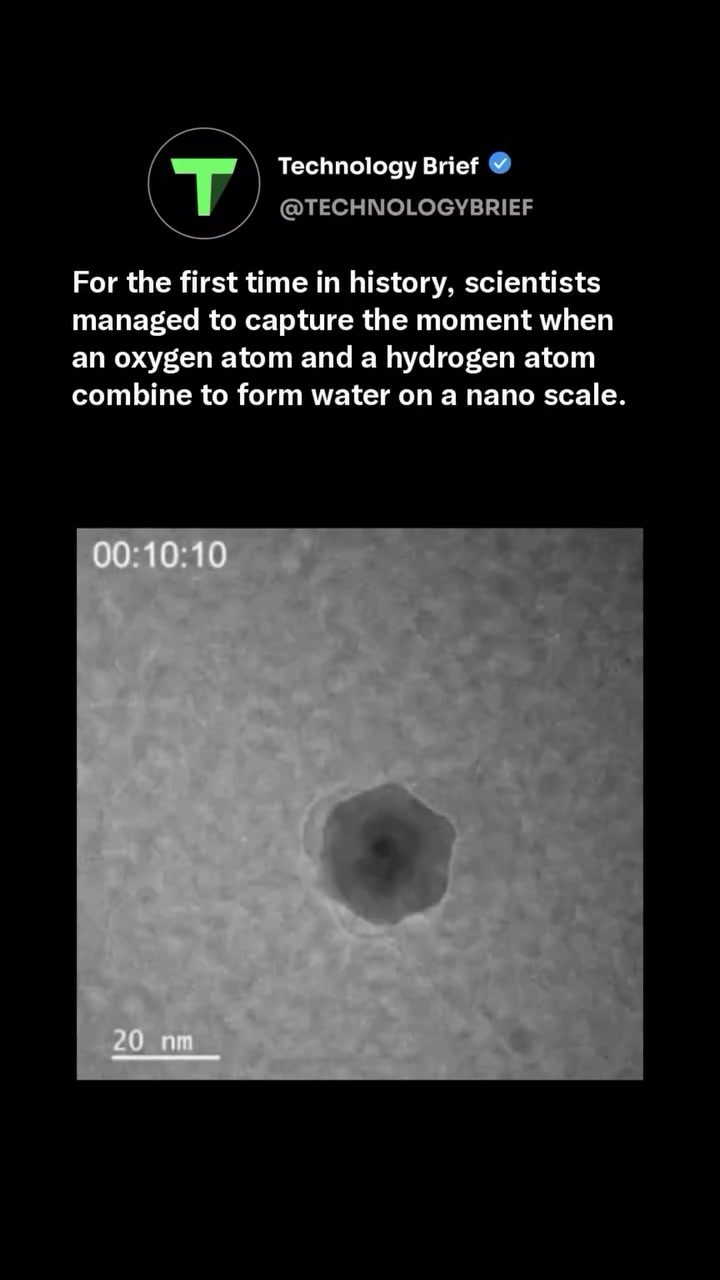
Nanoscale Imaging and Core-Shell Nanoparticles
Core-shell nanoparticles are a fascinating area of nanotechnology, where one material encapsulates another at an incredibly small scale. Recent advancements have allowed scientists to observe these processes in real time, providing valuable insights into their formation and potential applications.
Context: Why This Matters
Nanoscale imaging has revolutionized the way scientists study and manipulate materials at the atomic and molecular levels. By using techniques like in situ liquid-phase transmission electron microscopy, researchers can now watch chemical and structural changes happen live inside a microscope. This capability is crucial for developing advanced materials with tailored properties, which have significant applications in various fields.
The ability to observe and control the formation of core-shell nanoparticles at the nanoscale opens up new possibilities for drug delivery, catalysis, solar cells, and next-generation electronics. These structures can be fine-tuned by changing the core material, the shell thickness, or both, making them highly versatile for a range of applications.
Key Insights into Nanoscale Imaging
Transmission Electron Microscopy
Transmission electron microscopy (TEM) is a powerful tool used to study the structure of materials at the atomic level. In situ liquid-phase TEM, in particular, allows for real-time observation of chemical and structural changes. This technique involves using a liquid environment within the microscope, enabling researchers to watch processes like the formation of core-shell nanoparticles as they occur.
Core-Shell Nanoparticle Formation
Core-shell nanoparticles consist of a core material encapsulated by a shell of another material. The unique properties of these structures make them highly attractive for various applications. For instance, a protective shell can carry medicine to a specific location in the body and release it on cue, making them ideal for targeted drug delivery.
The formation of these nanostructures involves the gradual organization of the outer material into a smooth, rounded cage around the core particle. This process can be observed at a scale of just 20 nanometers, roughly 5,000 times thinner than a human hair. The ability to watch this process in real time helps scientists design more precise and effective nanoparticles for various applications.
Real-World Applications of Core-Shell Nanoparticles
Drug Delivery
One of the most promising applications of core-shell nanoparticles is in drug delivery. The protective shell can encapsulate and deliver therapeutic agents to specific target sites in the body, reducing side effects and enhancing the efficacy of treatments. Researchers can fine-tune the properties of these nanoparticles by adjusting the core material and shell thickness to achieve optimal performance.
Catalysis
Core-shell nanoparticles are also used in catalysis, where they act as catalysts to speed up chemical reactions. The unique properties of these structures allow for enhanced catalytic activity and selectivity, making them valuable in industrial processes and chemical manufacturing.
Solar Cells and Electronics
In the field of solar cells, core-shell nanoparticles can improve efficiency by enhancing light absorption and charge separation. Similarly, in next-generation electronics, these structures can be used to develop advanced materials with tailored electrical properties, paving the way for more efficient and compact devices.
Practical Tips for Researchers
Choosing the Right Materials
Selecting the appropriate core and shell materials is crucial for achieving the desired properties in core-shell nanoparticles. Researchers should consider the compatibility of the materials, their chemical stability, and their interaction with the surrounding environment. By carefully choosing the materials, scientists can design nanoparticles with enhanced functionality for specific applications.
Optimizing Shell Thickness
The thickness of the shell layer plays a significant role in determining the properties of core-shell nanoparticles. Researchers should experiment with different shell thicknesses to find the optimal configuration for their specific needs. This can involve iterative testing and characterization to achieve the desired performance.
Real-Time Imaging Techniques
Using real-time imaging techniques like in situ liquid-phase TEM allows researchers to gain deeper insights into the formation and behavior of core-shell nanoparticles. By observing the processes in real time, scientists can identify critical parameters that affect the performance of these nanostructures and make informed decisions to optimize their design.
Important Takeaways
The ability to observe the formation of core-shell nanoparticles at the nanoscale provides valuable insights into their properties and potential applications. Real-time imaging techniques like in situ liquid-phase TEM are essential for understanding and optimizing these nanostructures. By carefully selecting materials and adjusting shell thicknesses, researchers can develop advanced materials with tailored properties for various applications, including drug delivery, catalysis, solar cells, and electronics.
Conclusion
Nanoscale imaging and the study of core-shell nanoparticles represent a cutting-edge area of research with significant implications for various fields. By leveraging real-time imaging techniques and carefully designing these nanostructures, scientists can unlock new possibilities for advanced materials and technologies. As research continues to advance, the potential applications of core-shell nanoparticles are likely to expand, paving the way for innovative solutions in medicine, energy, and technology.
Questions readers ask
What exactly are core-shell nanoparticles?
Core-shell nanoparticles are a type of nanoparticle where a core material is completely covered by a shell material. The unique structure can lead to enhanced properties, such as improved stability or controlled release, which make them useful in various applications.
How does in situ liquid-phase transmission electron microscopy work?
In situ liquid-phase transmission electron microscopy involves observing samples in a liquid environment under a high-resolution electron microscope. This technique allows researchers to study the dynamic processes of nanoparticle formation and interactions in real-time, providing insights that static images cannot.
What are some key applications of core-shell nanoparticles?
Core-shell nanoparticles have several important applications, including drug delivery, where the core can contain a therapeutic agent and the shell controls its release, and catalysis, where the shell can protect the core catalyst from degradation while allowing reactants to pass through.
How do scientists control the formation of core-shell nanoparticles?
Scientists use various techniques to control the formation of core-shell nanoparticles, including adjusting reaction conditions such as temperature, pH, and concentration of reactants. Advanced imaging techniques, like in situ liquid-phase transmission electron microscopy, also help in monitoring and directing the formation process in real-time.
What benefits does real-time observation of nanoparticle formation provide?
Real-time observation of nanoparticle formation allows scientists to gain a deeper understanding of the mechanisms involved, identify key stages in the process, and optimize conditions for producing nanoparticles with desired properties. This can lead to more efficient and effective design of nanoparticles for specific applications.
Can core-shell nanoparticles be used for more than drug delivery and catalysis?
Yes, the unique properties of core-shell nanoparticles make them suitable for a wide range of applications beyond drug delivery and catalysis. These include biosensing, where the shell can enhance the specificity and sensitivity of the sensor, and environmental remediation, where the core-shell structure can be designed to capture and degrade pollutants.
What makes nanoscale imaging crucial for studying core-shell nanoparticles?
Nanoscale imaging is crucial because it allows scientists to observe the structural and chemical changes at the atomic and molecular levels. This high-resolution imaging enables researchers to understand the formation processes, interactions, and behaviors of core-shell nanoparticles, which is essential for developing new materials with tailored properties.
Related deep dives
Similar reads based on topic and creator.


Recent articles
Fresh deep dives from the latest Reels we unpacked.




Comments
Be the first to comment.