Campaign Sprint System: A Practical Approach to Marketing Campaigns
Marketing campaigns are crucial for engaging audiences and driving sales. However, coming up with fresh, impactful campaign ideas can be challenging. The Campaign Sprint System offers a structured framework to help marketers manage and innovate their campaigns effectively.
Why This Matters
In the fast-paced world of marketing, staying organized and innovative is key. The Campaign Sprint System provides a clear method for categorizing and executing campaigns, ensuring that no opportunity is missed. This framework is especially valuable for marketers who struggle with generating new campaign ideas or keeping track of ongoing and future campaigns.
The Campaign Sprint System: An Overview
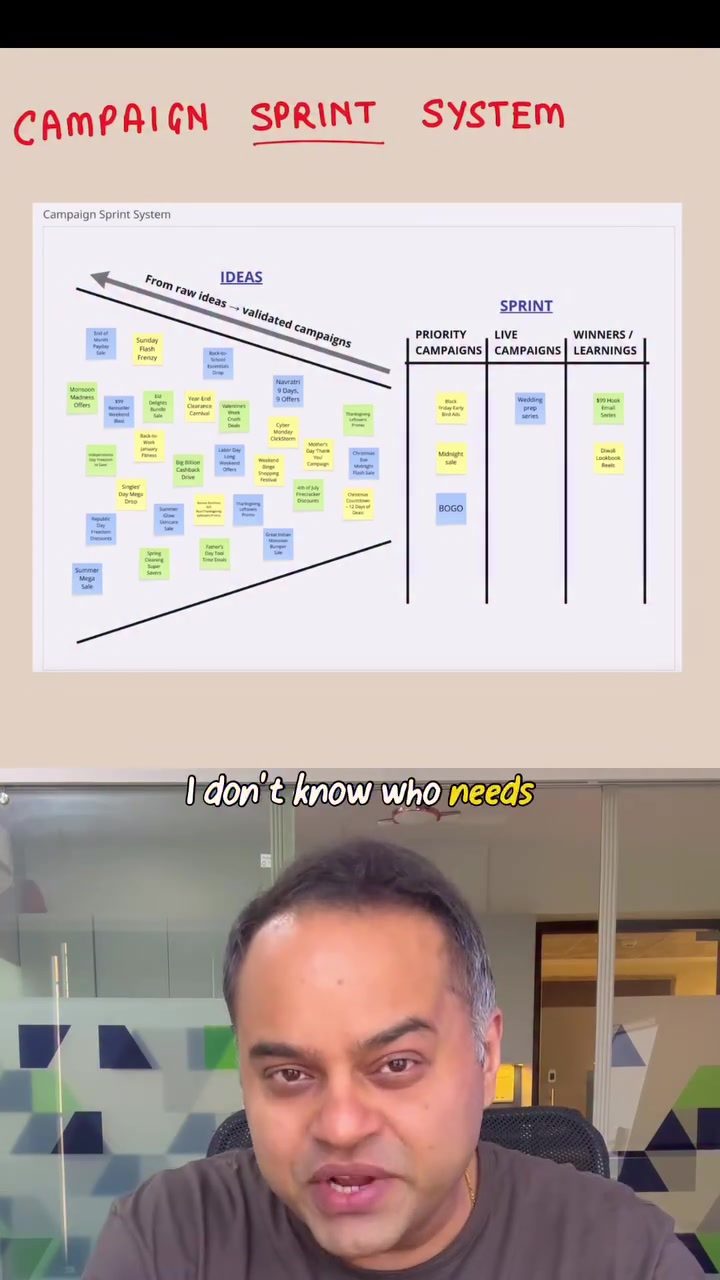
The Campaign Sprint System is divided into two main parts: the Sprint and the Ideas phase. Each phase serves a unique purpose in the overall campaign management process.
The Sprint Phase
The Sprint phase is where all past, current, and upcoming campaigns are managed. This phase is further divided into three categories:
-
Winners/Learnings: These are successful campaigns from the past that have proven effective. Examples include a $99 book email series or a Diwali lookbook reels campaign. By reviewing these winners, marketers can identify what worked well and apply those insights to future campaigns.
-
Live Campaigns: These are the campaigns currently in progress. Keeping track of live campaigns ensures that all ongoing efforts are aligned with the overall marketing strategy and that resources are allocated efficiently.
-
Priority Campaigns: These are upcoming campaigns that will be launched in the near future. Examples include Black Friday early bird access, midnight sales, and buy-one-get-one offers. Prioritizing these campaigns ensures that marketers are prepared and can capitalize on key sales periods.
The Ideas Phase
The Ideas phase is where raw campaign ideas are gathered and later validated. This phase is crucial for continuous innovation. Marketers can collect ideas from various sources, such as:
- Brainstorming sessions: Ideas that come to mind during brainstorming meetings.
- Competitor analysis: Campaigns executed well by other brands in the same or different categories.
- Seasonal themes: Ideas around holiday themes, such as Mother's Day, Cyber Monday, Valentine's Day and Summer Mega Sale. This phase provides a centralized location to store and review all potential campaign ideas, making it easier to convert them into validated campaigns.
Transitioning from Ideas to Validated Campaigns
Once ideas are collected in the Ideas phase, the next step is to validate them. Validation involves assessing the feasibility and potential impact of each idea. This process ensures that only the most promising ideas are moved into the Sprint phase for execution. For example, if a flash sale idea seems promising, it can be validated by conducting a small-scale test before rolling it out on a larger scale.
Practical Tips for Implementing the Campaign Sprint System
Implementing the Campaign Sprint System requires a systematic approach. Here are some practical tips to help you get started:
Organize Your Campaigns
Start by categorizing your campaigns into the three categories within the Sprint phase: Winners/Learnings, Live Campaigns, and Priority Campaigns. Use a shared document or project management tool to keep track of each campaign's details, including objectives, target audience, and performance metrics.
Brainstorm and Record Ideas
Regularly brainstorm new campaign ideas and record them in the Ideas phase. Encourage your team to contribute ideas and gather insights from competitors and industry trends. Keep a running list of potential campaign themes, such as holiday campaigns, seasonal promotions and special events.
Validate and Prioritize
Periodically review the ideas in the Ideas phase and validate them based on feasibility and potential impact. Prioritize the most promising ideas and move them into the Priority Campaigns category in the Sprint phase. Ensure that each idea aligns with your overall marketing strategy and business goals.
Monitor and Adjust
Regularly monitor the performance of your live campaigns and adjust as needed. Use data and feedback to optimize campaign strategies and improve future campaigns. For example, if a particular campaign is underperforming, consider tweaking the messaging, targeting, or promotional channels.
Collaborate and Communicate
Ensure that your team is aware of the Campaign Sprint System and understands their roles in managing and executing campaigns. Encourage collaboration and open communication to foster a culture of continuous innovation and improvement.
Important Takeaways
The Campaign Sprint System offers a structured approach to managing and innovating marketing campaigns. By organizing campaigns into Winners/Learnings, Live Campaigns, and Priority Campaigns, and by continuously gathering and validating new ideas, marketers can ensure that they are always ahead of the curve. This framework helps in capitalizing on key sales periods, leveraging past successes, and staying organized in the fast-paced world of marketing.
Conclusion
The Campaign Sprint System is a valuable tool for marketers looking to streamline their campaign management process. By following this framework, you can ensure that no opportunity is missed, and that your campaigns are always innovative and effective. Whether you are a seasoned marketer or just starting out, the Campaign Sprint System provides a practical and systematic approach to managing and executing successful marketing campaigns.
Questions readers ask
What is the Campaign Sprint System and how does it help in marketing campaign planning?
The Campaign Sprint System is a strategic framework designed to streamline marketing efforts by breaking down campaigns into distinct, manageable phases. It helps in planning by ensuring that past successful strategies are reused and future initiatives are well-prepared, making the process more organized and effective. This system allows marketers to stay on track and focused on achieving their goals.
How can the Campaign Sprint System enhance the impact of marketing campaigns?
By providing a structured approach, the Campaign Sprint System ensures that each phase of a campaign is well-planned and executed. This helps in leveraging past successes, avoiding pitfalls, and ensuring that all resources are used efficiently. The system promotes innovation by encouraging marketers to continuously refine their strategies, leading to more impactful and successful campaigns.
What are the key benefits of using the Campaign Sprint System for marketing campaign organization?
The key benefits include improved organization, enhanced creativity, and better resource management. By categorizing campaigns into manageable phases, the system helps marketers stay focused and innovative. It also ensures that no campaign element is overlooked, making the entire marketing process more efficient and effective.
What role does innovation play within the Campaign Sprint System?
Innovation is a core component of the Campaign Sprint System. The structured framework encourages marketers to regularly review and improve their strategies, ensuring that each campaign is fresh and engaging. This continuous innovation helps maintain audience interest and drives more successful outcomes.
How can the Campaign Sprint System be applied to specific events like a Diwali marketing campaign?
For a Diwali marketing campaign, the Campaign Sprint System can be used to plan each phase of the campaign, from initial ideation to post-campaign analysis. By breaking down the campaign into smaller, manageable tasks, marketers can ensure that every aspect of the festival is covered. This includes creating culturally relevant content, executing promotions, and analyzing the effectiveness of the campaign.
What are some effective marketing sprint ideas that can be incorporated into the campaign sprint planning?
Marketing sprint ideas can include focused activities such as keyword research, content creation, and social media engagement. To maximize effectiveness, consider sprints dedicated to each of these areas. For instance, a content creation sprint could involve brainstorming, writing, and scheduling content for the next month, ensuring a steady flow of material and maintaining audience engagement.
How does the Campaign Sprint System address the challenge of generating new campaign ideas?
The structured approach of the Campaign Sprint System helps marketers stay creative by encouraging regular brainstorming sessions and analysis of past campaign performance. By reviewing what worked and what didn't, marketers can identify new opportunities and develop fresh ideas. Additionally, the system’s emphasis on breaking down campaigns into phases allows for incremental innovation, making it easier to introduce new elements to existing campaigns.
Recent articles
Fresh deep dives from the latest Reels we unpacked.




Comments
Be the first to comment.