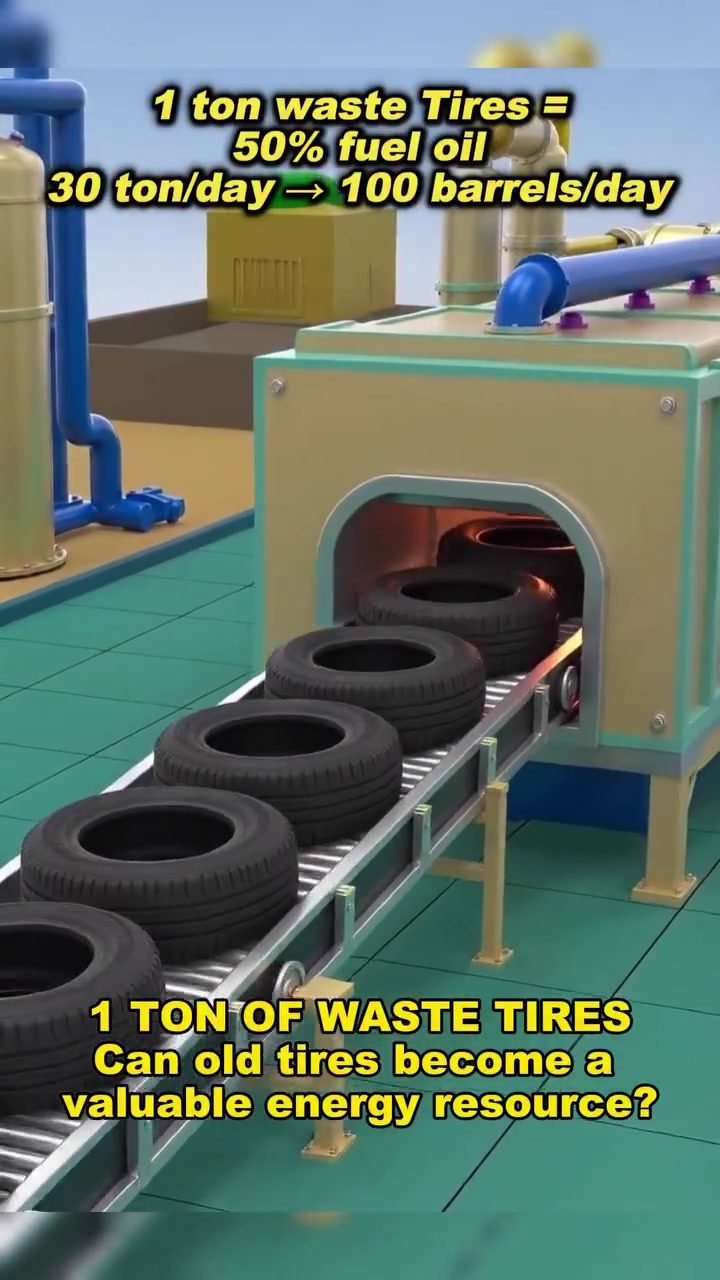
Tire Recycling to Fuel
Tire recycling has gained significance in recent years due to its potential to convert waste tires into valuable resources, particularly fuel. Waste tires, if not properly managed, can pose significant environmental challenges, such as soil and water contamination, and they can also be a fire hazard. However, through tire pyrolysis, these waste materials can be transformed into useful products, including fuel oil, carbon black, and steel wire.
Context / Why this matters
The process of converting end-of-life tires into valuable resources is crucial for several reasons. Firstly, it helps reduce the accumulation of waste tires, which can be a significant environmental hazard. Secondly, it recovers valuable materials that can be reused in various industries. Lastly, it supports a more sustainable circular economy by turning waste into multiple valuable products.
Main discussion
The Process of Tire Pyrolysis
Tire pyrolysis is an oxygen-free thermal decomposition process that converts end-of-life tires into valuable products. The process utilizes a tire recycling machine to break down the tires at high temperatures, typically in the range of 400-500°C (752-932°F). This process does not involve combustion, making it an environmentally friendly method for waste management.
The primary outputs of tire pyrolysis include:
- Fuel oil: This can be used as a raw material for industrial fuel applications or for further refining. The quantity of fuel oil that can be recovered from the process is typically 45-55% of the tire's weight.
- Recovery Carbon Black (rCB): Carbon black, which makes up 30-35% of the tire's weight, can be further processed for use in products such as rubber, asphalt, coatings, and other industrial applications.
- Steel Wire: Steel wire, which makes up 10-15% of the tire's weight, can be recovered and recycled as a valuable metal resource.
- Pyrolysis Gas: This gas can be reused as heating energy for the pyrolysis system, helping to reduce external fuel consumption and lower the overall operating costs.
The Efficiency of Tire Pyrolysis
The efficiency of a tire pyrolysis plant can be measured in terms of its daily processing capacity and the amount of fuel oil it can produce. A typical tire recycling machine can process up to 30 tons of tires per day, yielding approximately 100 barrels of fuel. This means that for every ton of waste tires processed, around 50% can be converted into fuel oil.
Benefits of Tire Pyrolysis
There are several benefits to using tire pyrolysis for waste management:
- Reduces Waste Accumulation: Tire pyrolysis helps to reduce the accumulation of waste tires, which can be a significant environmental hazard.
- Recovers Valuable Resources: The process recovers valuable resources such as fuel oil, carbon black, and steel wire, which can be used in various industries.
- Energy Efficient: The pyrolysis gas generated during the process can be reused as heating energy, helping to reduce external fuel consumption.
- Sustainable: Tire pyrolysis supports a more sustainable circular economy by turning waste into multiple valuable products.
Practical tips
Tips for Operating a Tire Pyrolysis Plant
- Maintain Optimal Temperature: Ensure that the pyrolysis machine is operating at the optimal temperature range of 400-500°C (752-932°F) for efficient waste tire processing.
- Monitor Air Supply: Since tire pyrolysis is an oxygen-free process, ensure that the air supply is carefully monitored and controlled.
- Regular Maintenance: Regular maintenance of the pyrolysis machine is crucial for optimal performance and to minimize downtime.
- Safety Measures: Ensure that all safety measures are in place, including proper ventilation and the use of personal protective equipment (PPE).
Tips for Utilizing Pyrolysis Products
- Fuel Oil: The recovered fuel oil can be used in various industrial applications, such as heating or further refining into high-value products.
- Carbon Black: The recovered carbon black can be further processed for use in products such as rubber, asphalt, and coatings.
- Steel Wire: The recovered steel wire can be recycled as a valuable metal resource.
- Pyrolysis Gas: The pyrolysis gas can be reused as heating energy for the pyrolysis process, helping to reduce external fuel consumption and lower operating costs.
Important takeaways
- Tire pyrolysis is an efficient method for converting waste tires into valuable resources.
- The process can produce fuel oil, carbon black, and steel wire, all of which can be used in various industries.
- Tire pyrolysis supports a more sustainable circular economy by turning waste into multiple valuable products.
Conclusion
Tire pyrolysis offers a sustainable solution for managing waste tires by converting them into valuable resources such as fuel oil, carbon black, and steel wire. The process is not only environmentally friendly but also economically viable, as it helps to reduce external fuel consumption and recover valuable materials. Moreover, it supports a more sustainable circular economy by turning waste into multiple valuable products.
Questions readers ask
What is tire pyrolysis and how does it work?
Tire pyrolysis is a thermal decomposition process that converts end-of-life tires into useful resources. The process involves heating tires in an oxygen-free environment, breaking them down into fuel oil, carbon black, and steel wire. This process reduces the volume of waste tires and transforms them into valuable commodities.
What are the benefits of converting waste tires into energy?
Converting waste tires into energy through pyrolysis offers several benefits. It reduces the number of waste tires in landfills, decreases environmental hazards such as soil and water contamination, and minimizes the risk of tire fires. Additionally, it recovers valuable materials like fuel oil and carbon black, which can be used in various industries.
What kind of fuel oil is produced from tires and who are the primary users?
Fuel oil produced from tire pyrolysis is a type of synthetic oil that can be used as a substitute for conventional fuels. It has a high caloric value and can be used in industrial boilers, kilns, and power plants. The primary users of this fuel oil include manufacturing companies, cement plants, and energy production facilities.
Is it possible to use pyrolysis to recycle carbon black from tires?
Yes, tire pyrolysis recovers carbon black, which is a valuable resource. The carbon black obtained from tire pyrolysis can be used in various applications, such as in the production of new tires, rubber products, and even inks and paints. This recycling effort contributes to a circular economy by reusing materials that would otherwise be wasted.
What happens to the steel wire extracted from waste tires during the pyrolysis process?
During the tire pyrolysis process, the steel wire embedded in the tires is separated and recovered. This steel can be cleaned, processed, and sold to steel mills or other industries for reuse. This not only reduces waste but also provides an additional revenue stream for tire pyrolysis operations.
What are the key considerations when setting up a tire pyrolysis plant?
When setting up a tire pyrolysis plant, key considerations include the availability of a consistent supply of waste tires, regulatory compliance, and the market demand for the end products such as fuel oil, carbon black, and steel wire. Additionally, the plant's location, environmental impact, and the necessary permits are crucial factors to ensure the operation's success and sustainability.
How does tire pyrolysis support a circular economy?
Tire pyrolysis supports a circular economy by transforming waste tires into valuable resources. This process recovers materials like fuel oil, carbon black, and steel wire, which can be reused in various industries. By extending the lifecycle of these materials, tire pyrolysis helps reduce waste, minimizes environmental impact, and creates a more sustainable and efficient use of resources.
Recent articles
Fresh deep dives from the latest Reels we unpacked.




Comments
Be the first to comment.